
Online European Roulette Casinos in the UK: What to Check
 Available in GB
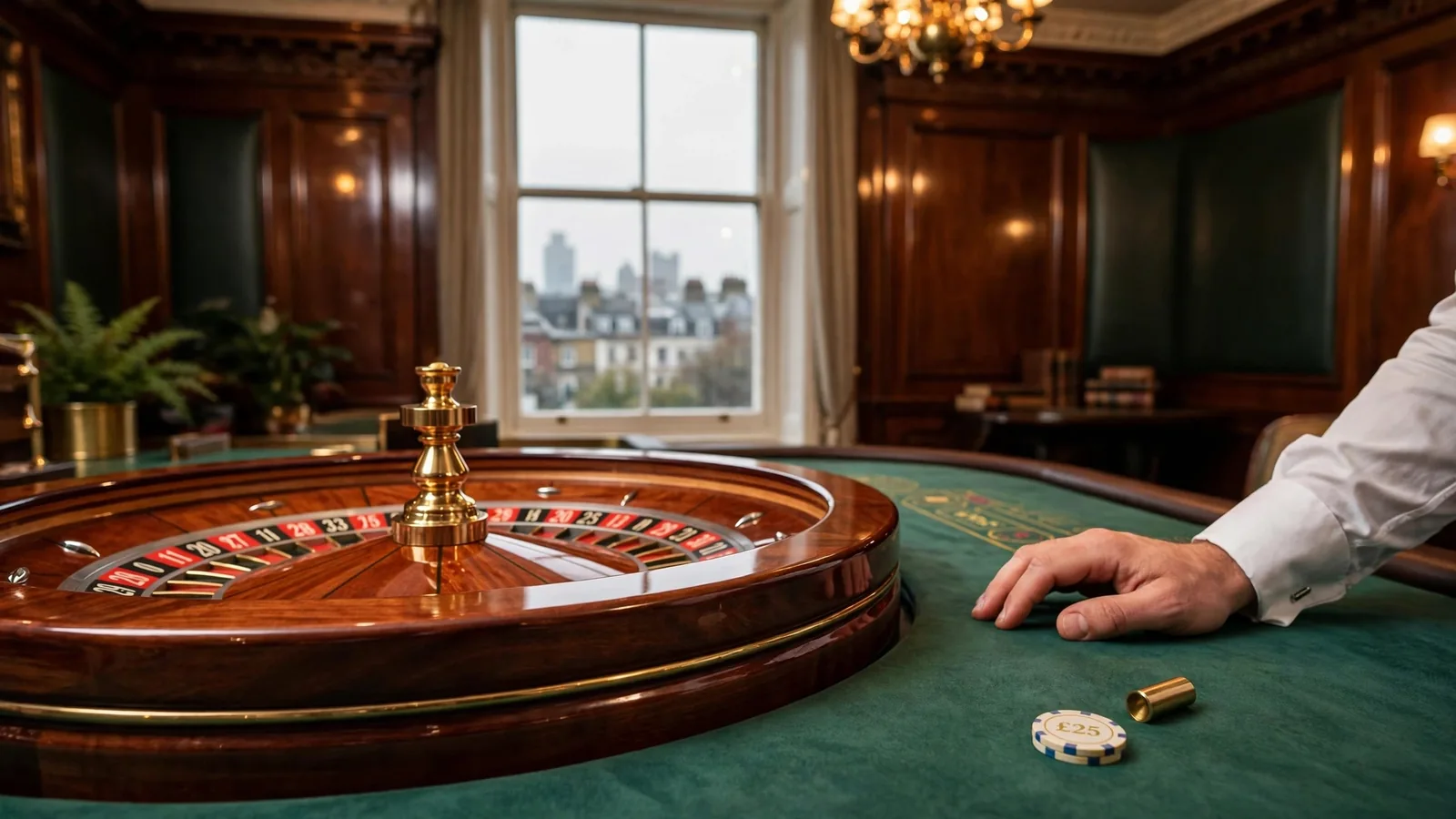
European roulette options differ by format, table rules and bonus conditions, so the game label alone is not enough to compare them.
What to Check Before Choosing a European Roulette Casino
A casino’s game catalogue can make European roulette look like a simple feature: find the name, open the table and play. But the label alone tells you little about the version on offer, its rules or how it fits any bonus terms. When comparing European roulette casinos in the UK, look for enough information to judge the actual game and the conditions attached to it—not just a prominent tile or a claim that the selection is extensive.
Check what the casino means by European roulette
Start with the game’s own information page. It should identify the game and provider, explain whether it is an automated RNG game or a live-dealer table, and make its rules and relevant terms available before you commit. RNG means that software generates the result; a live table uses a streamed physical wheel. Those are different playing experiences, so a casino that clearly labels its formats is easier to assess than one that groups every roulette title together.
Check that the version is actually described as European roulette, rather than assuming that any game called roulette has the same rules. If a casino offers several versions, its pages should make the distinctions understandable. You are comparing options, not relying on a thumbnail or a game’s visual styling to establish what is being offered.
Look for accessible RTP information too. RTP, or return to player, is a theoretical measure of how much a game returns over extended play; it is not a prediction of what you will receive in a session. UKGC-licensed operators should make relevant RTP information available. If you cannot find it on the game page, check the rules or help section, and consider whether the information is clear enough to compare.
Read the terms before considering a bonus
Bonus funds can come with wagering requirements: conditions that specify how much eligible play is needed before funds or winnings can be withdrawn. Roulette may count differently from other games, and the rules can distinguish between live roulette and RNG roulette. Find the game-weighting table in the bonus terms and read the entry for the exact format you intend to use.
Across UK operators, roulette play is commonly assigned a contribution somewhere in the 10%–20% range toward wagering requirements. That is not a promise about any particular casino. A specialist review also reports a wider operator-by-operator variation, with live roulette assigned a 10% or 20% contribution in some terms and RNG roulette sometimes counted in full. Treat that as a reason to inspect the operator’s own current terms, not as a substitute for them.
Check whether roulette is eligible at all, whether the contribution differs by table or format, and whether other restrictions apply. A bonus may look generous while roulette contributes little toward clearing its wagering requirement. If the terms are unclear, or the wording does not say which games qualify, do not assume that a roulette session will count as you expect.
Compare the practical details, not the sales language
For online casinos with European roulette, the useful comparison is often in the small print and the game information rather than in promotional claims. Check whether the casino provides a searchable roulette category, names the format clearly and makes rules, RTP details and bonus conditions easy to locate. These details reduce the risk of choosing a game based on an assumption the operator’s terms do not support.
If you are considering a VIP table, look for its conditions rather than treating “VIP” as evidence of a better game. The label may refer to the audience or table category; it does not, by itself, establish different rules, a more favourable RTP or a particular level of service. Compare the information provided for that table with the ordinary version and check whether its stakes and bonus eligibility suit your needs.
The same care applies to roulette titles presented with elaborate themes or features. Confirm that the game is roulette and read its rules before treating it as a standard European table. A familiar name or appearance is not enough to establish that all terms match another game.
Check who stands behind the offer
Before depositing, verify the operator’s licence number on the UK Gambling Commission’s public register. A site serving British players with real-money gambling must hold the relevant UKGC licence; a licence claim in a footer is not a replacement for checking the register. Also review the operator’s account controls and complaints information before deciding whether the service is suitable.
Choosing a European Roulette Casino
- Verify the operator’s licence number on the UK Gambling Commission public register
- Identify if the game is an RNG software game or a live-dealer table
- Locate the RTP information for the specific game version
- Check the bonus terms for the roulette game-weighting contribution
- Review the operator’s account controls and complaints information
A useful comparison does not require a ranking of “best” casinos. It requires clear, checkable answers: what format is offered, where to find the rules and RTP, and how roulette is treated under the bonus terms. If those answers are missing or difficult to reconcile, another option may be easier to assess.
Our top casino picks for the UK
- ChanzeBonus: Slots Welcome Bonus #1 200% up to €500 · Payout speed: 1-3 business days
- ZombillionBonus: Welcome Pack 250% up to £4000 + 200 FS · Payout speed: 1-3 business days
- NightLuckBonus: Welcome Pack + 805% Up To 6400€ + 280 FS · Payout speed: 1-3 business days
- AmunbetBonus: Join now and get 450% up to 2,700 GBP + 450 FS · Payout speed: 1-3 business days
- JetsetspinsBonus: 200% Bonus + 100 Free Spins + Free Royal Wheel · Payout speed: 1-3 business days
- NightWinBonus: £900 + 400 free spins · Payout speed: 1-3 business days
- EvoSpinBonus: 125% up to €2500 + 125 Free Spins · Payout speed: 1-3 business days
- BritsinoBonus: Welcome Package – Get your £2,200 + 2,000 FS · Payout speed: 1-3 business days
- BeOnBetBonus: 100% up to €500 + 100 FS · Payout speed: 1-3 business days
European Roulette Online in the UK: Licensing and Player Protections
When you play European roulette for real money, the operator behind the game matters as much as the game itself. In Great Britain, the UK Gambling Commission (UKGC) regulates online casino activity and is the sole regulator. Remote gambling operators offering services to customers there must hold the relevant UKGC licence, wherever the business is based. A company’s overseas location does not remove that requirement.
Online gambling is legal in the UK only through licensed and regulated sites. A platform without a valid UKGC licence cannot legally offer real-money live roulette to British residents. Offshore casinos operate outside the UKGC system; an account or game being accessible online does not mean the operator is authorised to serve you. Players are not legally liable simply for playing at an offshore casino, but they do not receive the protections that come with a UKGC-licensed operator.
Before depositing, look up the operator on the UKGC public register and verify its licence number. Check that the licence covers the gambling activity being offered and that the business name matches the site. A logo or a statement on the casino’s own pages is not a substitute for the public register. If the operator’s identity or licence status is unclear, do not treat the game as a regulated UK offering.
Checks before you deposit
UKGC-licensed operators must verify your age before allowing you to deposit funds into a gambling account. The legal age for online gambling is 18. Verification is part of the operator’s obligations, not an optional mark of good service.
Online Casino Without ID in the UK: What to Expect
New customers must be prompted to set a financial limit before making their first deposit, and account-level limit controls must remain accessible. These controls let you set boundaries for your own spending; they are not a prediction of how much you will lose or a guarantee that play will remain affordable. UKGC-licensed casinos must also provide responsible-gambling tools, including self-exclusion.
For live casino play, UKGC-licensed operators must offer deposit limits, loss limits, session time reminders, reality checks, cool-off periods and access to GamStop self-exclusion. These tools serve different purposes: limits can restrict deposits or losses, reminders interrupt extended sessions, and a cool-off period or self-exclusion can provide a break from gambling. Check where the controls sit in the account and how they work before you need them.
Payment rules form part of the same framework. UKGC-licensed casinos cannot accept credit cards for gambling. Operators are also barred from accepting wallet payments where the wallet allows credit-card funds to be used for gambling. A payment option appearing at checkout is not proof that every way of funding it is permitted, so read the payment terms rather than assuming that a digital wallet bypasses the restriction.
Licensing Risk
Online gambling is legal in the UK only through licensed and regulated sites; platforms without a valid UKGC licence cannot legally offer real-money live roulette to British residents.
Game information and complaints
Licensing does not make every European roulette game identical, nor does it settle whether a particular table suits you. It does mean the operator is within the UK regulatory system. Before playing, you should be able to find the game’s rules and terms, including accessible RTP information. RTP, or return to player, is a theoretical measure of the share of stakes a game returns over time; it does not forecast the result of an individual session. If the information is difficult to locate, ask the operator where it is published rather than relying on a general claim about roulette.
If a dispute arises, a UKGC licensee must provide an internal complaints process and access to an approved Alternative Dispute Resolution service. Follow the operator’s stated process and keep relevant records, such as messages and transaction details. The ADR route is there for unresolved complaints; it is not a promise that every complaint will be decided in your favour.
Operators are also required to contribute to the Research, Education and Treatment levy. That sector-wide requirement does not replace the practical protections on your account, but it is part of the responsibilities attached to regulated gambling.
These safeguards do not remove the financial risk of roulette. They establish who is accountable for the service and what protections must be available while you use it. For an online European roulette casino in the UK, confirming the UKGC licence is therefore a basic legal check, not a judgment that the game is safe or that playing is right for you.
How to Compare European Roulette Tables
A European roulette table is not defined by its name alone. To compare options, check what format is offered, which terms apply to that game, and whether its return-to-player information is easy to find. Those details help you judge the table itself rather than relying on a casino’s headline description.
Start with the game format. A table may use a software-generated result or a live wheel, and the pace and presentation differ. Check the game information before choosing: a title that says “European roulette” should be accompanied by rules or a help screen that confirms the variant and explains any special features. If the information is unclear, treat that as a reason to look elsewhere rather than assuming every table with the same label works identically.
Next, read the table’s terms. Look for the minimum and maximum stakes, any special rules, and whether the game has features that alter standard roulette payouts. These details should be available before you commit to a wager. If you are comparing tables on a mobile screen, make sure the rules and terms are still accessible there; information that is difficult to locate is not much use when you need to check it.
RTP, or return to player, is a theoretical measure of the proportion of stakes a game is designed to return over time. It is not a prediction of what you will receive in an individual session. For a fair comparison, find the RTP for the exact table or game version, rather than relying on a general figure for roulette. The operator should make this information accessible, and the game’s help or information panel is a sensible place to look. If you cannot find an RTP figure, ask customer support where it is published before deciding whether to play.
Promotional terms need separate attention. Check whether roulette wagers count towards bonus wagering requirements and, if so, at what game weighting. The weighting can differ between roulette formats and between operators; a bonus may therefore take longer to clear through roulette than its headline terms suggest. Also check whether particular tables or live games are excluded. Bonus funds are subject to their own conditions, so do not assume that a wager contributes simply because the game is available.
Do
- Confirm the game format (RNG or live)
- Check the specific table’s RTP and stake limits
- Verify the exact bonus game weighting
Don’t
- Rely on promotional sales language
- Assume all “European” tables are identical
- Trust a “VIP” label as evidence of better odds
A specialist review describes a UK-wide maximum bonus-wagering requirement of 10x, applying from January 2026. Treat that as a point to verify against the current rules and the operator’s own terms, rather than as a substitute for reading them. The cap does not tell you how roulette wagers are weighted, which games qualify, or what other bonus conditions apply. Those details still matter when comparing offers.
A useful comparison keeps these questions together: Is the format clear? Can you find the table rules and stake limits? Is the RTP published for that specific version? Are bonus conditions explicit about game weighting and exclusions? If a casino makes one answer difficult to establish, another table with clearly presented information may be easier to assess. No single label makes a table the best choice for every player; clear terms let you decide which one fits your preferences.
How to Play European Roulette and What the Payouts Mean
To play European roulette online, choose a table and decide what you want to wager on before the betting window closes. You can select a single number, a group of numbers or an outside bet, then set your stake and confirm it. Once the spin begins, no new wager can be added to that round. After the result is settled, the game credits any winning return to your balance.
The interface may let you select a bet by tapping the relevant option or dragging a chip onto it. Check the displayed stake before confirming: a misplaced or repeated selection can change the total amount wagered. If you are learning how the controls work, a free-play mode can help you practise without risking money. Real-money European roulette uses the same basic sequence, but each confirmed wager is taken from your gambling balance.
Reading the payout
A payout written as a ratio describes the winnings in relation to the stake, not the chance that the bet will win. A straight-up bet on one number pays 35:1. That means a winning stake of one unit earns 35 units in winnings; the original stake is also returned. The same straight-up payout applies in European and American roulette, though the two games are not otherwise identical.
A split bet covers two adjacent numbers and pays 17:1 if either wins. A street bet covers a horizontal row of three numbers and pays 11:1 if the result is in that row. These bets cover more outcomes than a single-number wager, but their payout per winning unit is lower. The ratio is not a forecast: it tells you what a win pays, not how likely the result is.
Outside bets cover broader categories rather than particular numbers. Red or black, odd or even, and high or low all pay 1:1. A winning stake of one unit therefore earns one unit in winnings, with the stake returned as well. Because these bets cover categories, the return is smaller than for a single-number bet. A zero can also affect whether an outside bet wins, so check the game’s rules rather than assuming that a broad category guarantees a result.
Straight-up Payout
Example: 35:1 × 1 unit = 35 units winnings (plus the original 1 unit stake returned).
Before confirming a wager
The payout is only one part of a bet. Look at the selection shown on screen, the stake attached to it and the displayed return before the round starts. If several selections are active, check the combined stake rather than judging each chip in isolation. Once betting closes, you cannot correct a choice for that spin.
For European roulette for real money, keep the stake within an amount you have decided in advance. A larger advertised payout does not make a number more likely to appear, and a sequence of losses does not make a win due. Roulette outcomes are determined by chance; no betting pattern can predict the next result. Treat each wager as a separate decision, and stop if continuing would mean spending more than intended.
The Single-Zero Wheel and the Bets You Can Place
A European roulette wheel has 37 pockets: one marked zero and the others numbered from 1 to 36. That single green zero is what “single-zero” refers to. The numbers are arranged around the wheel, while bets can be made either on particular numbers or on broader groups represented on the table.
The distinction matters because the zero is its own outcome. A wager on a number or group does not cover it unless the bet specifically includes zero. When the ball lands there, bets that do not include zero lose, with the treatment of some even-money bets depending on the table’s rules.
Inside bets follow the numbers
Inside bets are wagers on specific numbers or small groups of adjacent numbers. On the table, they sit in or across the numbered area, rather than on the larger betting boxes outside it. The placement indicates which pocket or pockets must come up for the bet to win.
A straight-up bet selects one number. A split covers two neighbouring numbers by placing the chip on the line between them. A street covers a row of three numbers, selected at the edge of that row. These bets connect the table’s numbered grid to pockets on the wheel: the selected number or group is the outcome you are backing.
The zero has a position of its own on the table, separate from the rows of numbered squares. It can be selected directly, or included in certain combinations where the layout allows. This makes it worth checking precisely which numbers a chip position covers; a small shift can change the wager.
Outside bets cover broader groups
Outside bets are placed in the larger areas around the numbered grid. They cover categories such as red or black, odd or even, and low or high numbers. Rather than naming individual pockets, you select a group that includes many of them.
These categories do not include the zero. So even when a colour or number range seems to cover a substantial part of the wheel, the green pocket remains outside that selection. The table’s markings show the intended group, but the zero’s separate status is central to understanding the result.
European roulette has a house edge of 2.70%. On tables that offer La Partage, half of an even-money bet is returned if the ball lands on zero; for those bets, the house edge falls to 1.35%. La Partage does not change the wheel or add another pocket. It changes how an eligible bet is settled when zero appears, so check whether the rule applies before treating two single-zero tables as identical.
La Partage Rule
On tables offering La Partage, the house edge falls from 2.70% to 1.35% because half of an even-money bet is returned if the ball lands on zero.
The single-zero design defines the available outcomes, while the table markings let you connect a wager to those outcomes. Understanding both helps you distinguish a bet on a particular pocket from one on a wider group, without assuming that a broad selection includes the zero.
RNG Roulette and the European Roulette Wheel
An online casino with European roulette may offer a simulated version in which software determines each result, rather than a ball dropping on a physical wheel. The software uses a random number generator, or RNG: a system that produces outcomes by chance. The game presents the familiar roulette format on screen, but there is no studio wheel or physical ball behind an RNG spin.
That difference changes the feel of play. With a simulated game, you can generally move from one spin to the next more quickly because there is no physical wheel cycle to watch. RNG roulette is also offered with lower minimum stakes than many other formats; some games allow a stake as low as 10p. These features can make it easier to play in short sessions or with a smaller balance, but a lower entry stake does not make results predictable.
A quicker game can also mean that money is staked and settled more often. If you prefer time to consider each decision, a fast sequence of software-generated spins may feel less suited to you than a slower format. The pace is part of the product, not a sign that the game offers better chances. Each result remains subject to chance, and a previous spin does not indicate what the next one will be.
When comparing an RNG game with a European roulette wheel in a live setting, focus on the experience you want rather than assuming that the digital version is merely a recording of a real table. In RNG play, the software simulates the spin; there is no dealer physically releasing a ball. The screen may still use familiar roulette imagery, but the underlying format is different.
Stake limits are another practical point. A low minimum can help you keep individual bets small, while a faster pace can make it easier to place more bets than intended. Set a budget before opening the game and consider whether the speed gives you enough time to stick to it. A small minimum stake is not, by itself, a reason to extend a session.
If you want an online casino with a European roulette option, check the game description to confirm whether the table is RNG or uses a physical wheel. That label tells you what kind of play to expect: software-led spins with a brisk rhythm, or a physical wheel format. The two may share the same roulette style, but they do not offer the same pace or experience.
Online Bingo UK: Rooms, Slots and How They Work
Reading the European Roulette Table Layout
A European roulette table pairs a numbered betting grid with areas for broader wagers. The grid shows the numbers from 1 to 36 in three vertical columns, with each column divided into rows. A separate space for zero sits at one end, outside the main numbered grid. This arrangement lets you see at a glance whether a marked betting area refers to a specific number or a group.
On a digital table, the layout is usually shown from above. On a physical table, the same basic pattern appears in felt, often with labels around the grid. The colours and borders can help distinguish sections, but check the labels rather than relying on colour alone: the labels identify what each area represents.
The numbered squares are the places associated with individual numbers. Some marked areas sit across the lines or corners between squares, indicating a wager that covers more than one number. Other betting zones are placed beyond the numbered grid. These are commonly called outside-bet areas; labels may refer to colours, odds and evens, or ranges of numbers. Their position and wording show that they cover a group rather than a single square.
A useful way to read a European roulette casino table is to trace the boundary of a betting area before selecting it. A mark confined to one numbered square is different from one spanning a line, corner or larger labelled zone. On screen, the selected area may change colour or display a chip after you choose it, but the table’s labels remain the clearest guide to what you have selected.
Layouts can vary in appearance between games, especially in how compact the grid is and where labels are placed. The underlying arrangement remains recognisable: a numbered grid, a separate zero space and labelled areas for group wagers. If you are comparing a European roulette table layout on a phone with one on a larger screen, check that the text and boundaries are clear enough to distinguish adjacent areas. A small display can make a narrow boundary easy to miss.
Reading the layout can help prevent a misplaced wager, but it is not a roulette strategy and cannot predict a result. Treat the table as a map of where each selection applies. Before confirming a choice, make sure its highlight or chip is on the intended square or labelled area.
Roulette Demos, RNG Play and Branded Game Variants
A European roulette demo can help you get used to a game’s controls before staking real money. Use it to see how the interface responds, where you select a stake and how the game displays the result. A demo is also a chance to check whether the version on offer is the roulette format you intended to play, rather than relying on its title or artwork.
French Roulette Online Casinos in the UK
Demo access does not, by itself, tell you what the real-money version costs to play. Before switching, check the real-money table’s available stakes and rules. RNG roulette uses a random number generator to simulate each spin. This format can run faster than a live table and may offer lower minimum stakes, sometimes starting at 10p. A quicker pace can mean decisions arrive sooner, so take time to understand the controls rather than treating the demo as a prediction of future results.
Names such as “3D European roulette”, “European Roulette Gold” or “European Roulette Platinum” are not enough to establish what kind of game a product is. A roulette-themed title may be a slot-style game rather than a conventional roulette table. Look at the game description and rules: do they present a roulette table and roulette wagering, or reels and slot mechanics? The word “roulette” in a product name does not settle the distinction.
The same check matters when a demo carries a branded or embellished title. Confirm that the demo corresponds to the game you mean to try, and read its rules rather than assuming that a familiar roulette label guarantees standard roulette play. If the description is unclear, do not infer the format from visual effects or a “gold” or “platinum” label.
A demo can show you how a particular game behaves, but it cannot establish that its real-money version has the same stake options or that a winning session will follow. Keep those questions separate: use the demo to learn the interface, then inspect the real-money game’s terms before playing for cash.
Live European Roulette: Dealers, Tables and Safer Play
A live European roulette table combines a real wheel, a human dealer and a video stream from a studio. You watch the dealer release the ball and announce the result, rather than seeing a software-generated spin. The format can make the round feel more like a shared table game, but it also means waiting for the physical spin and the dealer’s next round.
Minimum stakes vary by table and format. UK tables with a live dealer can start at 10p, while auto-roulette and speed roulette formats sometimes list 5p minimums. Those figures come from a specialist review, so check the stake shown at the table before joining; availability and terms can change. A lower minimum does not alter the rules or make outcomes predictable.
For a live European roulette casino serving people in Great Britain, the operator must hold a relevant UK Gambling Commission licence. A platform without a valid UKGC licence cannot legally offer real-money live roulette to British residents. Check the licence number on the Commission’s public register before depositing. The operator must verify your age before allowing a deposit, and remote gambling operators must prompt new customers to set a financial limit before their first deposit, with account-level limit controls accessible afterwards.
Online Slots Payout Percentage: How RTP Works
UKGC-licensed live casino operators must offer deposit and loss limits, session time reminders, reality checks, cool-off periods and GamStop self-exclusion. These are practical controls, not a promise that gambling is risk-free. You should also be able to find the operator’s internal complaints process and access to an approved Alternative Dispute Resolution service if a complaint is not resolved.
Before joining a live European roulette table, check its minimum stake and whether the game is streamed continuously or uses a faster format. A live dealer table may have a different pace and minimum from auto-roulette, even when both offer European roulette. Take note of your limits before the stream begins: the visible, social presentation can make it easy to lose track of time or spending.
European vs American Roulette: The Extra Zero Matters
The main difference between European and American roulette is not the numbered sequence but the number of green pockets. A European roulette game has 37 pockets: numbers 1 to 36 and one zero. The American version has 38, adding a double zero alongside the single zero.
That extra pocket changes the odds even though the numbered options remain the same. The house edge—the casino’s mathematical advantage over time—is 2.70% on European roulette and 5.26% on American roulette. The higher figure reflects the additional outcome that can make a wager lose. It is a material difference when comparing an online European roulette casino game with an American table.
The effect is also visible in the straight-up payout: a winning bet on one number pays 35:1 in both versions. Since the American wheel has an extra pocket but the payout does not increase to compensate, its house edge is higher. The payout displayed on screen may look familiar, but the underlying chance is not identical.
When checking a table, look at the wheel variant stated in its rules or information panel rather than relying on a game’s title or appearance. A green pocket marked double zero identifies the American format; a single zero indicates European roulette. If the format is unclear, the table rules should resolve it before you stake money.
For a like-for-like comparison, European roulette has the lower house edge of these two variants. That does not make an individual result predictable: each spin remains a chance outcome, and a run of wins or losses can differ sharply from the long-term mathematical picture. The practical distinction is straightforward: the American wheel adds one losing pocket without changing the standard straight-up payout.
Should I play American or European roulette if I’m in the UK?
European roulette has the lower house edge: 2.70%, compared with 5.26% for standard American roulette. Some American tables include a third zero, raising the house edge to 7.69%.
Is live dealer roulette with English-speaking dealers legal in the UK?
Yes, real-money live roulette is legal in Great Britain when offered by an operator with the relevant UK Gambling Commission licence. The dealer’s language does not change the licensing requirement.
What is the house edge on European roulette compared to American roulette?
European roulette has a 2.70% house edge, while standard American roulette has a 5.26% house edge. American tables with a third zero have a 7.69% house edge.
Casino Games
Crazy Time Live Casino Game Show in the UK
A practical guide to operator licensing, live casino studios, demo access, deposits and the rules that apply in Great Britain. How to check whether a Crazy Time casino is licensed…
Aviator Casino Game in the UK: How It Works
A guide to the game's possible formats, casino access, bonus conditions and…
Live Casino Lightning Roulette UK: Operator Checks
A practical guide to licensing, claims about Lightning Roulette, first-person play and…
High-Volatility Slots in the UK: How They Work
Volatility describes a slot’s pattern of returns, but it cannot predict when…
Published by the Paylobby team.