
ecoPayz Casino UK: A Payments-Analyst Guide to Payz at British Online Casinos
 Available in GB
Nine years ago, when I started tracking how British operator cashiers handled e-wallet rails, ecoPayz sat at the bottom of the dropdown, tucked beneath Skrill and Neteller. The wallet had a clunky brand, a Mastercard prepaid sidekick called ecoCard, and a reputation for being the option people picked when their first three choices declined. A lot has shifted since. The brand was retired in May 2023 in favour of "Payz", the operating entity — PSI-Pay Ltd — kept its FCA authorisation, and the regulatory floor underneath the wallet has been rebuilt twice: once by the 2020 credit card gambling ban, and again by the 2025 stake limits and the £150 vulnerability threshold operators now police at the cashier.
The UK digital wallet sector is forecast to grow from £269 billion in spend in 2025 to £453 billion by 2030, and ecoPayz casino activity lives in a small but stubborn corner of that curve. The "ecopayz casino" search still pulls roughly the volume it did in 2022 — people search for the wallet they used five years ago and find a different name on the same KYC database.
This guide walks through what Payz actually is in 2026, how deposits and withdrawals move through a UKGC-licensed cashier, what fees to expect, how the wallet compares with Skrill, Neteller, PayPal and the newer mobile rails, and where Payz sits inside the FCA and UKGC frame. Where I have dedicated cluster coverage, I link out.
Key Payments-Analyst Takeaways in 90 Seconds
- Payz is the rebranded ecoPayz since May 2023; PSI-Pay Ltd kept its FCA authorisation and 174-country footprint throughout.
- UK credit cards have been banned for gambling deposits since April 2020 — Payz cannot legally route credit-funded balances to UK casinos.
- The £5 online slot stake limit and the £150 financial vulnerability threshold apply to your casino account, not the wallet itself.
- The 2.99% currency conversion fee only triggers when wallet and casino currencies differ; on a GBP balance at a GBP casino, FX cost is zero.
- Withdrawal speed depends mostly on KYC clearance and operator cashier hours, not on PSI-Pay processing time.
From Eco Card to Payz E-Wallet: What the Brand Actually Is
Half the people who type "ecopayz casino" into Google in 2026 are looking for a wallet that does not exist by that name anymore. The brand was retired in May 2023, but the same legal entity — PSI-Pay Ltd — kept the licence, the KYC database, and the infrastructure. The cashier you opened ten minutes ago might still label the rail as "ecoPayz" or "ecoPayz/Payz" because operators are slow to refresh payment icons. None of this changes how the money moves.
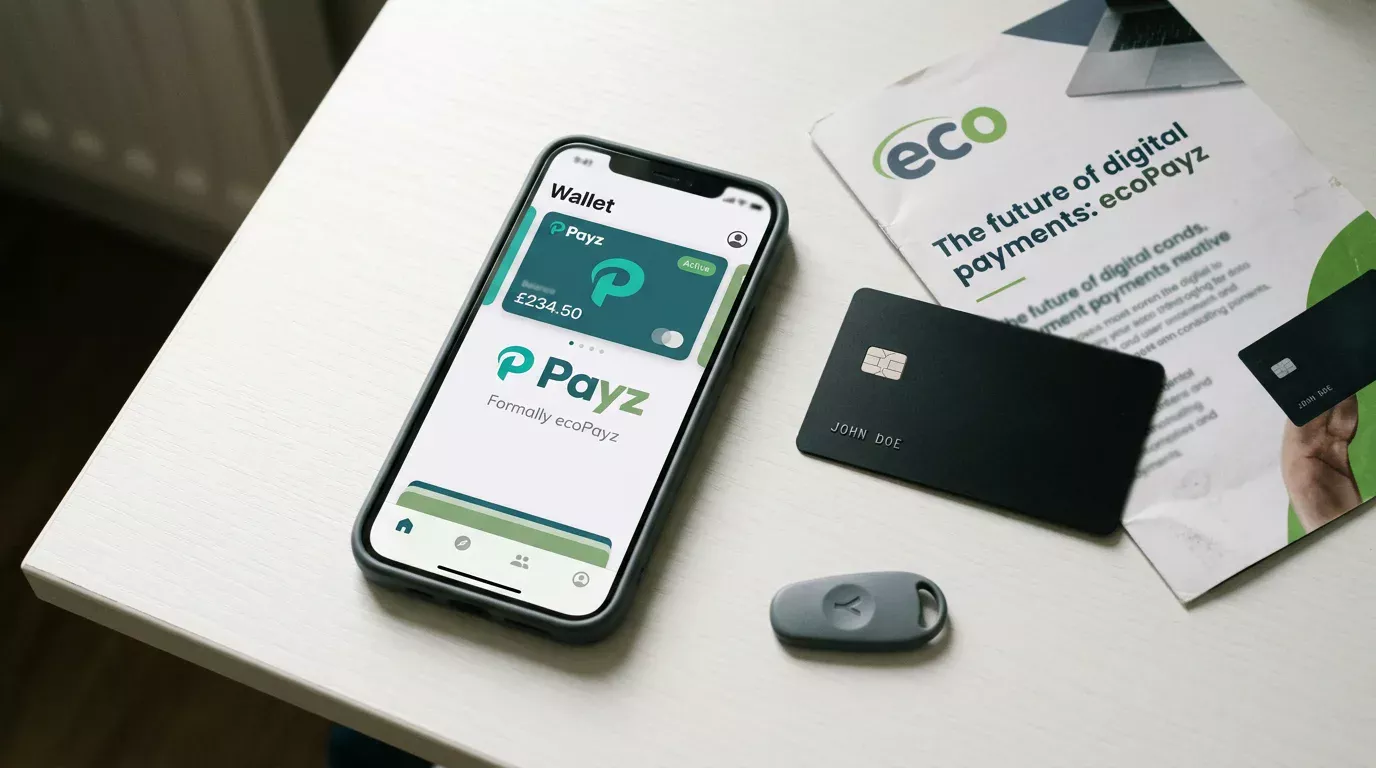
An e-wallet is a stored-value account with its own balance, regulated separately from your bank. You top it up from a bank account or card; the wallet then funds the casino. The casino sees only the wallet's transaction reference, not your bank details. With a Visa debit deposit, the casino's acquiring bank pulls funds straight from your account through the card network. With Payz, your bank moves money to PSI-Pay, then PSI-Pay moves money to the casino. Two hops. That second hop changes the speed profile, the privacy profile, and the dispute profile.
The structural consequence is something most cashier guides miss. Because the casino never touches your bank, it also never produces a card-scheme dispute record. There is no Visa or Mastercard chargeback path through a Payz transaction. You can complain to the operator, escalate to PSI-Pay, or take it to the Financial Ombudsman or IBAS — but you cannot file a Section 75 claim against the casino through your card issuer the way you might for a card deposit. That is a permanent feature of the rail, not a quirk.
PSI-Pay Ltd — the FCA-authorised electronic money institution that issues the Payz wallet. It is the legal counterparty for your wallet balance, not the casino. PSI-Pay also holds authorisation in Canada through FINTRAC and operates wallet services across 174 countries.
FCA (Financial Conduct Authority) — the UK regulator that licenses payment institutions and e-money issuers. An FCA-authorised wallet is not the same as an FSCS-protected bank deposit; safeguarding rules differ, and protections in a wind-down sit lower in the priority stack.
The British footprint matters because the FCA register entry is what your money depends on if PSI-Pay ever fails. FCA authorisation is not FSCS protection — your Payz balance is safeguarded rather than deposit-protected, and the two phrases are not interchangeable. The safety cluster covers the wind-down mechanics in detail.
What Changed in May 2023 — And What Did Not
The 2023 rebrand is one of the most misread events in UK e-wallet history. The wallet did not change owners, did not lose its FCA authorisation, and did not require existing customers to redo KYC. What changed was the marketing surface: a new name, a new logo, and the retirement of the physical ecoCard prepaid Mastercard. The ecoAccount identifier stayed. The ecoVirtualcard — a single-use virtual Mastercard generated from the wallet balance — kept its product name.
Why rebrand? The "eco" prefix had been awkward for a decade, implying an environmental positioning the company never developed and confusing new users searching for green payment options. "Payz" is shorter and fits inside a cashier's icon strip. The relevant fact for players is that the underlying compliance machinery did not break — KYC clean in April 2023 stayed clean in June 2023, the wallet kept operating across 174 countries, and the FCA register entry continued unchanged. The fallout I still see at the cashier today is cosmetic: some operators show "ecoPayz", some show "Payz", a few show "Payz (formerly ecoPayz)" to head off customer-support tickets.
The UK Rules That Shape Every Payz Casino Deposit
If you want to understand why a Payz cashier behaves the way it does in 2026, stop thinking about Payz on its own and start thinking about the three regulators stacked on top of it. The FCA cares about how PSI-Pay holds your money. The UKGC cares about how the casino spends it. HM Treasury, through the November 2025 budget duty rises, cares about how much the casino keeps. Each layer pushes friction down into the cashier, and the wallet is where you feel it.

Start with the regulator pair most people conflate. The FCA authorises and supervises PSI-Pay as an electronic money institution. That covers safeguarding of funds, AML compliance, and the technical floor for how Payz handles transactions. The UKGC has no direct say over Payz itself — its remedies run through the casino's operating licence. If the operator accepts Payz but fails to enforce the £150 vulnerability check, the UKGC sanctions the operator, not PSI-Pay.
Credit cards have been banned for gambling deposits in Great Britain since 14 April 2020. The ban applies whether you pay the casino directly with a credit card or route through an e-wallet that was itself funded by a credit card. Before the ban, 5.7% of all UK online gambling deposits were made by credit card, and 22% of credit-card gamblers met the threshold for problem gambling — the ratio that drove the UKGC's case for prohibition. PSI-Pay enforces the rule at funding-source level for UK customers.
Stake limits are the second compression layer. Since 9 April 2025, online slot stakes have been capped at £5 per spin for adult players. Since 21 May 2025 the cap drops to £2 per spin for players aged 18 to 24. These are stake caps, not deposit caps — Payz itself does not enforce them, but the slot game running on the operator's server does. The deposit you place via Payz can be £200, but if you load a slot you cannot wager more than £5 a spin.
Andrew Rhodes, the UKGC's chief executive, framed the broader balancing act bluntly: "We have to get the balance right between protecting people from the potentially life-ruining effects of gambling-related harm and respecting the freedom of adults." The cashier is where that balance is operationalised. When a Payz deposit triggers a vulnerability check, declines for a funding-source reason, or routes to enhanced due diligence, you are looking at the UKGC's protective lever pulling on top of PSI-Pay's authorisation.
Three regulators above, one wallet below — and the cashier is where they all converge on your screen.
The third compression layer arrives in April 2026 — Remote Gaming Duty rises from 21% to 40%, with general betting duty climbing from 15% to 25% from April 2027. The duty hits the operator, not you, but operator margins compress and cashier behaviour adjusts: tighter bonus terms, longer minimum-deposit thresholds, more conservative withdrawal cycles. It belongs in the regulatory frame because it walks into the cashier just like the £5 stake cap.
How UKGC-Licensed Operators Handle Payz in 2026
Open ten UK casino cashiers side by side and you see roughly the same payment menu — debit cards on top, two or three e-wallets in the middle, a mobile pay option pinned to the side, then a long tail of region-specific rails. Where Payz sits varies more by operator vintage than by anything technical. Brands that built their cashier in the mid-2010s tend to list Payz prominently. Operators launched after 2022 sometimes skip it in favour of newer rails like Trustly or Apple Pay.

60%
UK online casino players still default to debit cards as their primary deposit method.
47%
Year-on-year growth of Apple Pay and Google Pay in UK casino payments through 2025.
30%
Approximate share of UK casinos with Apple Pay enabled at the cashier.
174
Countries where the Payz wallet is operational under PSI-Pay Ltd.
The mobile wallet shift matters because the two rails compete for the same slot in your habits. Apple and Google route through tokenised debit cards, which means an Apple Pay deposit at a UK casino is effectively a card deposit under the bonnet — same FCA path, same banking rail, same disputable status. Payz is a different beast: stored balance, e-money authorisation, separate AML chain. The two coexist rather than substitute.
Established e-wallet adopters
Operators that have offered Payz since the ecoPayz era. Cashier flow is mature, withdrawal routing is well-established, and the wallet often appears in the second row. KYC overlap between Payz and casino is minimal in practice.
Specialist payments operators
UKGC-licensed brands leaning heavily on alternative rails. Payz appears alongside Trustly, Neteller, MuchBetter. These cashiers handle e-wallet bonuses unpredictably — sometimes excluding, sometimes treating on par with cards.
Mobile-first entrants
Newer UKGC licences with cashier stacks built around mobile-first rails. Payz availability is patchier; some launch with it on day one, others add it after the first quarter once volume justifies the integration cost.
One pattern worth knowing: payment menus are not symmetrical. A casino can accept Payz for deposits while paying out only to debit card or bank transfer, and the inverse exists too. If you intend to use Payz at both ends, check the withdrawal section of the cashier, not just the deposit one — the asymmetry usually sits three clicks deep in the support article.
Depositing With Payz: The Cashier Flow, End to End
Picture the moment you click "Deposit" at a UK casino with Payz selected. In the next 30 seconds, four parties interact — the operator, PSI-Pay, the casino's payment processor, and your bank or card issuer behind the Payz balance. In a clean transaction it feels instant. When something goes wrong, the diagnosis depends on which of those four parties failed. I outline the structural shape here and walk into the cluster article for the full troubleshooting tree.
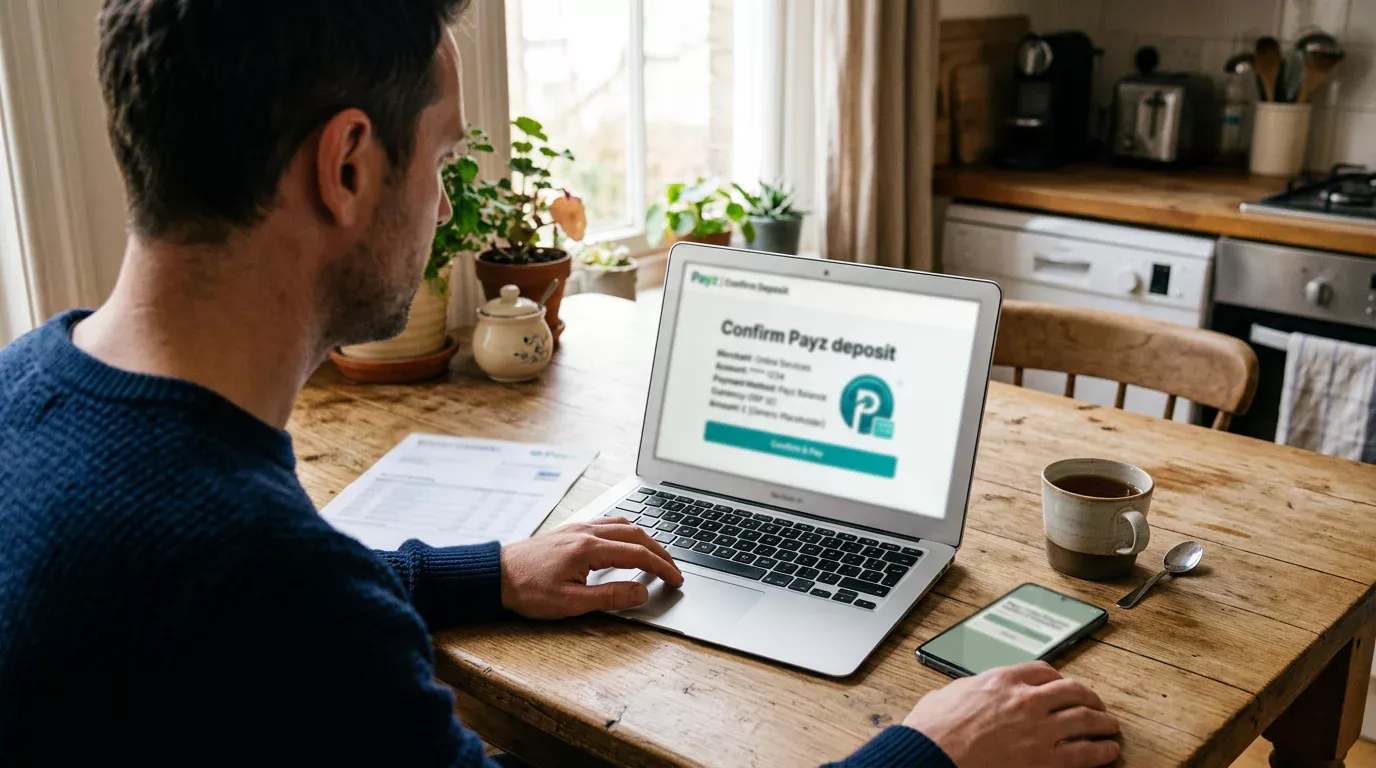
Before you open the cashier, you should have:
- An active Payz account with completed KYC at PSI-Pay (proof of identity, proof of address).
- A positive balance in Payz in a currency the casino accepts, or accept the 2.99% conversion if they differ.
- A UKGC operating-licence check on the casino — the number lives in the footer and on the public UKGC register.
- 2FA enabled on the Payz side; some cashiers will prompt for it mid-transaction.
- Casino KYC at the deposit level (often relaxed for first-time deposits but tightened before first withdrawal).
The deposit itself runs through six steps. You log in to the casino, open the cashier and select Payz, enter an amount (typically £10 minimum, sometimes £20, occasionally as low as £5), get redirected to a Payz authentication screen where you confirm with 2FA if enabled, and the transaction posts with your casino balance updating in seconds. PSI-Pay confirms to the casino via a back-channel that funds have moved out of your wallet into the operator's holding account. Behind the scenes all four parties run AML checks; the heaviest fire on the first deposit and on round-number amounts near vulnerability thresholds.
For the deposit mechanics in detail — including exact troubleshooting steps when a transaction sits in "pending", how to interpret error codes, and how to verify a deposit credited — see the dedicated walk-through on how to deposit at an ecoPayz casino, which I keep updated as cashier UIs change.
£100 deposit from a UK Payz wallet to a GBP-denominated UK casino (illustrative)
Step 1: Wallet balance £100, currency GBP, account tier Classic.
Step 2: Cashier deposit form — select Payz, enter £100.
Step 3: Redirect to Payz authentication; 2FA push confirmed.
Step 4: PSI-Pay confirms transfer to operator's holding account.
Step 5: Casino fee at the cashier — typically £0 in the UK, operator-absorbed.
Step 6: Payz fee for a GBP-to-GBP transaction — £0, no FX trigger.
Step 7: Net credited — £100 in the casino balance within seconds.
The same transaction at a EUR-denominated casino would attract the 2.99% FX margin from Payz, taking the net deposit closer to £97.
The deposit flow is the easy half of the relationship. The expensive surprises sit on the withdrawal side.
Withdrawing to Payz: How UK Cashiers Split Processing and KYC
The most common message I get is a screenshot of a "pending withdrawal" with the question "is something wrong?" Usually nothing is. The UKGC's affordability and KYC architecture sits between you and your payout in a way that the deposit flow does not, and "pending" is the cashier's neutral word for "we are doing the legal work we deferred when you deposited". Payz is not what slows the withdrawal — your casino's compliance queue is.
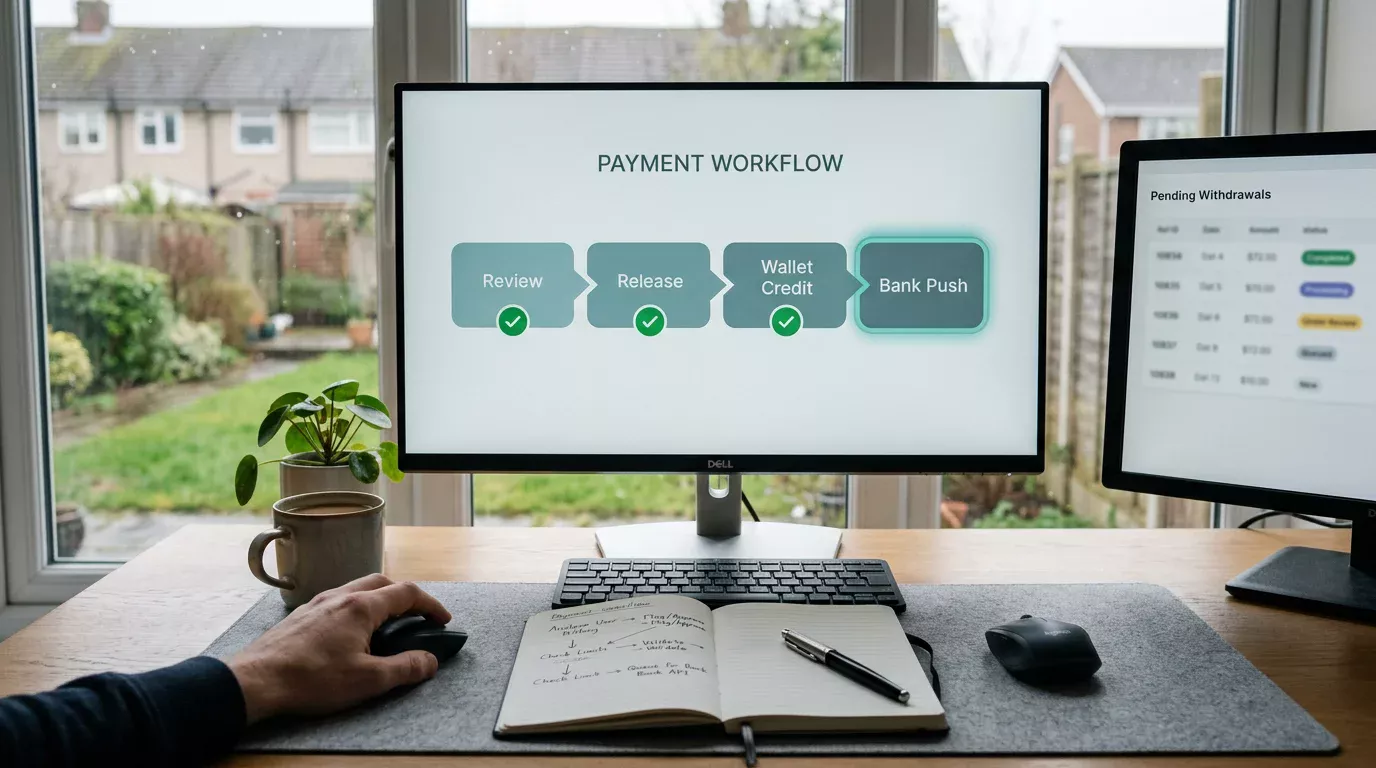
A Payz withdrawal moves through four stages. Stage one is operator review: the cashier flags the payout for manual or automated processing, runs an internal KYC pass, and checks deposit history for source-of-funds signals. Stage two is release — funds leave the casino's holding account and enter PSI-Pay's queue. Stage three is wallet credit, with any tier-based fee applied. Stage four is external rail, if you transfer onward to your bank.
The good news on stage one is that affordability checks pass more cleanly than the early discourse suggested. In the UKGC's stage-two pilot of frictionless financial risk assessments, 97% of checks passed without customer-side friction at all, well above the 80% threshold set out in the 2023 White Paper. Most withdrawals do not stall on affordability; they stall on something more banal, like a mismatched name between casino KYC and Payz KYC.
What to do at the withdrawal stage
- Complete full casino KYC before the first withdrawal, not after — the operator holds the payout until KYC settles, and back-and-forth on documents costs days.
- Match the name on Payz exactly to the name on the casino account; punctuation and middle-name conventions matter.
- Withdraw to the same Payz wallet you deposited from — operators apply closed-loop policy by default.
- Request withdrawals during operator cashier hours; many UK back-offices process payouts Monday to Friday.
What to avoid
- Submitting then immediately cancelling a withdrawal — this can trigger reverse-withdrawal review even though UKGC banned the mechanism itself.
- Splitting a withdrawal across multiple wallets to dodge tier limits; operators flag this pattern.
- Changing Payz tier mid-withdrawal — the fee that applies is the tier at completion, and a downgrade can void the request.
- Treating "approved by cashier" as "funds in wallet"; the two events can be hours or days apart.
Indicative timeline for a £500 withdrawal to a Silver-tier Payz wallet
Operator review: 0–24 hours, longer if KYC clears the same day.
Release to PSI-Pay: typically same business day after approval.
Wallet credit: minutes after PSI-Pay confirmation.
Payz withdrawal fee: a small fixed amount that scales with tier.
Onward transfer to a UK bank via Faster Payments: same day during banking hours.
For the full breakdown of what triggers each stage, how reverse-withdrawal-ban rules interact with Payz routing, and what to do when a withdrawal stalls past the typical timeline, see the dedicated guide to ecoPayz casino withdrawals.
What Payz Costs at a UK Casino: The Fees You Actually Pay
"Fee" is not a single number — five separate cost layers sit on a Payz casino transaction, and most articles flatten them into one figure that does not match anything on a statement. Payz is moderately expensive among UK e-wallets, but the expensive bits are predictable, and you can avoid most of them with planning.
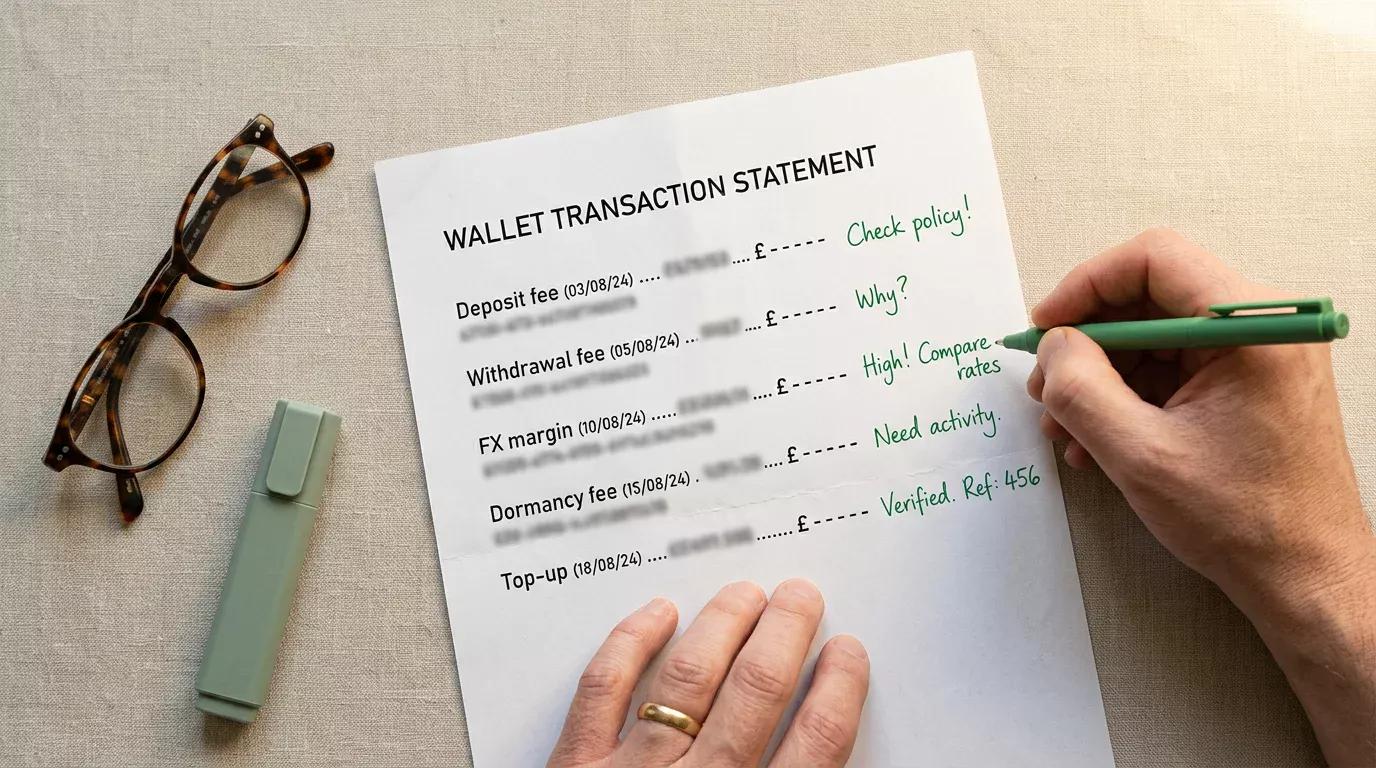
| Fee type | When it triggers | Who charges it | Typical level in 2026 |
|---|---|---|---|
| Deposit fee | At cashier confirmation | Operator (sometimes Payz) | £0 at most UK casinos; operator-absorbed |
| Withdrawal fee | At payout request | Operator and Payz | Fixed by tier; scales from a small flat fee at Classic to lower at top tiers |
| Currency conversion (FX) | When wallet and casino currencies differ | Payz | 2.99% over the wholesale rate |
| Dormancy fee | After 12+ months of inactivity | Payz | Monthly flat charge until balance is zero or activity resumes |
| Card top-up fee | When funding the wallet from a card | Payz (sometimes card issuer) | Variable; typically a small percentage |
Compare that to the deposit-side economics of a competing rail. Skrill generates roughly 67% of its revenue from transaction fees — a useful benchmark for what an e-wallet running on a similar fee model looks like at scale. Payz is structured similarly: the 2.99% FX margin and the tiered withdrawal schedule are the wallet's primary revenue lines, not deposit fees. Operators absorb deposit-side cost because they want the deposit to feel free at the point of sale.
The 2.99% FX fee is not 2.99% of your deposit — it is 2.99% on top of the wholesale interbank rate at the moment of conversion. On a £100 deposit at a EUR-denominated casino, that is roughly £3 in real terms, but the exact figure depends on the GBP-EUR spread on the day. The wholesale rate visible on currency websites is not the rate Payz uses.
The April 2026 Remote Gaming Duty rise from 21% to 40% compresses operator margins, and the second-order effect at the cashier is something I have already started to see: tighter minimum deposits for promotions, more conservative withdrawal cycles, selective tightening of e-wallet bonus eligibility. The duty does not fall on you directly through Payz, but its incidence works through operator pricing.
For the full fee structure including the tier-by-tier withdrawal schedule, dormancy timeline, FX worked examples, and how operator-side fees vary by cashier age, see the complete ecoPayz casino fees breakdown.
The Payz Cashier Cost Model
Most guides quote one fee. A real Payz year is five separate cost layers, and your account tier re-prices all of them. Enter your cashier rhythm and the model rebuilds your twelve-month rail cost, layer by layer, at every tier.
Model assumptions — edit to match your own schedule
These are the model's starting figures, not quoted tariffs. Fee schedules move, operators absorb different amounts at the cashier, and your own tariff sits in your Payz account. Change any number here and every figure above recalculates.
How to read this. The model prices the rail, not the play. It says nothing about whether a session is worth taking, and a lower rail cost is not a reason to move more money. Figures are illustrative and independent of any operator. 18+. Only stake what you can afford to lose. Free, confidential support is available 24/7 from GamCare on the National Gambling Helpline.
Payz vs Skrill, Neteller and PayPal at UK Casinos
"Should I use Payz or Skrill?" is the question I get asked weekly, and it has no universally correct answer. Each wallet is optimised for a slightly different set of constraints, and the right one depends on your deposit size, privacy preference, bonus T&Cs, and whether you run multi-currency. What I can offer is a side-by-side that shows where each wallet wins on a specific axis.
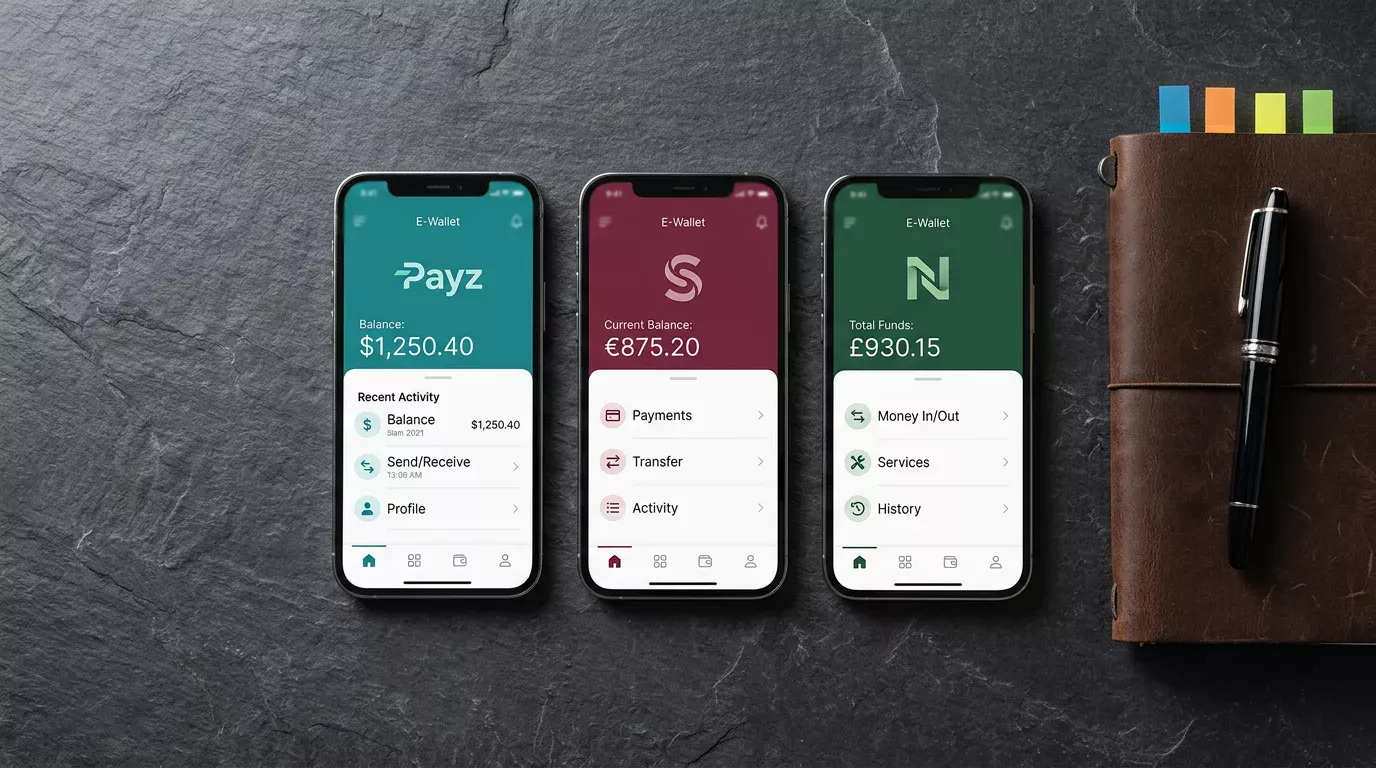
| Criterion | Payz (PSI-Pay) | Skrill (Paysafe) | Neteller (Paysafe) | PayPal |
|---|---|---|---|---|
| UK regulator | FCA (e-money) | FCA register 900001 | FCA (Paysafe Group) | FCA (UK ops) |
| UK casino coverage | Mid; wider at established brands | Wide; near-universal | Wide; near-universal | Selective; many block |
| Typical deposit cap | Tier-dependent | Up to £20,000 | Up to £10,000 onward route | Operator-dependent |
| FX fee | 2.99% over wholesale | ~3.99% typical | ~3.99% typical | Variable |
| Withdrawal speed | Hours to one business day | Hours to one business day | Hours to one business day | Variable; can be slower |
| Bonus eligibility | Often excluded | Often excluded | Often excluded | Sometimes excluded |
Paysafe Group — the parent company of Skrill, Neteller and Paysafecard. The three rails share infrastructure and FCA registration but maintain distinct cashier identities. A casino that blocks one Paysafe wallet often blocks the others by policy, not by technical limitation.
Skrill's FCA register entry (number 900001) is the cleanest single-line credential among UK e-wallets — it sits at the top of the historical register, marking how long the entity has been authorised. Payz, through PSI-Pay, is authorised on the same regulatory footing. Both rails clear the same compliance bar; the difference at the cashier is volume and integration depth, not safety profile.
The mobile wallet question has shifted hardest in the last 18 months. Apple Pay and Google Pay casino deposits grew roughly 47% year-on-year in 2025, and UK casino integration with both rails has climbed sharply. They are not Payz alternatives in the strict sense — they are tokenised card wrappers, not stored-balance wallets — but they compete for the same cashier slot. If your reason for using Payz is convenience, mobile pay often beats it on speed and fee transparency. If your reason is the stored-balance buffer between bank and casino, mobile pay does not replicate that.
The full method-by-method breakdown — FX cost, dispute mechanisms, bonus interaction, and how each rail behaves with the UK credit card ban — sits in the dedicated comparison of ecoPayz against Skrill, Neteller and PayPal.
Is Payz Safe? The FCA, PSI-Pay and What UKGC Adds on Top
The most common safety misconception I encounter is the assumption that "FCA-authorised" means your wallet balance enjoys the same protection as money in a current account. It does not, and the distinction matters most when something goes wrong. PSI-Pay is authorised as an electronic money institution, which means funds backing your wallet are safeguarded — held in a segregated account at a bank — but not deposit-protected under the Financial Services Compensation Scheme. In a wind-down, safeguarded funds sit above general creditors but below FSCS-protected bank deposits in the priority stack.
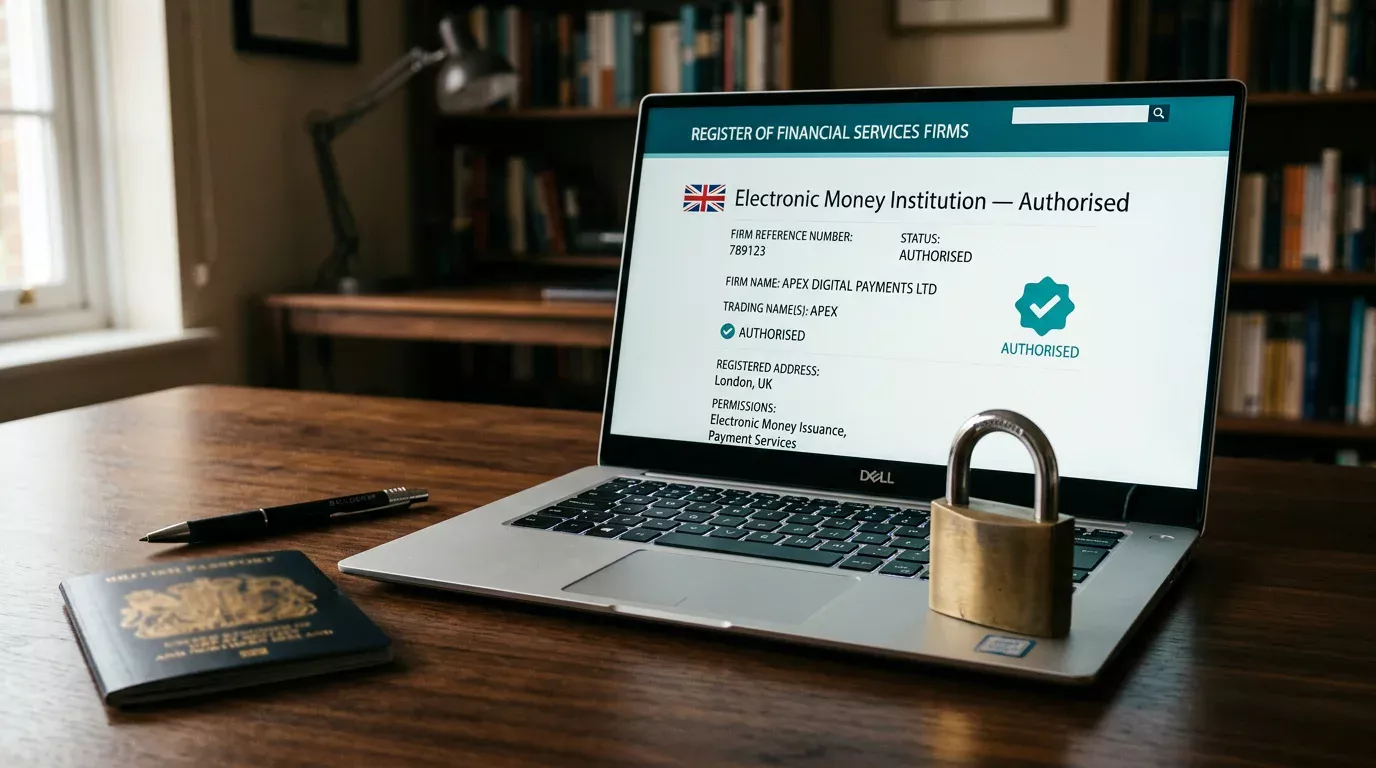
The technical floor at the wallet level is solid. Payz transactions are encrypted with 256-bit SSL, PSI-Pay maintains PCI DSS compliance for cardholder data, and two-factor authentication is available for both login and transaction confirmation. The security baseline is industry-standard for an FCA-authorised e-money institution, and it has not materially changed since the 2023 rebrand.
UKGC sits one layer above the wallet, and that layer is where most of the player-protection muscle lives in 2026. The Commission's enforcement footprint in 2025–26 included 741 cease-and-desist notices issued to unlicensed operators, with around 398,000 illegal URLs forwarded to search engines and roughly 267,000 of those taken down. That work keeps illegal "Payz casinos" off Google's first page for UK users; the rails themselves are not safer than the operators using them, and an unlicensed operator accepting Payz is unsafe regardless of how the wallet is authorised.
"The checks we have been piloting will not even attempt to make an assessment of what each customer can afford to gamble." — Tim Miller, Executive Director of the UKGC, framing how the regulator's affordability work overlays the cashier without replacing it. The wallet is one input among several that the operator weighs against the customer's profile.
The practical safety question decomposes into three sub-questions. Is PSI-Pay authorised and supervised? Yes, by the FCA with proper safeguarding. Is the casino licensed by the UKGC? Check the licence number in the footer against the public register. Is the cashier flow technically sound? Broadly yes — the encryption and 2FA story holds, and the rail has not had a notable breach event in the period I have been tracking it. Safety breaks at the operator end far more often than the wallet end.
The deep version of this question — including the safeguarding framework in detail, how 2FA interacts with cashier sessions, and the specific red flags that signal an unlicensed operator dressed up as a Payz casino — is covered in the safety and FCA cluster on ecoPayz at UK casinos.
E-Wallet Bonus Exclusions: Why Payz Often Falls Outside Welcome Offers
Open the terms and conditions of almost any UK welcome bonus and somewhere around clause 11 or 12 you will find a line that reads "deposits made via e-wallets do not qualify for this promotion". I have read hundreds of these clauses, and the pattern is consistent enough to be a structural feature rather than an oversight. Payz is on the exclusion list at a majority of UK operators, and so are Skrill, Neteller and sometimes PayPal.
The reason has more to do with operator economics than the wallet itself. Casinos run promotional models on assumed lifetime value, and e-wallet customers historically converted at lower margins because wallets made it easier to cash out winnings before wagering requirements were met. The cashier-side response was to bracket bonus eligibility around debit cards, where the deposit-to-bonus-to-wager chain was more predictable. Payz inherits this exclusion by association, not by any decision PSI-Pay made.
Whether e-wallet bonus exclusion is legal under UK consumer law has been litigated indirectly through Advertising Standards Authority rulings, but the standing position is that exclusion is permissible if disclosed clearly in the T&Cs at registration. The UKGC's interest is in whether the exclusion is hidden or misleading, not whether it is fair to e-wallet users.
What to check before assuming a Payz deposit qualifies
- Read the eligible-payment-methods clause in the bonus T&Cs.
- Look for "deposits via Skrill, Neteller, ecoPayz or Payz" — sometimes wrapped as "e-wallets and selected alternatives".
- Check the bonus FAQ for the operator's specific wallet exceptions.
What signals a hidden exclusion
- A promotion listing "all major payment methods" without specifying exclusions.
- A bonus that credits visibly but disappears the moment you trigger withdrawal.
- Wagering requirements changing retroactively when a Payz deposit is detected.
The 2026 picture is shifting under the Remote Gaming Duty rise. Operators recouping margin will not soften e-wallet exclusions; if anything, bonus structures are tightening across the board. If a UK casino welcome bonus is pulling you to the operator, the Payz deposit decision needs to follow the T&Cs in detail — bonus first, wallet second.
Classic, Silver, Gold, Platinum, VIP: Why Your Payz Tier Matters at the Cashier
Most cashier guides ignore the tier system entirely, which is strange because tier is the single biggest predictor of what your wallet will cost you over a year of casino activity. PSI-Pay runs five account tiers — Classic, Silver, Gold, Platinum, VIP — and each one moves three things: the fee schedule, the limit ceiling, and the speed of identity-related approvals at the wallet level. Tier does not change how the casino treats you. It changes how the wallet treats the transactions you push through it.

| Tier | Position in stack | Fee impact | Practical effect at cashier |
|---|---|---|---|
| Classic | Entry; default on signup | Highest withdrawal fee per transaction | Suitable for occasional users; higher per-payout cost erodes small wins |
| Silver | Light verification required | Slightly lower withdrawal fee | Realistic tier for monthly casino users |
| Gold | Volume-based progression | Reduced fee floor | Cost-efficient for multiple deposits per month |
| Platinum | Sustained activity threshold | Lower fees plus higher ceiling | Mid-stake regulars; better FX terms in some cases |
| VIP | Top tier; relationship-managed | Lowest per-transaction cost | High-roller territory; concierge support and elevated limits |
Tier downgrade — Payz can return a customer to a lower tier if activity drops below the threshold required to maintain it. The downgrade applies to future transactions and does not retroactively change fees on completed ones. This is one of the few wallet mechanics that can change your costs without you doing anything different.
The interaction with the casino is indirect but real. A higher Payz tier does not buy faster operator approval — that runs on the operator's KYC — but the wallet-side leg completes at lower cost and with higher caps. If you withdraw £400 four times a month, the per-transaction fee at Classic compounds into a meaningful annual cost; the same activity at Gold or Platinum compresses that cost substantially. PSI-Pay's 174-country footprint is reflected in the tier system, designed for cross-border users moving multi-currency balances rather than purely UK-domestic casino flow.
Payz, the £5 Stake Limit and the £150 Vulnerability Check
If you have read this far, you already know that the £5 slot stake limit and the £150 vulnerability threshold are real operational levers at the cashier. This section is about how they intersect with a Payz wallet specifically, and about the harm context that justifies them. I will not soften the numbers. The Gambling Survey for Great Britain 2024 found 2.7% of British adults score 8 or higher on the Problem Gambling Severity Index, with another 3.1% at moderate risk and 8.8% at low risk. Among 18 to 24-year-olds the PGSI 8+ rate climbs to 5.3% — the highest among any age band — the data behind the lower £2 stake cap for that cohort introduced in May 2025.

The £5 stake limit became enforceable on 9 April 2025 for adult slot players, and on 21 May 2025 for the 18–24 group at £2 per spin. Both caps run on slot game logic at the operator's server. Your Payz deposit does not interact with these limits at all — the £200 you load via Payz can sit in the casino balance, but you cannot stake more than £5 per spin on a slot. Stake limits restrict the rate of loss, not the deposit ceiling.
The £150 financial vulnerability threshold is a different mechanism. From 28 February 2025, UKGC reduced the trigger for a vulnerability check from £500 to £150 per 30-day rolling period. Andrew Rhodes framed the change at the BGC AGM that February: "Tomorrow financial vulnerability thresholds fall to £150 per 30-day rolling period and as others have mentioned today, we are still piloting Financial Risk Assessments and that pilot is well advanced." The check happens at the operator level against your aggregate deposit pattern, and Payz is one input among several. The wallet is not opaque to the operator — your deposit total, frequency, and pattern are visible — but the casino does not see your underlying funding source.
Three Payz deposits of £60 in a single rolling 30-day window do trigger the £150 check, because the check is on aggregate deposits to the casino, not on individual transactions. The check is not unique to Payz; it fires across all payment rails feeding the same operator account. There is no wallet you can route through to avoid it at a UKGC-licensed casino.
If gambling stops being fun, the resources you need are not behind a Payz cashier setting. GamCare, the NHS Gambling Treatment Service, and the GAMSTOP self-exclusion scheme are the three tools that work in 2026. GAMSTOP enrolment blocks you from registering at every UKGC-licensed operator for the period you choose; the scheme is independent of any payment method, including Payz.
Zoë Osmond of GambleAware framed the harm risk in 2025 with language the cashier industry should engage with more directly: "No form of gambling is completely without risk. However this new research shows that there are some particular types of gambling which can lead to an increased chance of experiencing gambling harm." Online slots — the format most often funded by e-wallets — sit at the higher-risk end of that scale, which is why both the stake cap and the vulnerability check land hardest on this part of the cashier.
The Numbers Behind 2026: UK Gambling, Black Markets and the E-Wallet's Role
I want to close the analytical part of this guide with a wider lens, because the way Payz is regulated in 2026 only makes sense inside the bigger market picture. The UKGC's industry statistics for April 2024 to March 2025 show a regulated British gambling market with £16.8 billion in gross gambling yield, up 7.3% year-on-year. Remote Casino, Betting and Bingo accounts for 46% of that yield, and online casino games alone produced £5.0 billion, with online slots driving £4.2 billion of it. Slots are the centre of the cashier conversation for a reason.
£16.8bn
Regulated British gambling GGY for 2024–25, up 7.3% year-on-year.
46%
Share of regulated GGY held by Remote Casino, Betting and Bingo.
£788m
UK online slots GGY in Q3 2025–26 — a third consecutive quarterly peak despite the £5 stake limit.
£16.6bn
Estimated UK offshore unregulated gambling market in 2025 — up from £5bn in 2019.
The most striking thing about that £788 million figure for Q3 2025–26 online slots is that it rose 10% year-on-year despite the £5 stake limit having been in force for the entire quarter. The cap compresses the per-spin maximum without compressing the player base; monthly active slot accounts ticked up 5% to 4.6 million in the same quarter. The cashier — Payz or otherwise — is processing more deposits per active player, not fewer.
Online slot sessions longer than one hour fell 16% year-on-year in Q3 2025–26 to 8.9 million, and the share of all sessions in that long bracket dropped from 6.2% to 4.4%. The stake limit appears to be shortening sessions while leaving overall engagement intact — a behavioural shift the UKGC explicitly cited as evidence the cap is working as intended.
The other half of the market does not show up in those numbers. H2 Gambling Capital estimates the UK offshore unregulated market at £16.6 billion in 2025, a 230%-plus rise from £5 billion in 2019, with channelisation — the share of UK gambling running through licensed operators — falling from 97% to 92% over the same period. Grainne Hurst, CEO of the Betting and Gaming Council, captured the trajectory: "What we are seeing is a harmful black market scaling up at pace. Illegal operators are becoming more sophisticated, more visible and more aggressive in how they reach UK customers." That market context is why I keep insisting on UKGC licence verification before depositing — the offshore alternative is not a safer free option.
The relevance to Payz is direct. Unlicensed operators sometimes claim to accept Payz, and the wallet's brand recognition lends false credibility. PSI-Pay's compliance work blocks most of those routes at funding-source level for UK customers, but the burden of operator verification still sits with the player.
FAQ: Payz at UK Casinos
Is ecoPayz (Payz) safe to use at UK online casinos?
Yes, in the sense that matters most: the wallet is operated by PSI-Pay Ltd, which holds full FCA authorisation as an electronic money institution and applies 256-bit SSL encryption with 2FA. Your balance is safeguarded in segregated bank accounts. The caveat is that "safeguarded" is not FSCS deposit protection, and the broader safety question depends on whether the casino at the other end holds a current UKGC operating licence. Check that number in the casino footer.
How do I deposit and withdraw at a casino with ecoPayz?
Depositing is a six-step flow at most UK cashiers: log in, open the cashier, select Payz, enter an amount, authenticate at the Payz redirect, and confirm. Funds credit in seconds. Withdrawals run through four stages — operator review, release to PSI-Pay, wallet credit, optional onward bank transfer — and typically complete inside one business day if KYC is clean. The detailed walk-through lives in the linked cluster articles.
What fees does ecoPayz charge when used at UK casinos?
Five separate cost layers: deposit fees (usually £0 at UK casinos, operator-absorbed), withdrawal fees (tier-dependent), 2.99% currency conversion when wallet and casino currencies differ, dormancy charges after extended inactivity, and card top-up fees when you fund the wallet from a card. On a GBP wallet to a GBP UK casino with regular activity, the only fee you reliably see is the per-withdrawal flat amount tied to your account tier.
Why was the eco Card name retired in May 2023 — what business reason drove it?
The "eco" prefix had been a marketing liability for a decade. It implied an environmental positioning the company never built a product story around, and confused users searching for green payment options. "Payz" is easier to render in cashier UIs, easier to internationalise across the wallet's 174-country footprint, and easier to position against Skrill and Neteller. The legal entity, FCA authorisation, and customer KYC database all stayed put.
Are e-wallet welcome bonuses still common in 2026, or have UK casinos cut them?
E-wallet exclusion from welcome bonuses has been the structural norm at UK casinos for years, and the April 2026 Remote Gaming Duty rise from 21% to 40% has not softened the position. Operators recouping margin have tightened bonus T&Cs further. A minority run wallet-friendly promotions separately, but the default assumption is that a Payz deposit will not qualify for a headline welcome offer unless the T&Cs explicitly include e-wallets.
Are Payz casino withdrawals genuinely instant, or is that marketing?
Marketing, mostly. The Payz-side credit can complete in minutes once the operator releases funds, but operator-side review typically runs up to 24 hours and longer when KYC is unsettled. "Instant withdrawal" usually means the wallet-credit stage is fast, not the full end-to-end timeline. A clean, well-verified account on a Friday afternoon will usually see funds in the wallet within hours; the same request on a Sunday or with KYC questions outstanding can take significantly longer.
Is ecoPayz licensed by the UK Financial Conduct Authority (FCA)?
The wallet's legal operator, PSI-Pay Ltd, is authorised by the FCA as an electronic money institution and has been for over a decade. PSI-Pay is also regulated in Canada by FINTRAC for its parallel operations there. The FCA authorisation covers safeguarding of customer funds, AML obligations, and the e-money operating framework. The casino accepting Payz is separately licensed by the UKGC; the two licences cover different parts of the chain.
Who Payz Actually Suits at a UK Casino in 2026
Payz fits a specific player profile: someone who wants a stored-balance buffer between bank and casino, runs a modest but regular cashier rhythm, and values the FCA-authorised e-money path over the speed of a tokenised card wallet. It is not the cheapest UK rail, not the fastest, and not the most bonus-friendly. What it offers is a mature, FCA-authorised wallet with a 174-country footprint, a clean rebrand from ecoPayz, and a structural separation between bank and cashier that does not exist in tokenised mobile pay.
If your activity is high-frequency, multi-currency, or genuinely high-stakes, the tier system is your friend — climb to Silver or Gold and the per-transaction cost compresses noticeably. If your profile is occasional, low-deposit, and welcome-bonus-driven, Payz is the wrong rail; a UK debit card gives you bonus eligibility you cannot replicate through an e-wallet. The regulatory frame in 2026 — the £5 stake limit, the £150 vulnerability threshold, the April RGD hike — applies the same way regardless of payment method, so picking Payz over a card is not a route around any of it.
The wallet I tracked in 2017 is not the wallet I track in 2026. The brand changed, the regulatory ceiling lowered, the operator landscape consolidated, and the cashier became smarter at its compliance work. What stayed the same is the structural logic: deposit fast, wait on the withdrawal, mind the FX margin if you cross currencies, and check the operator licence before you trust the rail. Read that as a working brief for the cluster articles, where each piece gets its own detailed treatment.
Articles
Payz vs Apple Pay
A reader asked me last spring which payment method I would choose if I could only pick one for UK casino play. I gave him the answer I should give…
Casinos That Accept Ripple XRP in the UK
A casino’s crypto claim is not confirmation: XRP must appear as a…
Deal or No Deal Casino UK: Slots and Game Versions
Deal or No Deal branding can cover different casino games, so each…
Casino Sites Not Registered with GamStop in the UK
GamStop applies to participating UKGC-licensed operators, not every gambling website, so its…
Created by the "Paylobby" editorial team.