
Curaçao Casino Licence UK: What It Means
 Available in GB
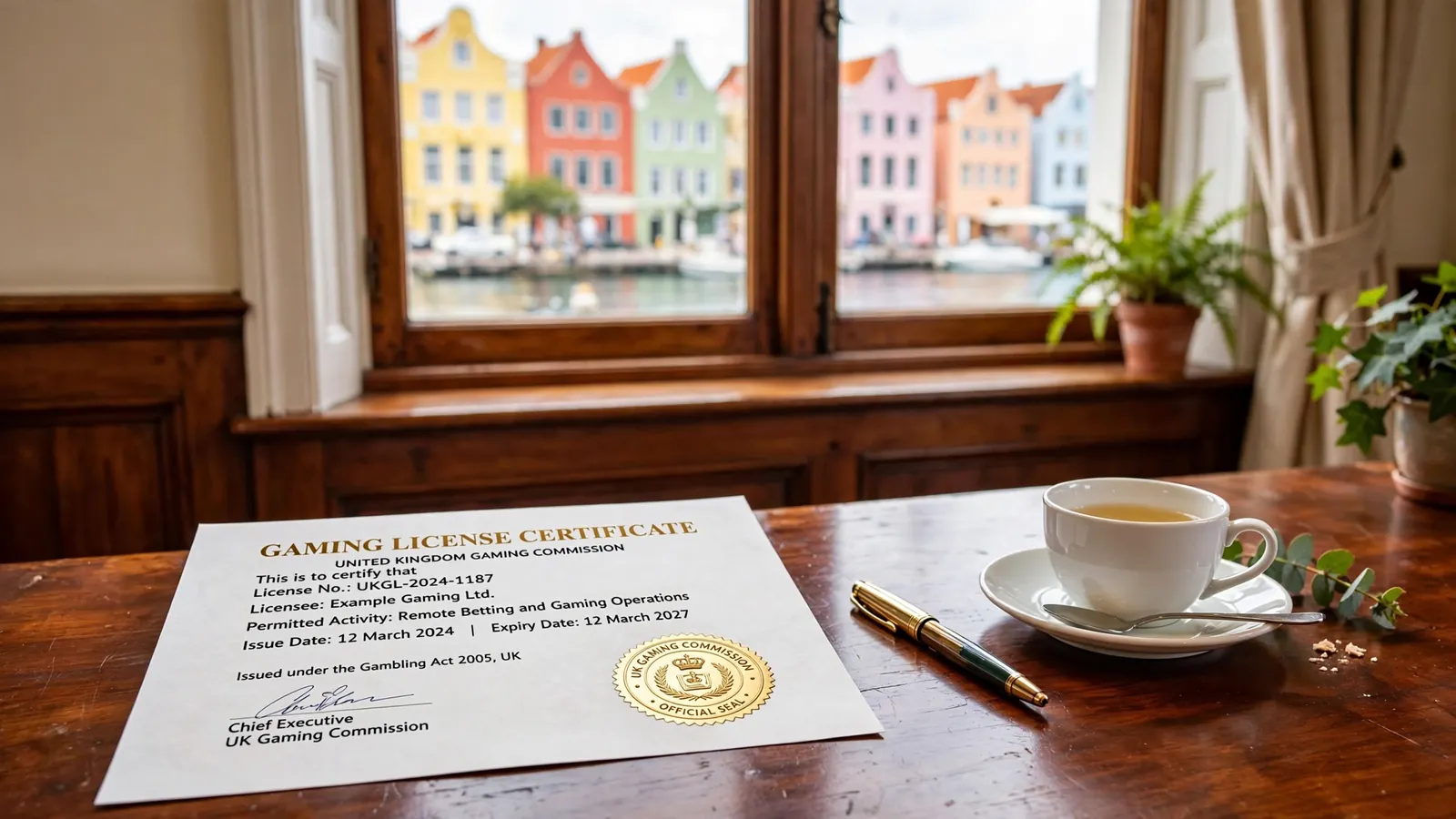
A foreign gambling licence is not UKGC oversight, and its label alone does not establish a casino’s full status.
What “offshore casino” means in the UK
In UK discussions, “offshore casino” is commonly used for an online gambling site that operates outside the oversight of the UK Gambling Commission (UKGC). A clearer description is often “non-UK-regulated casino”: it identifies the important point without suggesting that every site has the same location, licence or operating arrangements.
The term can be misleading if it is taken to mean that a casino has no regulator at all. Non-UK-regulated casinos may be licensed by authorities in other jurisdictions. Malta, Curaçao, Gibraltar and Anjouan are among the places that may issue licences to online gambling businesses. A licence from one of those jurisdictions is not the same thing as UKGC oversight, however. “Offshore” describes the site in relation to the UK regulatory system; it does not, by itself, explain the full status of the operator.
That distinction matters when you encounter phrases such as “Curaçao casino sites” or “Curaçao online casinos UK”. They refer to online casinos associated with a Curaçao licence or presented to UK readers under that label. The wording does not establish that a particular site is licensed, that its licence is current, or that it is overseen by the UKGC. Nor does the presence of a foreign licence turn it into a UK-regulated casino.
People may also use “online casinos in Curaçao” to mean different things. They might be referring to a business licensed there, a site that says it is licensed there, or simply a casino described in promotional material as Curaçao-based. Those descriptions are not interchangeable. A label on a page is a claim about the operator, not a regulator’s confirmation of what oversight applies.
The same caution applies to “UK Curaçao casinos” and “Curaçao casinos UK”. These phrases can sound as if they name a recognised category within the UK system. They do not. They combine a jurisdictional label with a reference to the intended audience, but tell you little on their own about the relationship between a particular operator and UK regulation. The key distinction remains whether the casino operates under UKGC oversight or outside it.
Casino Without a Swedish Licence: UK Legal Position
“Non-UK-regulated casino” is therefore useful as a broad category, not as a verdict on every detail of a site. It tells you that the UK Gambling Commission is not overseeing the casino. It does not tell you which overseas authority, if any, licenses it, what conditions apply under that authority, or how the operator handles a particular customer issue. Those points need to be considered separately rather than inferred from the word “offshore”.
A casino’s location and its regulatory status are also different questions. A company may be associated with a jurisdiction that licenses gambling businesses, while its website uses branding or promotional language aimed at people elsewhere. The place named in that material does not, by itself, settle what rules apply to the operator or show that a UK regulator supervises it. The name of a licensing jurisdiction should not be mistaken for a statement about UK oversight.
This is why broad lists of “best Curaçao online casinos” or “new Curaçao casino sites” can be an unreliable starting point for understanding the term. A ranking or listing may group sites by how they describe themselves, but the category alone does not confirm the status of each entry. Newness, popularity or inclusion in a list does not change the basic meaning of non-UK-regulated: the site operates without oversight from the UKGC.
For a UK reader, the label is most useful when it prompts a more precise question: who, if anyone, regulates the operator, and is that regulator the UK Gambling Commission? Naming Curaçao, Malta, Gibraltar or Anjouan points to a possible overseas licensing jurisdiction. It should not be read as another way of saying “UK-licensed”.
In short, “offshore casino” is a broad, informal description of an online casino outside the UKGC’s oversight. Some such casinos may hold licences from other jurisdictions, including Curaçao. The two facts should be kept separate: a foreign jurisdiction may license an operator, while the UK Gambling Commission does not oversee that casino.
Key Distinctions
- An offshore casino is a broad term for a site operating outside UK Gambling Commission (UKGC) oversight.
- A foreign licence (e.g., Curaçao) does not make a casino UK-regulated.
- The term “non-UK-regulated” identifies the lack of UKGC oversight regardless of other licences held.
- Location and regulatory status are separate; a foreign base does not replace the need for a UK licence to serve Great Britain.
What happens when an offshore casino serves UK customers
A casino’s registered office and the market it serves are separate matters. A company may be based outside Britain, but its location does not decide which rules apply when it offers remote gambling to customers in Great Britain. The key issue is where the service is being supplied, not where the operator says it is headquartered.
For operators offering gambling to customers in Great Britain, a UK Gambling Commission licence is required. That requirement applies whether the business is based in Britain or overseas. A company cannot avoid it simply by running its website from another country or describing itself as an international casino.
This distinction matters when you encounter a Curacao online casino or a site that says it operates from another jurisdiction. The overseas base may explain where the business is established; it does not, by itself, establish that the operator is authorised to serve Great Britain. If the operator is not overseen by the UK Gambling Commission, it is a non-UK-regulated casino. The description concerns its relationship with the British regulator, not the address shown on its website.
The service matters more than the address
Remote gambling can be offered through a website or other online service, so there may be no physical casino for a customer to visit. That can make an operator’s location seem like the most obvious detail to check. For regulatory purposes, however, a foreign base does not replace the requirement attached to serving customers in Great Britain.
USA Casinos for UK Players: Licensing Explained
A Curacao casino online may present itself as a business licensed or operated abroad. That tells you something about the way it describes its overseas arrangements, but it does not answer the separate question of whether it holds the licence needed for the British market. The same distinction applies to a casino based in any other jurisdiction: the location of the company and its authority to serve customers here are not interchangeable facts.
It is also worth keeping the scope precise. The rule described here concerns Great Britain: England, Scotland and Wales. Northern Ireland has a different legal position and should not be folded into a statement about the British market.
Why the distinction is easy to miss
Websites often foreground their brand, games, payment options or claimed licensing location. Those details can make an online casino Curacao operation look like a single regulatory category. In practice, the country where an operator is based and the market in which it provides gambling are distinct questions.
A search for a Curacao online casino list, or for what may be called the best Curacao online casino, may bring up sites that share a location or a licensing claim. Neither a list nor a shared label settles whether each operator has the required UK Gambling Commission licence. The name of a jurisdiction does not change the rule for supplying gambling services to customers in Great Britain.
The same applies when a casino describes itself as “offshore”, “international” or “available worldwide”. These terms do not establish the operator’s regulatory status in Britain. Nor does the fact that a site can be viewed online prove, on its own, that it is authorised to serve the British market. A site’s accessibility and the operator’s permission are different matters.
Regulatory Scope
The rules regarding the requirement for a UK Gambling Commission licence apply to Great Britain (England, Scotland, and Wales), while Northern Ireland has a different legal position.
What this means for the operator
The obligation rests on the business supplying the gambling service. An operator cannot rely on its overseas base as a substitute for a UK Gambling Commission licence when serving customers in Great Britain. In other words, the regulatory question follows the market being served, rather than stopping at the border where the operator is registered.
That is why a Curacao online casino licence, or a similar claim tied to an overseas location, should not be treated as an answer to the British licensing question.
For a reader comparing a casino online Curacao site with a locally regulated operator, it helps to separate three things: where the business is based, what licence it says it holds, and whether it has the UK Gambling Commission licence required for the British market. Those details may be presented together on a website, but they answer different questions. Keeping them separate prevents an overseas address from being mistaken for permission to operate in Great Britain.
A foreign licence is not a UKGC licence
A licence from another country and a licence from the UK Gambling Commission are different regulatory statuses. A non-UK-regulated casino operates without oversight from the UK Gambling Commission, even if it holds a licence issued elsewhere. The foreign licence may identify a jurisdiction connected with the operator, but it does not make the site UKGC-regulated.
Merkur Casino Online UK: Games and Player Checks
That distinction matters when you see a casino described as licensed, including one promoted as a Curaçao-licensed online casino. The word “licensed” is incomplete on its own: you need to know which authority issued the licence and what market that status relates to. A licence from Malta, Curaçao, Gibraltar or Anjouan is not a UK Gambling Commission licence.
For operators serving customers in Great Britain, the relevant status is a UK Gambling Commission licence, regardless of where the business is based. An overseas licence does not replace that requirement or become equivalent to it simply because it is displayed on a site. The location of a company and the regulator overseeing its gambling activity are separate questions.
This is why searches for Curaçao online casinos accepting UK players, casinos not on GamStop or real-money sites can blur unlike things together. A casino may be described as licensed abroad, and it may be accessible online, but neither description tells you that the UK Gambling Commission oversees it. Nor does a payment method, including cryptocurrency, change which regulator issued a licence.
A foreign licence can therefore establish a limited point: an operator claims a relationship with a licensing jurisdiction. It does not, by itself, establish UKGC oversight. It also should not be read as a general assurance that the rules, supervision or routes available to customers match those attached to a UKGC-licensed operator. The word “licensed” is not a portable badge.
The same distinction applies to listings of Curaçao eGaming casinos or lists of casinos said to accept UK customers. Grouping sites under a foreign licensing label does not turn that label into UK regulation. A heading, badge or promotional description cannot alter the identity of the authority involved.
Licensing Risk
A foreign licence from jurisdictions like Curaçao, Malta, or Gibraltar is not a UKGC licence and does not provide the same regulatory protections for UK players.
For a UK reader, the useful question is not simply whether a casino calls itself licensed. It is whether the status being claimed is a UK Gambling Commission licence. If it is a foreign licence instead, the operator remains outside UKGC oversight; the foreign status and the UK status should not be treated as interchangeable.
What the phrase “Curaçao casino licence” tells you—and what it does not
A Curaçao casino licence is a reference to a gambling licence associated with Curaçao, not a UK licence. Curaçao is one of several jurisdictions that may license non-UK-regulated casinos; Malta, Gibraltar and Anjouan are others. The phrase therefore points to a possible licensing jurisdiction, but it does not describe the protections or rules that apply to a particular site.
That distinction matters because a non-UK-regulated casino operates without oversight from the UK Gambling Commission. Naming Curaçao does not change that description or turn an overseas licence into UK regulatory oversight. Nor does the phrase, by itself, establish that a particular operator holds a current licence there. It may appear in a site’s own description, but a label is not the same thing as evidence about the operator behind it.
The wording can also make different claims sound interchangeable. “Licensed in Curaçao” might be used to describe the jurisdiction an operator says is responsible for its licence. It does not, on its own, tell you what conditions the operator must meet, how those conditions are enforced, or what help is available if a disagreement arises. Those details depend on the relevant framework and the individual circumstances; they should not be inferred from the place name alone.
Jackpot Mobile Casino UK: Types, Rules and Play
The same caution applies to Curacao casinos online that accept cryptocurrency. A site accepting Bitcoin is describing a payment option, not establishing the status or quality of its licence. “Bitcoin casino licensed in Curaçao” combines two separate claims: one about how customers may pay, and another about licensing. Neither claim verifies the other.
This is why searches for Curacao casinos or a Curacao casino licence can produce descriptions that are more confident than the phrase warrants. A foreign jurisdiction may license non-UK-regulated gambling sites, but the word “licensed” is not a complete account of what that status means for customers. It should not be read as a general seal of approval or as a promise that protections match those associated with a UK-regulated operator.
The careful reading is narrower: Curaçao is among the jurisdictions that may license non-UK-regulated casinos. The wording does not tell you, by itself, whether a specific operator is licensed, what its licence requires, or what safeguards follow from it. Treating those unanswered questions as settled would give the phrase more meaning than it carries.
Our top casino picks for the UK
- ChanzeBonus: Slots Welcome Bonus #1 200% up to €500 · Payout speed: 1-3 business days
- ZombillionBonus: Welcome Pack 250% up to £4000 + 200 FS · Payout speed: 1-3 business days
- NightLuckBonus: Welcome Pack + 805% Up To 6400€ + 280 FS · Payout speed: 1-3 business days
- AmunbetBonus: Join now and get 450% up to 2,700 GBP + 450 FS · Payout speed: 1-3 business days
- JetsetspinsBonus: 200% Bonus + 100 Free Spins + Free Royal Wheel · Payout speed: 1-3 business days
- NightWinBonus: £900 + 400 free spins · Payout speed: 1-3 business days
- EvoSpinBonus: 125% up to €2500 + 125 Free Spins · Payout speed: 1-3 business days
- BritsinoBonus: Welcome Package – Get your £2,200 + 2,000 FS · Payout speed: 1-3 business days
- BeOnBetBonus: 100% up to €500 + 100 FS · Payout speed: 1-3 business days
Can UK players use casinos licensed abroad?
The rules for a gambling business and the rules for a person using its service are not the same. The Gambling Act 2005 is directed at operators that supply gambling services into the UK market; it does not make the individual player its target. Separately, UK law does not specifically bar British citizens from using gambling services licensed in another country. A person who gambles on a site without a UK licence does not, on that account alone, commit a criminal offence.
Attention: While using an unlicensed site is not a criminal offence for the player, this does not mean the operator is authorised to serve you or that the site is safe.
That distinction answers only a narrow legal question. It does not mean that every overseas casino is authorised to serve people in Great Britain, or that a player has the same protections they would have at a UK-licensed site. Nor does the fact that a casino has a licence abroad settle whether its particular terms, conduct or services are safe for you. The operator’s position and the player’s exposure should not be treated as interchangeable.
This is why searches about whether Curaçao casinos accept UK players, or whether a Curaçao casino is legal in the UK, can lead to a misleadingly simple answer. A casino’s willingness to open an account for a UK resident does not itself establish that its service is lawful for the operator to provide here. And the fact that UK law does not criminalise the player merely for gambling on an unlicensed site is not an endorsement of the operator.
“Legal” can refer to different things in this context. It might mean whether a player risks criminal prosecution simply by placing a bet; it might mean whether the operator is entitled to offer that service in Great Britain; or it might be used loosely to ask whether the site is trustworthy. These are separate questions. The player-facing legal position is not a guarantee about the business, its licence, or what happens if a dispute arises.
The same caution applies to asking whether a Curaçao casino is safe. A foreign licence is not, by itself, a finding that a site is safe for a UK customer. You should not infer from the word “licensed” that UK rules apply, or that a UK regulator can resolve a complaint about that operator. Equally, the player’s lack of criminal liability does not remove the practical risks of using a service outside the UK regulatory system.
So, can a UK player use a casino licensed abroad? The law’s treatment of the player is different from its treatment of an operator serving the market: using an unlicensed site is not itself a criminal offence for the player, and there is no specific ban on British citizens using gambling services licensed overseas. That is a limited statement about the player’s legal exposure, not a recommendation to register or gamble. It does not establish that a particular Curaçao casino is authorised to serve you, safe, or covered by UK protections.
Casinos outside GamStop: what that means for you
GamStop is the UK Gambling Commission’s self-exclusion scheme. A casino outside the scheme is not connected to that system, so enrolling with GamStop does not amount to self-exclusion from that casino. This matters if you are looking at Curaçao casinos outside GamStop: the jurisdiction named on a site’s licence does not make it part of the UK scheme.
Do
- Check the operator’s own account closure and exclusion options.
- Verify if specific responsible-gambling tools are available on the site.
- Understand that GamStop only applies to UKGC-licensed operators.
Don’t
- Assume a Curaçao licence connects a site to the GamStop scheme.
- Rely on a generic responsible-gambling statement as proof of UKGC-level safeguards.
- Expect UK Financial Ombudsman Service access when using non-UK-regulated casinos.
Self-exclusion is intended to help you restrict your access to gambling. If a site is not included in GamStop, the scheme cannot provide that restriction there. A casino might offer its own account closure or exclusion option, but that is a separate arrangement. You would need to check what it covers, how to activate it and whether it applies across the operator’s other sites. Do not assume that a control on one site will carry over to another.
There is a wider protection gap, too. Non-UK-regulated casinos may apply less stringent responsible-gambling and data-protection rules than operators licensed by the UK Gambling Commission. They may not provide the responsible-gambling tools that UKGC-licensed operators are required to make available. The precise tools and policies can vary by operator; the important distinction is that you cannot rely on the UK scheme and its requirements being in place.
That difference can affect what support is available when gambling becomes difficult to control. A site’s own limits or account settings, if offered, are not the same as being covered by GamStop. Nor should a prominent responsible-gambling statement be treated as proof that the operator provides the same safeguards or oversight as a UKGC-licensed casino.
There are also consequences if a dispute arises. When you use a casino outside the UK regulatory system, you do not have access to the UK’s Financial Ombudsman Service or the mandatory responsible-gambling tools associated with UKGC-licensed operators. If you have a concern about how an operator has handled an account or a self-exclusion request, you should not assume that UK protections or routes for resolving complaints will apply.
Before opening an account, consider whether using a site outside GamStop could undermine an exclusion you have already chosen. If you are trying to stop gambling, relying on a site’s separate controls may leave you with less protection than you intended. A Curaçao casino licence, where claimed, does not itself connect a site to GamStop or establish that the scheme’s safeguards apply. The practical point is simple: check the operator’s own terms, but do not mistake those terms for membership of the UK self-exclusion system.
How to assess claims made in a Curaçao casino listing
A listing can help you identify what a site says about itself, but its presence in a directory is not proof that the operator is overseen by the UK Gambling Commission. Nor does a Curaçao label, on its own, establish that a particular casino holds a licence from that jurisdiction. Treat the listing as a set of claims to interpret, not as a regulator’s approval.
Non-UK-regulated casinos operate without UK Gambling Commission oversight. They may be licensed in jurisdictions including Curaçao, Malta, Gibraltar or Anjouan. That broad fact does not confirm the status of every site described as Curaçao-licensed. A directory may group casinos by a stated licence, a promotional category or other criteria; the label alone does not tell you which.
Read the wording closely. “Curaçao casino” may be used loosely to describe a site, while “licensed in Curaçao” is a more specific claim about its regulatory status. Neither phrase tells you whether the casino is authorised to serve customers in Great Britain. A page that moves between those expressions without explaining the difference is giving you less clarity than its confident presentation may suggest.
Reading Listing Claims
Step 1: Identify the label
Determine if the site is loosely called a "Curaçao casino" or specifically claims to be "licensed in Curaçao."
Step 2: Check UK authorization
Verify if the listing confirms the operator holds a UK Gambling Commission licence or merely a foreign one.
Step 3: Separate the claims
Distinguish between the site’s description, its actual foreign licensing status, and its status regarding UKGC oversight.
Reviews need the same care. A positive rating or recommendation is an opinion, not evidence of UKGC oversight. Look at what the review actually supports: does it identify the basis for calling the operator Curaçao-licensed, or simply repeat the label found in a listing? Does it distinguish that claim from the separate question of UK regulation? If the answer is unclear, do not treat the review’s conclusion as confirmation.
A list of Curaçao-licensed casinos can also create a misleading impression of completeness. Inclusion does not show that every relevant operator appears there, and omission does not establish a site’s licensing status. The heading and presentation may be useful for navigation, but they cannot substitute for evidence about an individual operator.
Keep three claims separate when reading promotional material: that a site is described as Curaçao-licensed; that it actually holds a licence there; and that it has UKGC oversight. The first may be no more than the listing’s wording. The second concerns the operator’s claimed foreign licensing status. The third is a distinct question, and a Curaçao label does not answer it. This distinction matters even when a page uses terms such as “trusted”, “approved” or “recommended”: those words do not, by themselves, identify who has assessed the casino or what that assessment covers.
How to check a licence—and the limits of an Anjouan example
A licence claim is a starting point, not a measure of how well a player is protected. When checking a casino’s stated licence, compare the operator’s name and licence details with the relevant regulator’s public records. A mismatch, or a claim you cannot verify, is a reason to pause. Even a matching entry tells you who issued the licence; it does not, by itself, establish what safeguards or complaint options apply.
Anjouan illustrates why those details matter. Its framework does not require casinos to have random number generator (RNG) testing, independent audits or segregated player funds. Segregation means keeping customers’ money separate from the operator’s own funds. Without it being required, you cannot assume that player balances are protected in that way if a business fails.
Complaint handling is another separate issue. The Anjouan authority does not take up player complaints, mediate disputes or make decisions on them. Casinos licensed there also lack an independent dispute-resolution route comparable to the services approved under the UK Gambling Commission’s system. A licence can therefore exist without giving you an authority-led route to resolve a disagreement.
These are facts about Anjouan, not Curaçao. They should not be used to describe Curaçao’s licensing rules or to infer that the two frameworks offer the same protections. If you are carrying out a Curaçao casino licence check, the relevant regulator and the specific operator’s status are what matter; an example from another jurisdiction cannot verify either one.
The practical question is not only whether a casino names a regulator, but what that regulator’s framework requires and what recourse is available if something goes wrong. Treat a licence statement as one piece of information, rather than a guarantee of testing, financial safeguards or independent dispute resolution. A regulator’s name on a website may look reassuring; the protection lies in the rules behind it.
Anjouan Framework
Does not require RNG testing, independent audits, or segregated player funds; the authority does not mediate player disputes.
Curaçao Framework
A possible licensing jurisdiction for non-UK-regulated casinos, but a licence here is not a UKGC licence.
UKGC Framework
The required regulatory oversight for any operator supplying gambling services to customers in Great Britain.
Bonuses, payments and the cost of withdrawing
A welcome offer—or a bonus advertised without a deposit—can look straightforward until you reach its conditions. Read the full terms before accepting: the wagering requirement tells you how much qualifying play is needed before bonus-related funds can be withdrawn. A specialist review has reported offshore welcome offers with requirements of 35 times the bonus or more, but that is not a rule for every offer. The terms attached to the specific promotion matter.
Check what the requirement applies to. It may be calculated on the bonus, the deposit, or a combination, and games may not count equally towards it. Also look for expiry conditions, withdrawal restrictions and rules that could cancel bonus funds. A page describing a Curaçao casino bonus does not, by itself, establish what an individual operator currently offers or how its terms work.
Payment methods can include credit cards, e-wallets, bank transfers and cryptocurrencies, sometimes handled through alternative processors. A method shown for deposits is not proof that the same route will be available for withdrawals. Confirm the withdrawal options and any verification requirements before transferring money; keep a record of the terms and transaction details.
Published withdrawal estimates conflict. Some descriptions say payments can arrive within 24 hours to five business days, while others warn that a withdrawal may take three or four weeks. Neither estimate guarantees what will happen to a particular request. For a non-UK-regulated casino, there is no UK regulatory clock compelling the operator to meet a stated processing time. Delays, account restrictions or disputes over terms can therefore leave you with fewer routes for resolving the issue, including no recourse to UK regulators.
Treat the advertised bonus and the route back to your money as one decision. If the operator’s terms do not clearly explain when winnings become withdrawable, which payment methods can be used, and what checks may be required, the headline offer does not answer the practical questions.
Why licensing frameworks are not interchangeable
A licence issued in one jurisdiction does not tell you what another jurisdiction requires. That matters when a listing uses the phrase “Curaçao gaming licence” alongside claims about oversight or complaints: rules associated with a different licensing framework cannot be treated as evidence of Curaçao’s requirements.
Anjouan illustrates the point. An Anjouan casino licence does not authorise an operator to serve customers in the United Kingdom or in other markets that its rules restrict. That is a statement about Anjouan’s framework, not a rule that can be transferred to a Curaçao licence. For operators serving customers in Great Britain, the relevant operating permission is a UK Gambling Commission licence, regardless of where the operator is based.
There is also a specific complaint-handling requirement under Anjouan’s framework: operators must respond to complaints within 30 calendar days. A response deadline is not the same as an independent body deciding a dispute, and it should not be presented as a feature of a Curaçao licence. Nor does the existence of a deadline by itself tell you whether a complaint will be resolved in your favour.
The practical lesson is to keep each claim attached to the framework it actually describes. A rule about market access, complaint handling or supervision in one jurisdiction cannot safely be used to fill gaps in information about another. If a casino listing mentions Curaçao, that wording alone does not establish that Anjouan’s restrictions or complaint requirements apply—or that equivalent protections exist.
For a UK reader, the distinction is particularly important: an Anjouan licence is not permission to operate in the UK, and its complaint-response rule is not a substitute for UK authorisation. Treating foreign licences as interchangeable turns a precise label into a promise it does not make.
What happens if I have a dispute with an Anjouan-licensed casino as a UK player?
You can complain to the operator, which must respond within 30 calendar days. Anjouan’s authority does not mediate or decide player complaints, and these casinos do not provide an independent dispute-resolution route comparable to UKGC-approved services.
Is it legal for a UK player to gamble at an Anjouan-licensed casino?
UK law does not explicitly prohibit you as a player from using an overseas-licensed gambling service, and players do not commit a criminal offence by gambling on an unlicensed site. However, an Anjouan licence does not authorise the operator to serve customers in Great Britain; operators doing so need a UK Gambling Commission licence.
Are sites that are not on GamStop legal for players in the UK to access?
UK law does not explicitly prohibit you from using a gambling service licensed overseas, and players do not commit a criminal offence by using an unlicensed site. But operators serving customers in Great Britain must hold a UK Gambling Commission licence, and sites outside its oversight are not part of GamStop.
Are gaming sites not on GamStop permitted for UK players?
You are not committing a criminal offence under UK law by gambling on an unlicensed site. However, a site that serves customers in Great Britain must have a UK Gambling Commission licence, and casinos outside UKGC oversight are not part of GamStop.
Are Anjouan casinos connected to the GamStop self-exclusion scheme?
No. Anjouan-licensed casinos are not required to integrate with GamStop.
Casinos
Non-UK Licence Casinos: Rules and Checks
A licence may come from another jurisdiction, so its regulator, protections and complaint route matter as much as the label. What “Non-UK-Regulated” Means A non-UK-regulated casino is an online gambling…
Trusted UK Casino: Licence Checks and Key Risks
A licence confirms an operator’s regulatory status in Great Britain, while terms,…
Merkur Casino Online UK: Games and Player Checks
Learn how to assess game availability, slot rules, offers and casino claims…
UK online casino payout rates: understanding RTP
RTP and house edge describe long-run game returns, but neither guarantees a…
Created by the "Paylobby" editorial team.