
Safe Online Casinos in the UK: What to Check
 Available in GB
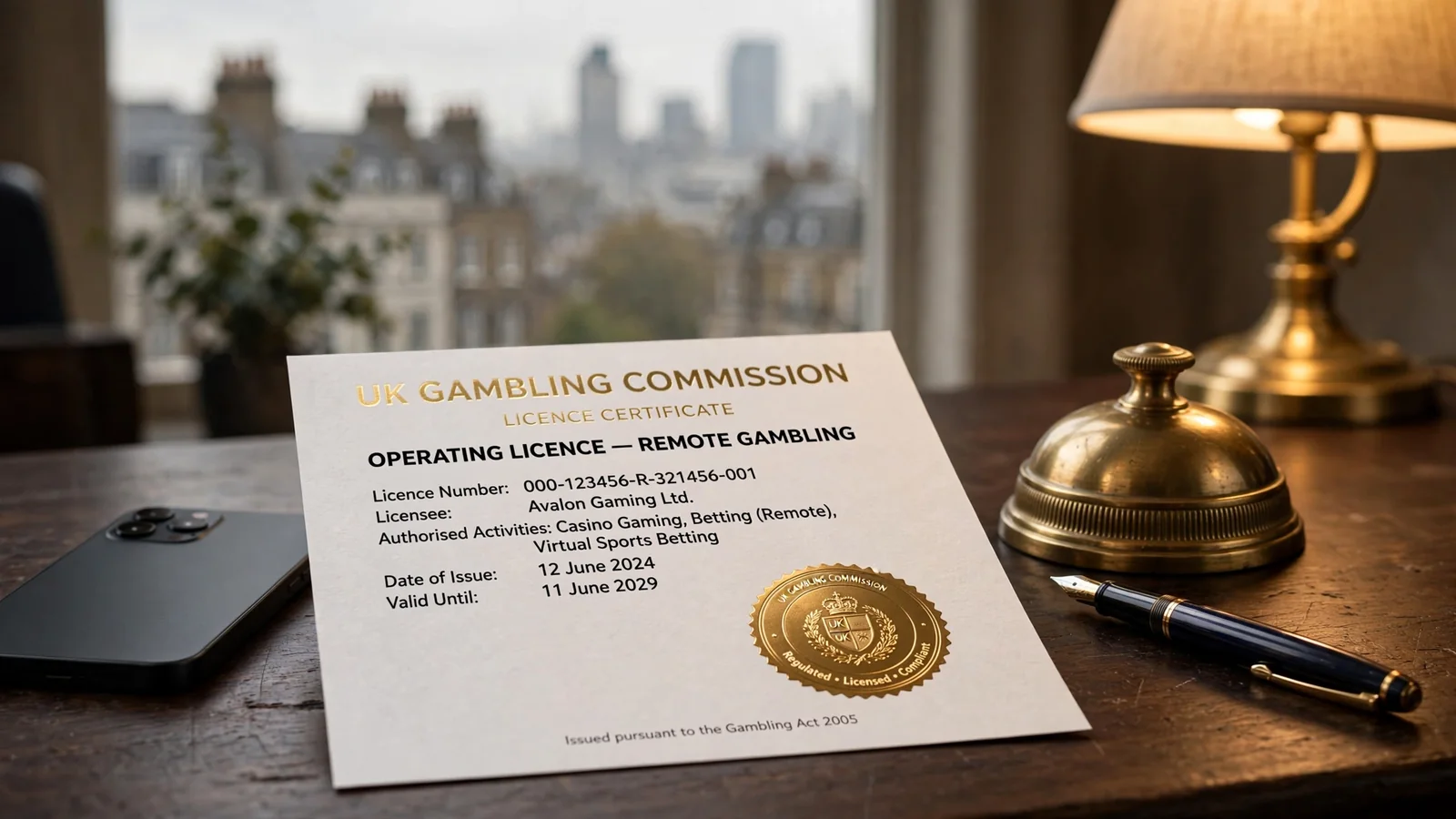
A practical look at licensing, operator checks, account verification, safer-gambling tools, bonus terms and payment rules for UK casino sites.
What a UK Casino Licence Actually Tells You
A UKGC licence is the first thing to establish when assessing an online casino for players in Great Britain. The UK Gambling Commission regulates gambling operators serving British players, and a casino must hold its licence to operate legally for them. If a site takes real-money play from people in Great Britain, a claim that it is “safe” cannot replace this basic question: is the operator authorised by the regulator?
A licence is meaningful, but its meaning has limits. It indicates that the operator is subject to the UK Gambling Commission’s requirements for offering gambling to this market. It does not certify that every feature, promotion or customer interaction will suit you, nor does it guarantee that you will win or never encounter a problem. “Licensed” is a statement about legal authorisation and oversight, not a promise of a risk-free experience.
That distinction matters because safety claims can be broad and difficult to assess. A polished website, familiar payment logos or reassuring language may create confidence, but none of them establishes that a casino is licensed to serve players in Great Britain. Nor does the word “licensed” tell you, by itself, which legal entity is responsible or whether the claim is current. Those are questions to check against the regulator’s own information, rather than accept from the casino’s presentation.
Use the Commission’s public register
The UK Gambling Commission maintains a public register of gambling businesses and their permissions. Find the regulator’s official website independently and use its register to look up the operator. A casino should provide a working link to the regulator’s official registry next to its licence information; treat that link as a route to verification, not as proof on its own.
The register is more useful than a badge because it is maintained by the regulator rather than by the site making the claim. A badge can be copied, displayed without context or left in place after details change. A generic statement that a casino is “regulated” is also incomplete unless you can establish which regulator is involved and what authorisation applies to the operator serving you.
UK online casino payout rates: understanding RTP
At this stage, the purpose is to confirm that the operator appears in the official record and that the entry relates to gambling activity for the relevant market. Do not confuse a company’s existence, a game provider’s credentials or a payment service’s status with a casino operating licence. They describe different parts of the business and do not answer whether the casino itself is legally authorised to offer gambling to players in Great Britain.
What authorisation does—and does not—settle
For someone looking for safe online casinos in the UK, a current UKGC licence is a threshold check, not a complete verdict. It separates legal operators serving the British market from sites that do not hold the required local authorisation. That is a substantial distinction: without it, a casino cannot legally operate for UK players. But the licence does not remove the personal and financial risks that come with gambling.
Think of the licence as evidence of regulatory accountability, not an endorsement of a particular brand. You still need to decide whether the terms are clear, whether the games and account features suit you, and whether gambling is appropriate for your circumstances. A regulated casino can still be a poor choice for an individual player; legal status and personal suitability are separate judgements.
The same caution applies to words such as “trusted” and “safe”. They are not substitutes for checking the register, and they should not be treated as guarantees. An operator can describe its own service in favourable terms. The regulator’s entry is a more dependable starting point for establishing authorisation, while the rest of your assessment should be based on the casino’s actual practices and information.
A sensible first check is therefore simple: locate the UK Gambling Commission’s public register, search for the operator and confirm that the casino’s licence information points to a real entry. The next step is to compare that entry with the website you are considering, since a genuine licence claim attached to a different business or site does not settle who is responsible for the one in front of you. Be wary of any casino that presents a licence badge but gives you no working route to the regulator’s record. A licence is the beginning of due diligence, not the end of it.
Do
- Use the UK Gambling Commission’s public register independently
- Confirm the operator appears in the official record
- Verify the entry relates to gambling activity for the relevant market
Don’t
- Rely on a badge alone as proof of licensing
- Accept generic statements that a casino is “regulated”
- Confuse game provider credentials with an operating licence
If you are comparing UK safe casino sites, keep that distinction in view. The regulator’s role is to oversee operators serving British players and to record their authorisation; it is not to tell you which casino is best for you. Treat the register as a source of evidence about legal status, then assess the operator on that basis without mistaking a regulatory requirement for a blanket assurance about every aspect of the experience.
Our top casino picks for the UK
- ChanzeBonus: Slots Welcome Bonus #1 200% up to €500 · Payout speed: 1-3 business days
- ZombillionBonus: Welcome Pack 250% up to £4000 + 200 FS · Payout speed: 1-3 business days
- NightLuckBonus: Welcome Pack + 805% Up To 6400€ + 280 FS · Payout speed: 1-3 business days
- AmunbetBonus: Join now and get 450% up to 2,700 GBP + 450 FS · Payout speed: 1-3 business days
- JetsetspinsBonus: 200% Bonus + 100 Free Spins + Free Royal Wheel · Payout speed: 1-3 business days
- NightWinBonus: £900 + 400 free spins · Payout speed: 1-3 business days
- EvoSpinBonus: 125% up to €2500 + 125 Free Spins · Payout speed: 1-3 business days
- BritsinoBonus: Welcome Package – Get your £2,200 + 2,000 FS · Payout speed: 1-3 business days
- BeOnBetBonus: 100% up to €500 + 100 FS · Payout speed: 1-3 business days
Check the Operator Behind the 2026 Website
A UKGC badge on a casino page is a claim, not proof that the site you are visiting is covered by the licence. Before depositing, check the operator against the UK Gambling Commission’s public register. Start with the licence number shown on the site, then search for it in the register. Do not stop at a logo, a line of text saying “UK licensed”, or a link that merely returns you to the casino’s own pages.
The check is about whether the registered business and the website match the place where you intend to play. Compare three details: the exact domain in your browser, the trading name used for the casino, and the legal business named in the register. A trading name is the customer-facing brand; the legal business is the company responsible for operating it. The names can differ, so look for a clear connection between them rather than assuming that a familiar brand name is enough.
Match the website, not just the brand
Read the domain carefully and compare it with the domain listed in the register. A change in spelling, an extra word, or a different ending can take you to a different site, even when the page uses the same colours and branding. Check the full address, not only the name displayed in a search result or on a promotional page. If the register lists a particular domain, a similar-looking address is not a match.
Merkur Casino Online UK: Games and Player Checks
Next, check the trading name and legal business. A casino may present itself under a brand that is not the company’s formal name, but the register should give you a way to establish which licensed business is behind that brand. If the site provides a company name or licence number that does not correspond with the register entry, pause. Do not treat a plausible-looking explanation on the casino site as a substitute for the regulator’s record.
If a detail is unclear, contact the operator using its published customer-support route and ask which legal business operates the exact domain you are using. Then compare the answer with the register. If you cannot reconcile the domain, brand and business, do not deposit while the mismatch remains unresolved.
Treat badges as a starting point
A badge can be copied, out of date or displayed without enough information to verify it. A generic statement that a casino is “regulated” is no better if it does not identify the licence and the business behind the site. The useful evidence is the matching entry in the Commission’s register, not the appearance of a seal on a page.
Check the register yourself rather than relying solely on a link supplied by the casino. A link to the official register can be helpful, but confirm that it takes you to the regulator and that the details there match the address and operator you have in front of you. Keep the distinction clear: a company name that appears in the register does not, by itself, establish that every site using a related brand is covered. The domain matters.
Verify Your Operator
Step 1: Find the licence number
Locate the licence number provided on the casino’s website.
Step 2: Search the official register
Enter that number into the UK Gambling Commission’s public register.
Step 3: Match three key details
Compare the exact domain in your browser, the trading name, and the legal business name against the register entry.
Records can change, and brand claims can persist after a site or business changes. Treat the check as something to do at the point you are considering an account, not as a permanent endorsement based on something you saw earlier. If the operator changes its domain or legal business, check the new details against the register before relying on the old match.
A dated example shows why this matters. A specialist review reported that the UKGC register dated 26 September 2026 did not identify a LuckyPays licence entry under that brand or its stated domain. That is a finding tied to the named brand, domain and date; it is not a general conclusion about other operators. More importantly, a brand’s own licence claim should be tested against the regulator’s record rather than accepted on presentation alone.
A careful check does not require you to interpret every regulatory detail. It does require the basic identifiers to line up: the licence number, the exact website domain, the trading name and the legal business. If they do not, stop before depositing and seek clarification. A site can look established and still leave you without a verified link between the casino in your browser and the business named in the register.
Offshore Sites: Know Which Protections May Be Missing
A licence issued outside the UK can show that a casino is overseen somewhere, but it does not make that operator subject to UK Gambling Commission rules. An offshore licence is not, by itself, evidence of protections equivalent to those associated with UKGC or Malta Gaming Authority oversight. The regulator, the rules it enforces and the routes available when something goes wrong all matter.
Anjouan Casino Licence in the UK: What It Means
This distinction is easy to miss when a site displays a foreign regulator’s badge prominently. The badge may identify the authority that licensed the operator, but it does not establish that the casino holds a UKGC licence or that UK-specific safeguards apply. A site can be accessible to British visitors while remaining outside the UK regulatory system.
What may not carry across
GamStop is a UK self-exclusion system. Operators licensed offshore are not required to connect to it. So, without an identifiable UKGC entry for the operator, do not assume that registering with GamStop will block access to that casino. A logo or a statement about responsible gambling is not proof of a connection.
The same caution applies if you need to challenge a decision. Non-GamStop casinos operate outside UK dispute resolution channels. A foreign regulator may have its own complaint process, but that is not the same as access to UK-regulated alternative dispute resolution. Before depositing, check which regulator is named, how the operator says complaints are handled and whether the stated route is one you can actually use.
Nor should you assume that UK-specific rules for protecting customer funds apply. UKGC-licensed operators must keep player funds separate from operating capital. Without an identifiable UKGC licence entry, you should not treat that UK requirement as protection for money held by the site. A foreign licence does not tell you, on its own, how customer balances are safeguarded if the operator runs into financial trouble.
Offshore Risks
Offshore licences do not guarantee UKGC protections, meaning GamStop may not work and UK-specific customer fund safeguards may be missing.
These are practical differences, not just technical details in a footer. They affect which body oversees the operator and what protections or complaint routes you can rely on. If a site’s licensing information is unclear, or the named company and domain do not match a regulator’s records, do not fill in the gaps by assuming UK safeguards apply.
Make the decision on the protections, not the badge
If you are comparing licensed casino sites in the UK, separate two questions: where the operator is licensed, and whether it has a current UKGC licence for serving British players. A foreign licence answers only the first. It does not turn a non-UKGC operator into a UK-regulated casino, however familiar the brand or polished the site may look.
The same applies when assessing safe gambling sites or online slot sites. A review, a promotional claim or a list of casino features cannot replace confirmation of the operator’s regulatory status. Free spins and other offers do not change which rules apply. If an operator does not have an identifiable UKGC entry, do not assume GamStop, UK dispute resolution or UK-specific consumer-funds protections are available.
That does not mean every foreign regulator works in the same way. It means the existence of a foreign licence alone is not enough to establish equivalent protection for a player in Great Britain. Find out who issued it and what complaint route the operator names; then consider what is not covered by UKGC oversight.
Curaçao Casino Licence UK: What It Means
Paylobby may receive a commission if you register with a partner casino. That commercial relationship does not alter the operator’s licence or the protections attached to it. A safer assessment starts with the regulator and the specific protections that apply, not with the offer or the badge.
Real-Money Accounts: Verify Before You Withdraw
A real-money account can appear ready to use before its identity checks are complete. That distinction matters when you later request a withdrawal: every licensed operator must verify your identity before processing one. If you wait until then to provide documents, the checks can hold up access to your funds.
Send the requested documents soon after creating your account and before you deposit. This gives the operator time to review them while no withdrawal is pending. It does not guarantee that every later request will be processed immediately, but it avoids leaving a routine account check until the moment you want to cash out.
Prepare the standard documents
Operators commonly ask for:
- A government-issued photo ID, such as a passport or driving licence.
- Proof of address dated within the previous three months, such as a utility bill or bank statement.
- Payment-method ownership confirmation, if the operator needs to establish that the payment method belongs to you.
Check that your name and address are consistent across the documents and the details on your account. If they differ, contact the operator before submitting them rather than assuming the discrepancy will be resolved automatically. Follow the operator’s instructions for sending documents; do not send identity papers through an unverified contact channel.
An operator may ask for additional information if the documents supplied do not let it complete its checks. Respond to a request through the account or contact route shown on the operator’s own site, and keep a note of what you have submitted. If an upload is rejected, check whether the image is readable and whether the document meets the stated requirements before trying again.
Identity checks are not the same as age checks
Age verification is required before a customer can deposit into a gambling account. On licensed platforms, it is also required before access to gambling-related content, including free game demos. Identity verification for a withdrawal is a further check: passing one stage should not be taken as proof that every later request has been completed.
Withdrawal Preparation
- Provide a government-issued photo ID (passport or driving licence)
- Submit proof of address dated within the last three months
- Confirm ownership of the payment method
- Ensure name and address are consistent across all documents
This is relevant whether you are choosing a casino for slots or other real-money games. The safety of a game itself does not remove the need to establish who holds the account. Nor does a welcome offer change the basic document checks. Read the operator’s instructions before funding the account, rather than treating registration as the end of verification.
If you are comparing a safe online casino for real-money play, make the document process part of your assessment. Look for clear instructions on which records are accepted and how to submit them. A vague promise of quick withdrawals is not a substitute for knowing what evidence the operator requires.
These steps help you prepare for the checks that stand between a withdrawal request and its processing. Keep copies of the documents you submit and check for messages requesting clarification. Providing accurate, legible information at the outset is the practical way to reduce avoidable back-and-forth when money is at stake.
Limits, Time-Outs and Self-Exclusion
A licensed casino should give you ways to put boundaries around your gambling before it becomes difficult to manage. In Great Britain, remote operators must prompt new customers to set a financial limit before their first deposit and make account-level limit controls accessible. UKGC-licensed operators must also offer time-outs and self-exclusion through GamStop.
Gibraltar Casino Licence: UK Rules and Risks
A deposit limit restricts how much money you can add to your account over a period you choose from the options available. Set it before depositing, while you can make the decision without pressure. A limit is useful only if it reflects what you can afford to lose; it is not a prediction of how long your money will last or a guarantee that you will stop at the right moment.
Check that you can find the limit controls in your account and understand how changing them works. If you are considering raising a limit, take time to reconsider rather than treating the option as routine. These tools help you control access to gambling funds, but they cannot remove the risk of losing money.
A time-out is a temporary break from gambling at an operator. It can help if you want to stop playing for a while without making a longer-term commitment. Read the operator’s explanation of what the pause covers and how it takes effect before you activate it. Do not assume that a control at one casino automatically applies to accounts you hold elsewhere.
GamStop is the self-exclusion scheme used by UKGC-licensed operators. Self-exclusion is intended for a more decisive break: it restricts access to gambling with participating licensed operators for the period selected through the scheme. If you have decided that you need to stop, use the scheme rather than relying only on individual account limits or a time-out. Avoid opening other gambling accounts during the exclusion.
Responsible Gambling Tools
UKGC-licensed operators must provide financial limit controls, time-outs, and self-exclusion through GamStop to help players manage their gambling.
These controls are part of why a UKGC licence matters when you assess an online casino, but their existence is not a guarantee that gambling will be harmless. Before relying on them, make sure the casino’s current licence entry is identifiable in the Gambling Commission’s public register. Without that entry, do not assume that GamStop protection applies. A site may display familiar-looking wording or controls, but that is not a substitute for confirming its regulatory status.
There is no equivalent systematic trigger at non GamStop casinos to prompt checks based on a player’s spending. That makes it especially important not to treat an account’s limit settings as evidence that the same protections are in place. If you are worried about your gambling, a deposit limit is not a substitute for stopping and seeking support.
If you register through a partner link on this site, Paylobby may receive a commission.
Read the Bonus Terms Before You Opt In
A bonus can add funds to an account, but it can also attach conditions to withdrawals. The key term is the wagering requirement: the amount you must stake before bonus-related funds or winnings become withdrawable. UK rules cap wagering requirements on incentives at 10x. Check how the operator defines the requirement and what counts towards it before accepting.
The calculation may apply to the bonus alone or to the combined deposit and bonus. Those bases produce different turnover requirements. A specialist review illustrates the distinction with a £100 deposit and a £100 bonus at 35x: wagering the bonus alone would require £3,500 in turnover, while applying the requirement to the combined £200 would require £7,000. That illustration is not a permitted UK incentive term: the UK limit is 10x. Its useful point is that the calculation basis matters, so look for wording such as “bonus amount” or “deposit plus bonus”.
Casino Without a Swedish Licence: UK Legal Position
Game contribution rules affect how quickly eligible play adds to the target. A specialist review reports slots contributing 100% of each pound staked, while table games contribute 5% to 10%. If a game contributes only a fraction of your stake, the rest does not count towards the wagering requirement. The operator’s own terms should say which games qualify and how their contribution is calculated; do not assume every game advances the target equally.
Check the maximum permitted bet while bonus credit is active, too. A specialist review reports a £5-per-spin cap at most operators, but the terms for the specific offer are what matter. A bet above an offer’s limit may breach its conditions, potentially putting bonus funds or associated winnings at risk. Read the limit before playing rather than relying on a general description.
UK incentives also cannot combine more than one type of gambling product. A single offer cannot, for instance, require a mix of casino play and betting activity. If the terms appear to bundle different product types into one incentive, pause before opting in and seek clarification.
The headline amount is only one part of the offer. Check the wagering basis, eligible games, contribution rates, bet cap and withdrawal conditions together. Paylobby may receive a commission if you register with a partner casino; that does not change the offer terms, which you should assess for yourself.
Payments: Credit-Card Rules and Crypto Timing
For gambling with a UKGC-licensed operator, a credit card cannot be used to pay for a deposit. The restriction has applied to UK casino operators since April 2020. It also covers an indirect route: an operator cannot accept a gambling payment funded by a credit card through a money service business. Nor can it accept a wallet payment where the wallet lets you use credit-card funds for gambling.
Credit Card Ban
Since April 2020, UKGC-licensed operators are prohibited from accepting credit cards, including payments via wallets funded by credit cards.
That matters when judging claims about secure casino payments in the UK. A payment option appearing on a cashier page does not make every way of funding it acceptable. Check whether the method is permitted for gambling and whether the source of the funds is allowed. The rule is intended to prevent credit being used to gamble; it is not a general guarantee that every payment transaction will be free from risk.
The position differs at operators outside UKGC oversight. The Commission’s credit-card ban does not apply to them, so a non-GamStop casino may still accept credit cards. That difference is not a sign of stronger payment security. A site taking British customers without a UKGC licence is outside the UK regulatory system, and the UK restriction cannot be relied on there. A familiar card option should not be mistaken for the protections attached to a UKGC-licensed operator.
Crypto payments bring a separate timing issue: the operator’s processing stage comes before a withdrawal is sent to the blockchain. A specialist review reports that crypto withdrawals settle on-chain within 10–30 minutes after operator processing. Treat that as a reported timing, not a promise for every casino or transaction. The operator may take time to approve a withdrawal before the transfer is initiated, and the stated on-chain interval does not describe that earlier stage.
Online Casino No Registration UK: What It Means
If you are considering a safe crypto casino in the UK, separate the operator’s status from the mechanics of the payment. Crypto settlement speed says nothing by itself about whether the casino is authorised to serve British players or what protections apply to your account. Be wary of treating a quick transfer, card acceptance or polished cashier as evidence that a site is safe. The payment method is only one part of the decision; its availability does not establish that the operator is properly regulated.
Slot Rules That Affect How You Play
Online slot rules shape both the pace of a game and the amount you can stake. In Great Britain, autoplay is banned on licensed slots, so each spin must be started manually. A spin must also last at least 2.5 seconds. These requirements are intended to slow play and reduce the intensity of a session; they do not make gambling risk-free.
There is a legal stake ceiling as well. Since 9 April 2025, the maximum stake per online slot game cycle has been £5 for all adults. A specialist review has described a broader range of stakes at casinos, including a £0.10 minimum and bets as high as £100 per round. That is a report about what a source observed, not the legal limit: the £5 cap applies to online slot play.
These rules matter when you compare safe online slot games. A licensed game should not offer autoplay or let you spin faster than the required interval, and the stake controls should respect the applicable maximum. If a game appears to allow otherwise, pause before playing and check whether you are on the operator’s genuine licensed site.
Slot Game Rules
- Autoplay is banned on licensed slots
- Each spin must last at least 2.5 seconds
- The maximum stake per game cycle is capped at £5 for all adults
- Age verification is required before accessing gambling content or demos
Age checks are also part of access to gambling content. A licensed platform must verify your age before you can view gambling-related material, including free game demos, and before it allows you to deposit. This applies even when you are not yet playing for money. Safe casino games are not defined by their themes or graphics; the practical protections are the rules governing how they can be played and the operator’s compliance with them.
The mechanics set boundaries, not outcomes. A slower spin does not improve the chance of winning, and a stake limit does not prevent losses. Treat the displayed stake as the amount at risk on each game cycle, and do not assume that a game’s presentation tells you how strongly it is regulated.
Deposits, Bank Transfers and PayPal Availability
Payment options differ between casinos, so a method shown on one site should not be assumed to be available elsewhere. Before choosing a casino, check its own cashier and payment terms: these should show which methods it accepts and any conditions that apply to deposits or withdrawals. A familiar payment logo is not a guarantee that the method will work for your account.
Bank transfers can suit players who prefer to move money directly through their bank, but allow for processing time. A specialist review of a selection of casino brands reported bank-transfer times of 3–5 banking days. That is a finding about the reviewed brands, not a promise for every operator or transaction. Check the casino’s stated processing information before relying on a particular arrival date.
PayPal availability also needs checking at the individual site. At non GamStop casinos, PayPal is not offered universally; whether a casino can accept it depends on PayPal’s merchant approval. A payment option mentioned in general casino material may therefore not appear in the cashier when you visit. Confirm availability directly rather than treating it as a standard feature.
A useful comparison is not simply which logo appears, but whether the method you intend to use is currently listed by the operator and what the operator says about processing. If a method is absent from the cashier or its terms are unclear, do not assume that another casino’s arrangements apply.
Payment choice alone does not establish that a casino is safe. It is one practical detail to check alongside the operator’s identity and licence information, before you send money. The site may receive a commission if you register with a partner casino; that does not change the need to check the payment conditions for yourself.
Before You Install a Casino App
A polished app, or one available through an app store, is not evidence that the casino behind it is authorised to serve players in Britain. Treat the app as another way of reaching an operator: check the business, not just the software.
Before depositing, find the operator’s UKGC licence number and cross-reference it with the UK Gambling Commission’s public register. Compare the exact website domain, trading name and legal business shown in the register with the details given by the app and casino. A badge or a general statement that a site is licensed is not a substitute for a matching register entry. A casino needs a UK Gambling Commission licence to operate legally for UK players.
The check matters even if the app itself appears legitimate. An app can make access simpler; it cannot establish that the operator named on its screens is the business authorised by the regulator. If the details do not match, pause rather than treating the app’s presence as reassurance.
Age checks also apply before gambling-related content is available on licensed platforms, including free game demos. Operators must verify your age before allowing you to deposit into a gambling account. Do not assume that a free demo is exempt simply because no money is staked.
Once installed, check that the app identifies the same operator and website domain you verified in the register. If it sends you to a different site or presents different business details, return to the register before sharing personal information or funding an account.
This publication may receive a commission if you register with a partner casino. That does not replace the licence check: confirm the operator’s details independently before proceeding.
Is it safe to play at online casinos in the UK?
It is safer to start with a casino that holds a current UK Gambling Commission licence, but a licence does not guarantee a risk-free experience or mean the casino is right for you. Check the operator on the Commission’s public register.
How do I verify whether a UK online casino is safe before depositing?
Look up the casino’s licence number in the UK Gambling Commission’s public register, then compare the registered business and trading name with the casino website and its exact domain. Also submit your photo ID and recent proof of address for verification before funding your account.
What exactly are non GamStop casinos and are they legal in the UK?
Non-GamStop casinos are not connected to the UK self-exclusion system and are generally offshore-licensed. A casino needs a UK Gambling Commission licence to operate legally for UK players; offshore sites do not provide the same protections or UK dispute-resolution routes.
Casinos
Online Slots Not on GamStop: What Players Should Know
GamStop applies to operators, not individual games; site status, licensing and bonus terms shape what slot access means. What “Not on GamStop” Means for Slot Players GamStop is a self-exclusion…
Non-UK Licence Casinos: Rules and Checks
A licence may come from another jurisdiction, so its regulator, protections and…
Foreign Casinos for UK Players: Licensing and Risks
In the UK, a foreign casino is defined by lacking a UKGC…
Non-GAMSTOP Casinos in the UK: What to Know
GAMSTOP is designed to block access across participating licensed gambling businesses, rather…
Written by the editors at Paylobby.