
High-Limit ecoPayz Tiers for UK Casino Actions
 Available in GB
The Payz tier system is something I get asked about more by experienced players than by newcomers, which is the wrong way round. Tier choice matters most at the lower end, where transaction caps can interrupt a routine casino session, and least at the top, where the lifestyle and FX benefits are real but rarely game-changing. Classic users hit ceilings; VIP users do not. The interesting tier decisions happen in the middle, and the answer depends almost entirely on how you actually use the wallet at UK operators.
What I want to clear up is the relationship between Payz tiers and casino VIP programmes. They are not connected. Your Payz tier is a wallet-side construct administered by PSI-Pay; the casino’s VIP scheme is an operator-side construct administered by the casino’s loyalty team. The two do not communicate, do not cross-credit, and do not affect each other. Treat them as parallel systems serving different functions.
Five Tiers and Respective Operational Parameters
Classic is the entry tier you get on registration. It has the lowest transaction caps, the most restrictive limits on monthly throughput, and the highest fees on certain operations. For UK casino play it is workable but limiting — a regular player making weekly deposits can hit the Classic monthly throughput cap if the deposits are over £150 each. PSI-Pay’s broader scale, operating across 174 countries, means the Classic tier serves users with very different needs; UK casino players are not its design centre, and the limits reflect that.
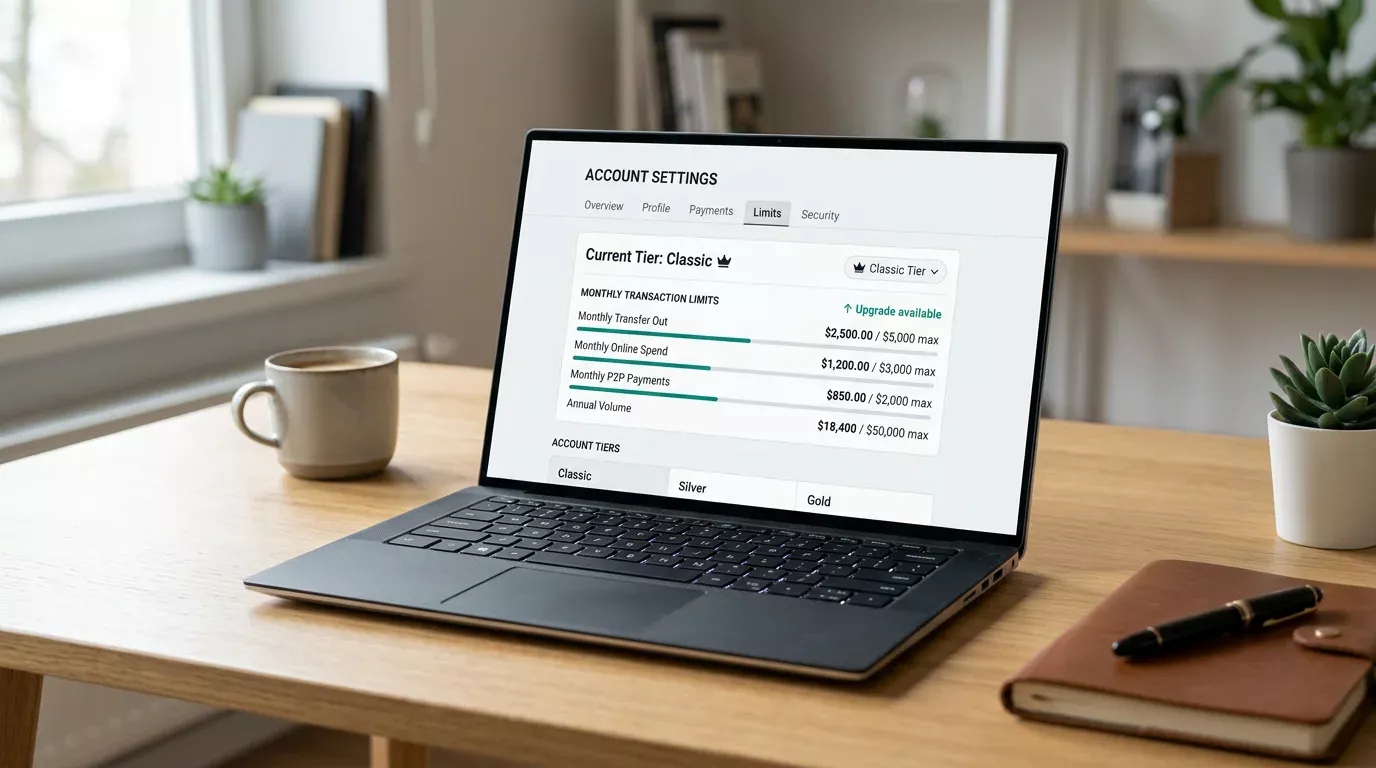
Silver is the first paid tier and removes most of the binding limits for casual UK casino users. It raises monthly transaction throughput, enables higher per-transaction caps, and reduces fees on certain operations. The trade-off is the tier fee itself, which is annual or monthly depending on the variant; whether Silver pays for itself depends on your transaction frequency and average size. Below roughly two deposits per month or below an average deposit of £30, Silver typically does not earn its keep.
Gold is the tier where the wallet starts feeling unrestricted for a typical regular player. Higher caps, lower fees on currency conversion, slightly faster customer support response. Gold is appropriate for players who run several deposits a month across one or two UK casinos and occasionally hold non-GBP balances. The annual fee is a meaningful expense but is usually offset by the FX savings if you do any cross-currency play.
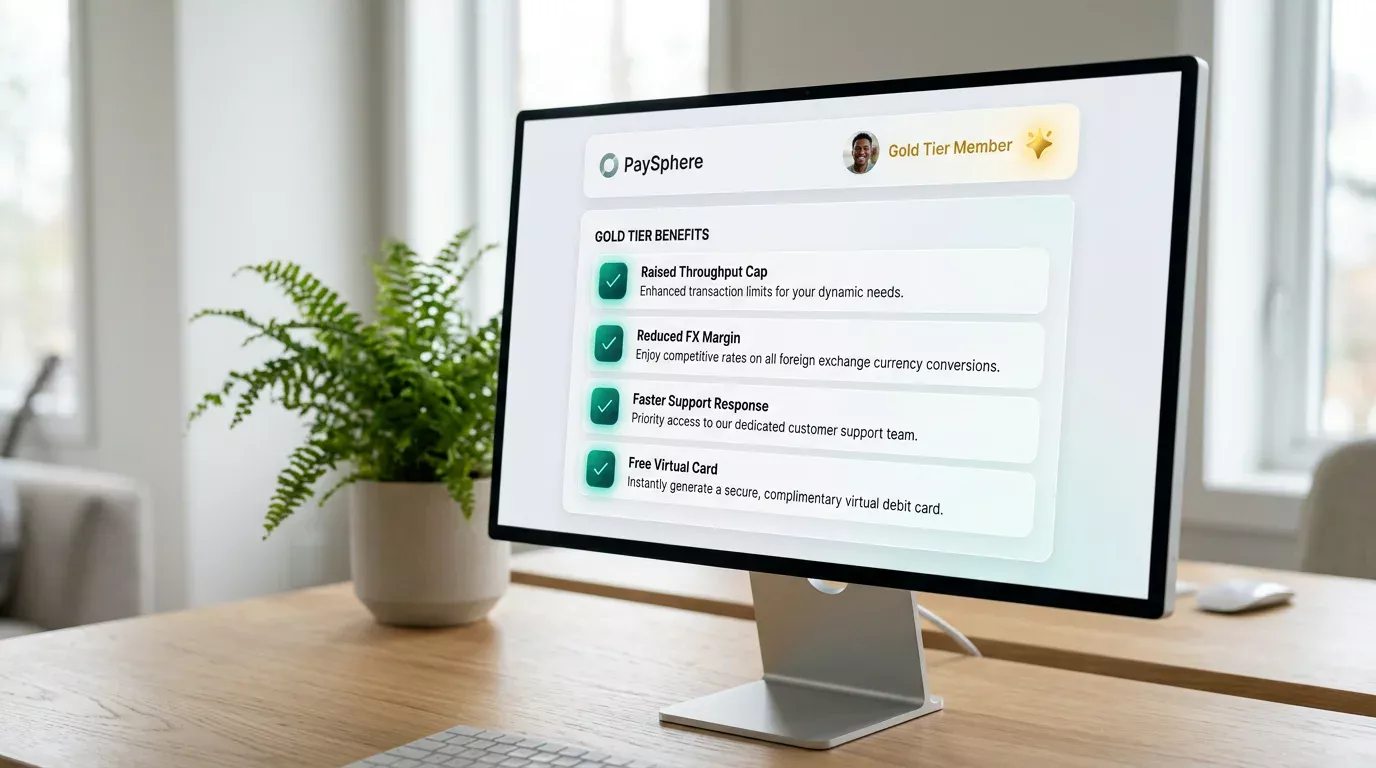
Platinum and VIP are the upper tiers and serve players whose throughput would breach lower-tier caps. The fees climb but so do the limits, and the per-transaction overhead is reduced. The defining benefit of these tiers is throughput rather than features — you can move more money through the wallet without triggering caps or escalated checks. For ordinary UK casino play, Platinum and VIP are overkill; for high-stakes table players or those running multi-operator portfolios, they are operationally necessary.
One useful comparative datapoint. Skrill, a comparable e-wallet popular in UK gambling contexts, reports that 25.32% of its corporate client base sits in the UK, with the heaviest concentration in forex, sports betting, and casino gaming. Payz has a different geographic distribution but a broadly similar tier philosophy — the upper tiers exist primarily to serve commercial and high-volume retail users, and the gambling segment is a meaningful but not dominant slice. The point is that the tier system was not designed exclusively for UK casino players, which is why the tier choice that maximises value for your specific use case is not obvious.
How Tiers Actually Affect the Casino Cashier
This is the section that closes the gap between marketing pages and reality. Your Payz tier affects three things at the UK casino cashier, and none of them is “the casino treats you better”.
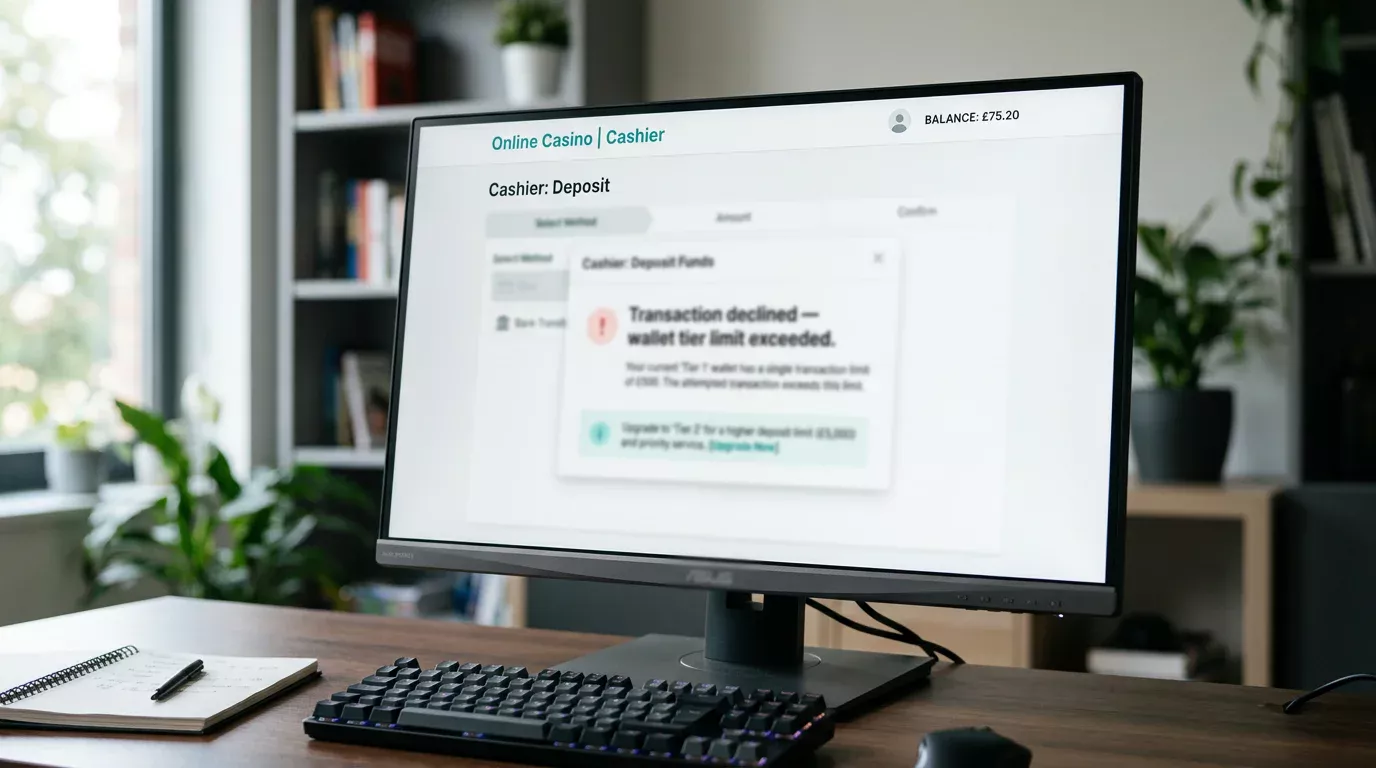
The first effect is transaction throughput. A Classic-tier user attempting a £500 deposit at a UK casino may have the transaction declined at the Payz side, not the casino side, because the deposit exceeds Classic’s per-transaction cap. The error message displayed at the cashier is often generic (“transaction declined”) and does not clearly point at the tier as the cause. Higher tiers raise these caps; the cap, not the casino’s risk engine, is the binding constraint at the upper end of a Classic user’s transactions.
The second is fee structure. Withdrawals back to your Payz wallet from a UK casino are usually free on the casino side. The fee you pay is on the Payz side — for currency conversion, for transfers to a linked bank account, or for periods of dormancy. These fees scale down as your tier scales up. A Gold user paying half the Classic FX margin on a £100 withdrawal saves real money over a year of regular play.
The third is customer support priority. Higher tiers get faster response times on Payz support tickets, which is rarely relevant on routine deposits but can matter at withdrawal time. If a £1,000 cashout to your Payz wallet hits a verification flag, the difference between Gold-tier support response (hours) and Classic-tier response (a day or more) can be the difference between a smooth weekend and a week of waiting.
What tiers do not affect: the casino’s KYC, the £150 financial vulnerability threshold check, the operator’s withdrawal hold period, or the bonus eligibility rules. The wallet tier is invisible to the operator’s bonus engine and to the regulator’s affordability framework. A VIP Payz user faces the same casino-side checks as a Classic user.
Upgrading a Tier the Right Way
Tier upgrades happen on PSI-Pay’s schedule, not yours. The wallet evaluates your transaction history, your verification level, and your account standing, and offers an upgrade when the criteria are met. You can accept the upgrade and pay the associated fee, or you can decline and stay on the current tier.
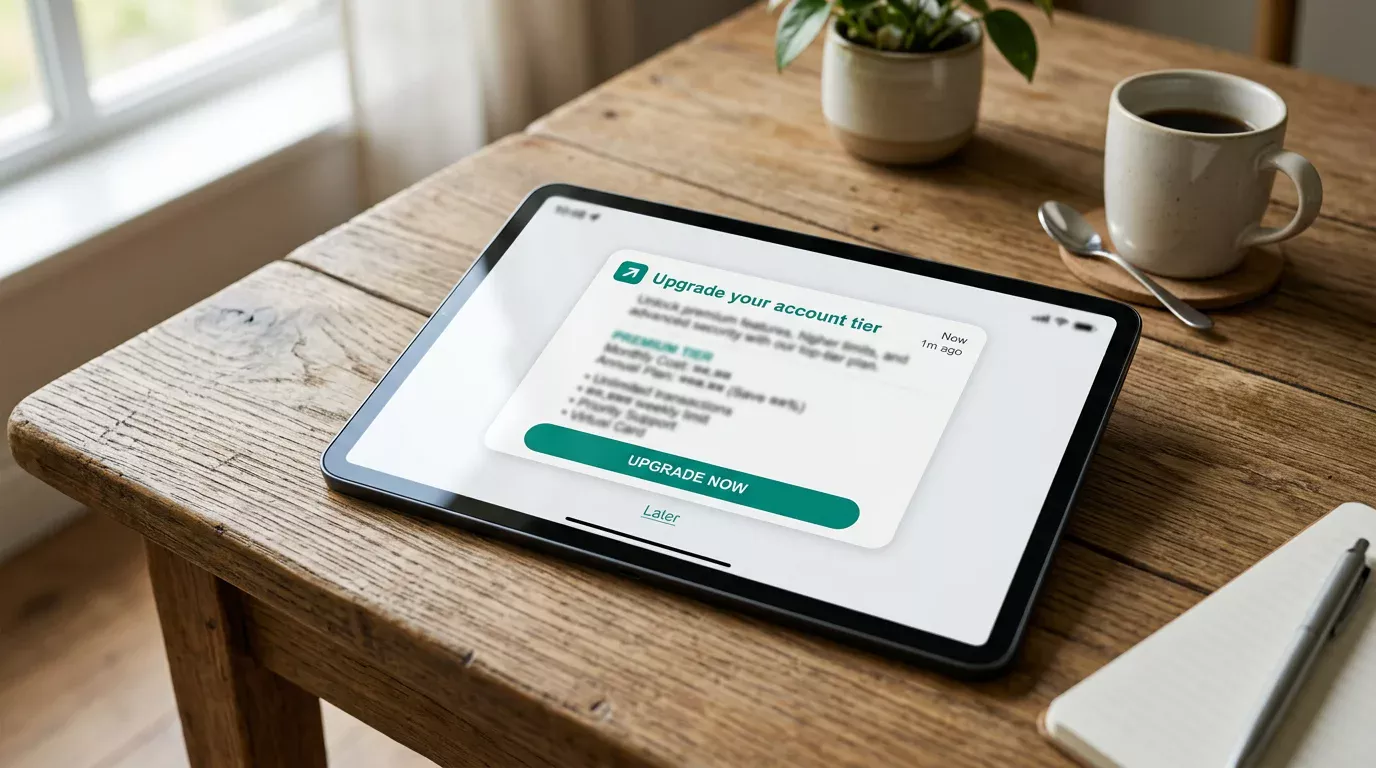
Two principles for getting the timing right. First, do not upgrade speculatively. The fees on Silver, Gold, and above are non-trivial, and an upgrade taken in anticipation of activity that does not materialise is wasted spending. Look at your last three months of wallet activity, project the next three, and only upgrade if the projection breaches your current tier’s caps.
Second, time the upgrade to align with a planned high-throughput period. If you are about to participate in a tournament series or a high-stakes session, upgrading the day before makes more sense than upgrading three months earlier. The tier’s annual cost is the same regardless of when in the year you start it, so timing it to coincide with activity maximises the benefit-per-fee ratio.
A consideration on downgrades. You can downgrade a Payz tier between annual renewal periods, but you cannot generally retrieve the prepaid fee. Casino activity that drops permanently — say, you have moved away from regular play — should prompt a downgrade at the next renewal point, not mid-year.
Tier Versus the Casino’s Own VIP Scheme
The terminology overlap causes regular confusion. A “Payz VIP” user is not automatically a “casino VIP”, and a “casino VIP” does not become a “Payz VIP”. The two schemes are wholly independent.
Casino VIP programmes typically run on lifetime deposit volume, monthly turnover, or recommended-by-host criteria. They confer benefits like dedicated account managers, faster withdrawal handling, custom promotional offers, and occasionally invitations to events. None of these benefits flow from the Payz tier. A Payz Classic player who deposits £50,000 a year at a single casino will reach that casino’s VIP tier; a Payz VIP player who deposits £500 a year will not.

The connection that does exist is operational. Casino VIP managers tend to want their highest-deposit players to use a payment method that processes cleanly and at speed, and that often means encouraging them to upgrade to a higher Payz tier. The casino does not require it, but the friction reduction at scale is real. For players approaching the operator’s high-roller bracket, the Payz tier becomes part of the cashier experience worth optimising — I cover that intersection in my guide to ecoPayz high roller casinos in the UK.
One last point. Some readers ask whether the Payz tier appears anywhere in their casino account profile. It does not. The operator sees your wallet as a single Payz account; the tier is invisible at the cashier level. The only place your Payz tier matters from the operator’s perspective is in the transaction-level behaviour — whether deposits clear, whether withdrawals process quickly, whether the wallet’s response times match the casino’s. The badge is internal to Payz.
Created by the "Paylobby" editorial team.