
ecoPayz Casinos and GAMSTOP: How Self-Exclusion Interacts With Your Wallet
 Available in GB
The hardest emails to answer are not the ones asking technical questions about cashier behaviour. They are the ones from readers a few weeks into GAMSTOP self-exclusion asking whether their Payz wallet still being active counts as a loophole. The short answer is no. The longer answer is that the question itself signals a moment to step back. The wallet does not get you around exclusion; exclusion does not block the wallet. They run on parallel tracks for sensible reasons, and understanding the architecture matters more than searching for a workaround.
Self-exclusion is one of the most important player-protection mechanisms in the UK regulated gambling ecosystem, and how it interacts with payment instruments is a question that deserves a direct answer rather than evasive marketing. The Payz wallet works the same way whether or not its holder is registered with GAMSTOP — it has no view into the exclusion register and no role to play in enforcing it. The enforcement happens at the casino, and at every UK-licensed casino it is total.
How GAMSTOP Actually Works
GAMSTOP is a multi-operator self-exclusion scheme covering all UK-licensed online gambling operators. When you register and complete the exclusion period, the scheme places your identity details on a register that every UK-licensed operator is required to check at account creation, login, and deposit. Any attempt to gamble at a UK-licensed site during the exclusion period is blocked at the operator account level.
The current data on problem gambling in the UK contextualises why this matters. The Gambling Survey for Great Britain 2024 reported a PGSI 8+ problem gambling rate of 2.7% among adults — up from 2.5% in 2023 — with a further 3.1% in the moderate-risk band (PGSI 3-7) and 8.8% in the low-risk band. Within this picture, the 18-24 age cohort is the most exposed, with a PGSI 8+ rate of 5.3% — the highest of any age group in the survey. Self-exclusion is the most direct mechanism available to anyone in any of these categories who has decided that they want a break.
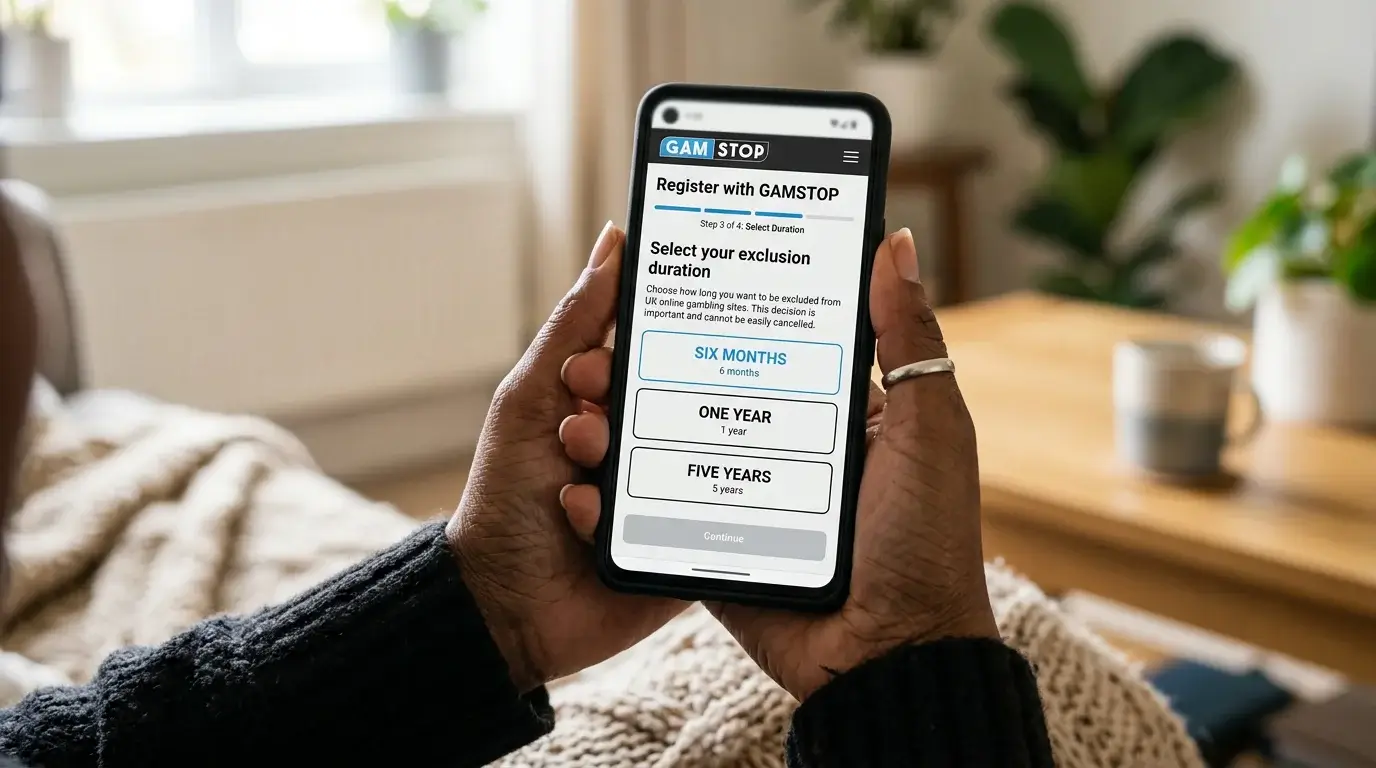
The exclusion period the player chooses is binding. Six months, twelve months, or five years are the standard options. The register holds the exclusion until the period expires; reactivation requires the player to wait out the period and then complete a reactivation process that includes a cooling-off window. The system is deliberately one-way during the exclusion — the player cannot shorten or cancel an active exclusion period.
How Payz and GAMSTOP Intersect
The wallet is unaware of the player’s GAMSTOP status. PSI-Pay operates as a payment service; it processes transfers between accounts based on the wallet holder’s instructions. It does not subscribe to the GAMSTOP register, does not screen counterparties for gambling status, and does not block transfers to operators based on the wallet holder’s gambling exclusion. This is consistent with how other payment instruments work in the UK — debit cards do not block gambling sites based on the cardholder’s exclusion either, beyond the optional gambling-block feature that some banks offer.
What this means in practice is that a self-excluded player whose wallet still works can still send funds to operators. The block lands at the operator. If the player attempts to deposit to a UK-licensed casino during the exclusion period, the operator declines the deposit at the cashier stage because the player’s identity matches the GAMSTOP register. The wallet sends the funds; the casino sends them back. The exclusion holds.
The dangerous version of this question — the one that motivates some search traffic on this topic — is whether the wallet can be used to fund non-GAMSTOP sites. Sites that operate outside the UK licensing regime are by definition not subject to UK player protections, including GAMSTOP. The 2025 H2GC data put the UK offshore unregulated market at £16.6 billion in stakes, up from £5 billion in 2019 — a more than threefold increase in six years. Channelisation, the regulated share, has slipped from 97% in 2019 to 92% in 2025, with player flow to unlicensed sites accelerating.
Ismail Vali, President of Gaming Compliance International (Yield Sec), framed the targeting of vulnerable players bluntly in early 2026: “Illegal online gambling in Great Britain is now knocking on the door of 10% market share and it has achieved this through the cynical exploitation of two vulnerable audiences: children and self-excluded gamblers on the Gamstop scheme.” The black market is not accidentally serving self-excluded players. It is targeting them. Marketing tactics, search-result placement, and ad targeting for unlicensed sites have all converged on exactly the audience for whom UK regulators have designed the strongest protections.

What the Wallet Does Not Do
The wallet does not have a “GAMSTOP mode” or a self-exclusion toggle. PSI-Pay does not offer a customer-controlled lock on gambling transactions. What the wallet offers is the ability for the customer to close the account, which terminates the funding pathway entirely. For some self-excluded players this is the right move; for others it removes a useful non-gambling payment instrument they want to keep using.
The wallet also does not flag the player to support services when high-volume gambling activity is detected. That signal-and-intervention work happens at the operator side, where licensed casinos are required to identify markers of harm and intervene with their customers. The wallet’s transaction volumes pass through PSI-Pay’s AML and risk frameworks but not through gambling-specific harm-monitoring frameworks. The player-protection layer that does exist sits with the operator.
What the wallet can offer, and what I recommend to anyone in the GAMSTOP cohort, is account-level friction. The same financial vulnerability checks that operators apply at £150 monthly thresholds exist for a reason, and engaging actively with them — keeping your contact details current, opening communication channels, treating support requests as opportunities to talk rather than problems to bypass — is more useful than searching for technical workarounds. The protective architecture works for players who engage with it.

The Bank-Side Complement
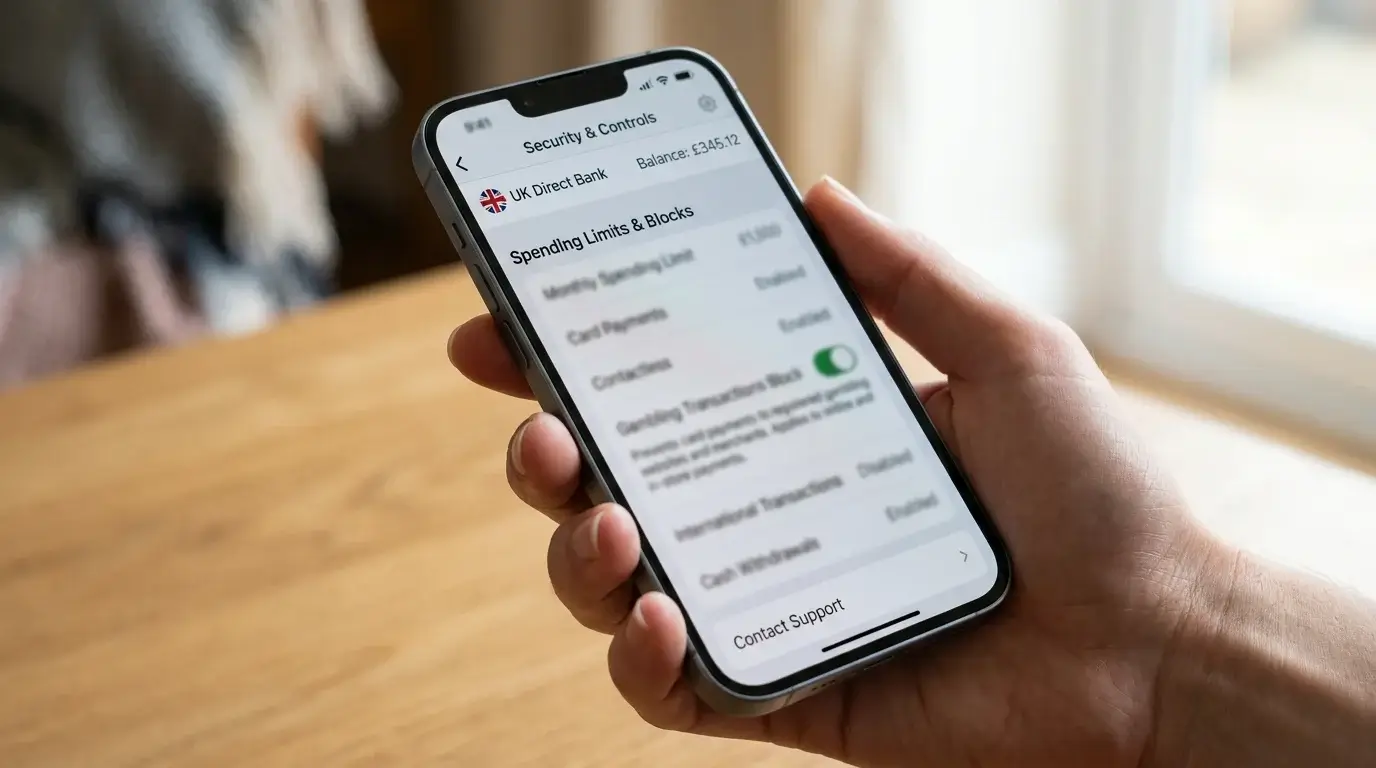
Most major UK banks now offer a gambling block as part of their app controls. Activated, the block prevents the bank from processing transactions to gambling merchants, including transfers to e-money wallets where the bank can identify the destination’s primary use as gambling. The block is not perfect — PSI-Pay’s descriptor is for general e-money services, not specifically for gambling — but for many bank customers the block applies effectively because PSI-Pay’s MCC is treated as a gambling-related code by some bank-block implementations.
The interaction with GAMSTOP makes the bank-side block a useful complement. GAMSTOP blocks at the operator; a bank gambling block prevents the funding flow upstream of the operator. Combined, the two provide layered protection that is harder to circumvent in a moment of weakness. The NHS Adult Psychiatric Morbidity Survey 2023/24 found that only 14.6% of people with PGSI 3+ had used self-exclusion tools, which suggests significant scope for the broader protective architecture to be more widely adopted. Among the 6.3% of people with PGSI 3+ who had received a professional diagnosis, the engagement with formal protective mechanisms was substantially higher.
Activating both GAMSTOP and a bank gambling block takes perhaps ten minutes total. Neither is reversible during their respective cool-off periods. Both work even when the player has a wallet sitting in their account.
The Payz Account Closure Question
A specific question I get from GAMSTOP-registered readers: should I close my Payz wallet entirely? The answer depends on whether you use the wallet for anything non-gambling. The wallet is a general-purpose e-money service and works at any merchant that accepts it; many users have non-gambling reasons to keep an active wallet — international transfers, online shopping at non-card-friendly merchants, certain subscription services.
If the wallet is primarily for gambling and your exclusion is significant, closing the account removes one possible point of relapse pressure. PSI-Pay will close on request and return any remaining balance. If the wallet has other uses, leaving it open while relying on GAMSTOP at the operator level is structurally sound — the wallet cannot do anything harmful by itself because the casino enforcement holds.
The honest framing is that the wallet is not the problem and not the solution. Self-exclusion happens at the operator. The wallet is a piece of infrastructure that does what its user instructs. Players who are working with self-exclusion seriously should think of the wallet as one of many tools in their financial life rather than as something with a special role in the exclusion architecture.

The Settled View From the Protective Architecture
GAMSTOP works. The data on its coverage and effectiveness is incomplete in places, but the structural protection — every UK-licensed operator checking the register on every account event — is real and consistently enforced. The black market exists outside this architecture and targets self-excluded players deliberately. The Payz wallet is neither a part of the protective architecture nor a tool for evading it; it is a payment instrument that does its job and stops there.
For anyone reading this who is in or considering GAMSTOP, the practical advice is unromantic. Register. Set the period to one that gives you space — twelve months is the most popular choice for good reason. Activate your bank’s gambling block alongside it. Engage with treatment routes if the underlying issue warrants it; the National Gambling Helpline and other support services exist and are useful. Treat the wallet as neutral infrastructure rather than as either a threat or a resource. The protection you have built will hold, and the path back to control runs through that protection, not around it.
Prepared by the Paylobby editorial staff.