
Fast ecoPayz Casino Withdrawals and UK Cashier Limits
 Available in GB
A player once messaged me at three in the morning, panicked because his £1,400 Payz withdrawal had been sitting in “pending” for eleven hours. He had a screenshot. He had the transaction reference. He had a casino chat agent telling him everything was fine. What he did not have was an understanding that a withdrawal at a UK-licensed cashier is not a single event — it is a four-stage relay, and the operator usually only tells you what is happening at one stage at a time.
I have spent nine years tracing the difference between what UK casinos say about Payz withdrawals and what actually happens in the back office. The pattern that emerges, once you have seen a few hundred of these, is that the cashier message is the smallest part of the story. The interesting part is who is holding your money at any given moment, what they are checking, and how long that stage is allowed to last under UKGC rules. Payz inherits a strong technical floor from its FCA-authorised parent PSI-Pay Ltd — 256-bit SSL, PCI DSS infrastructure, the same e-money stack that protected ecoPayz transfers for over a decade — but the technical floor is the easy part. The complicated part is the regulatory and operational layer sitting on top.
This guide walks through that layer in full. The four stages a Payz casino withdrawal moves through, why KYC is the gate that converts a winning into a payout, the daily and monthly limits that bite at scale, the reverse-withdrawal ban that quietly speeds your money along, the routing logic that decides whether your funds land in Payz or somewhere else entirely, and what to do when the whole thing stalls.
Players often wonder about the exact ecoPayz casino withdrawal time, as processing speeds can vary depending on the operator’s internal KYC checks.
Four Stages of a Payz Casino Withdrawal Process
Every Payz withdrawal at a UK-licensed casino passes through four distinct stages, and confusing one for another is the single biggest source of player frustration I see. Knowing which stage you are in tells you who to chase, what to ask, and roughly how long the wait should still take.
Stage one is operator-side cashier review. You submit the withdrawal in the cashier and it lands in a queue inside the operator’s payments team. This is where the casino confirms that your account is in good standing, that your wagering on the deposited funds has been completed where required, that no outstanding bonus terms forbid the cashout, and that no security flag is open on the account. Stage one is the most variable. On a routine withdrawal at an established account, it can clear in minutes. On a first cashout from a new account, expect hours. Some operators publish a fixed “pending period” — typically 1 to 24 hours — during which the player can technically cancel and put the money back into play. The cashier will say “pending” throughout this stage, which is accurate but unhelpful.
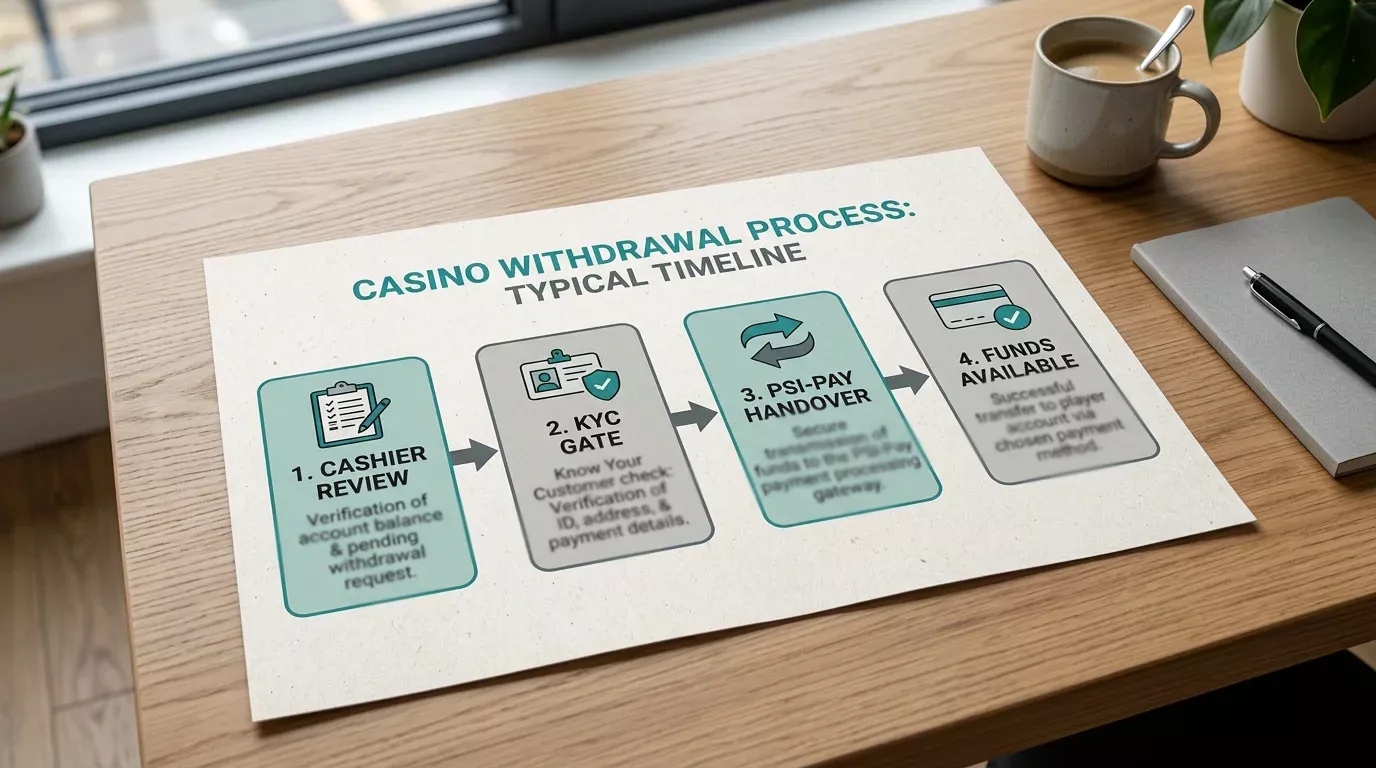
Stage two is the KYC and affordability gate. If the cashout triggers a KYC step the operator has not yet completed, or if your recent deposit pattern flags an open affordability check, the withdrawal pauses here for documentation. This is the stage that derails the most withdrawals. The good news, broadly, is that the Commission has reported 97% of financial vulnerability checks in the pilot’s second phase now run frictionlessly — meaning most cleared accounts pass through this stage without needing to upload anything. The bad news is that the remaining 3% sit in this stage until the player responds.
Stage three is the PSI-Pay handover. The casino approves the withdrawal, builds the outbound payment payload, and pushes it across the Payz API to PSI-Pay’s settlement infrastructure. PSI-Pay applies its own AML controls — particularly on larger amounts and on routes involving currency conversion — and then credits the corresponding Payz wallet. The 256-bit SSL and PCI DSS technical floor sits at this stage. On clean transactions, the handover takes seconds. On flagged ones, PSI-Pay’s compliance team may add a review delay measured in hours, occasionally a day or two.
Why KYC Sits Between You and Your First Payz Payout
The first Payz payout from any new UK casino account is the one that teaches players the most about how regulation actually works — usually unpleasantly, because the KYC gate fires hardest there.
KYC sits between you and your first payout for a specific reason: a deposit can be reversed in principle, but a withdrawal cannot. The moment the operator pays out, the funds leave the regulated estate, and the casino’s ability to recover them — if anything turns out to be wrong about your identity, your funding source, or your residency — drops to near zero. So the operator front-loads the identity work onto the payout, even though the same checks could in principle be done at deposit. The result is that a player who deposited £200, played for a week, and now wants to withdraw £180 will hit a documentation request they did not anticipate.
What the operator typically wants at this stage is some combination of a government-issued ID, a proof of address dated within the last three months, and — if the deposit pattern triggered the £150 vulnerability check — a public-data signal or document supporting your declared income. The £150 threshold itself dropped from £500 on 28 February 2025, and Andrew Rhodes flagged the change with notable directness ahead of the switch, saying that tomorrow financial vulnerability thresholds fall to £150 per thirty-day rolling period and the pilot for Financial Risk Assessments is well advanced.
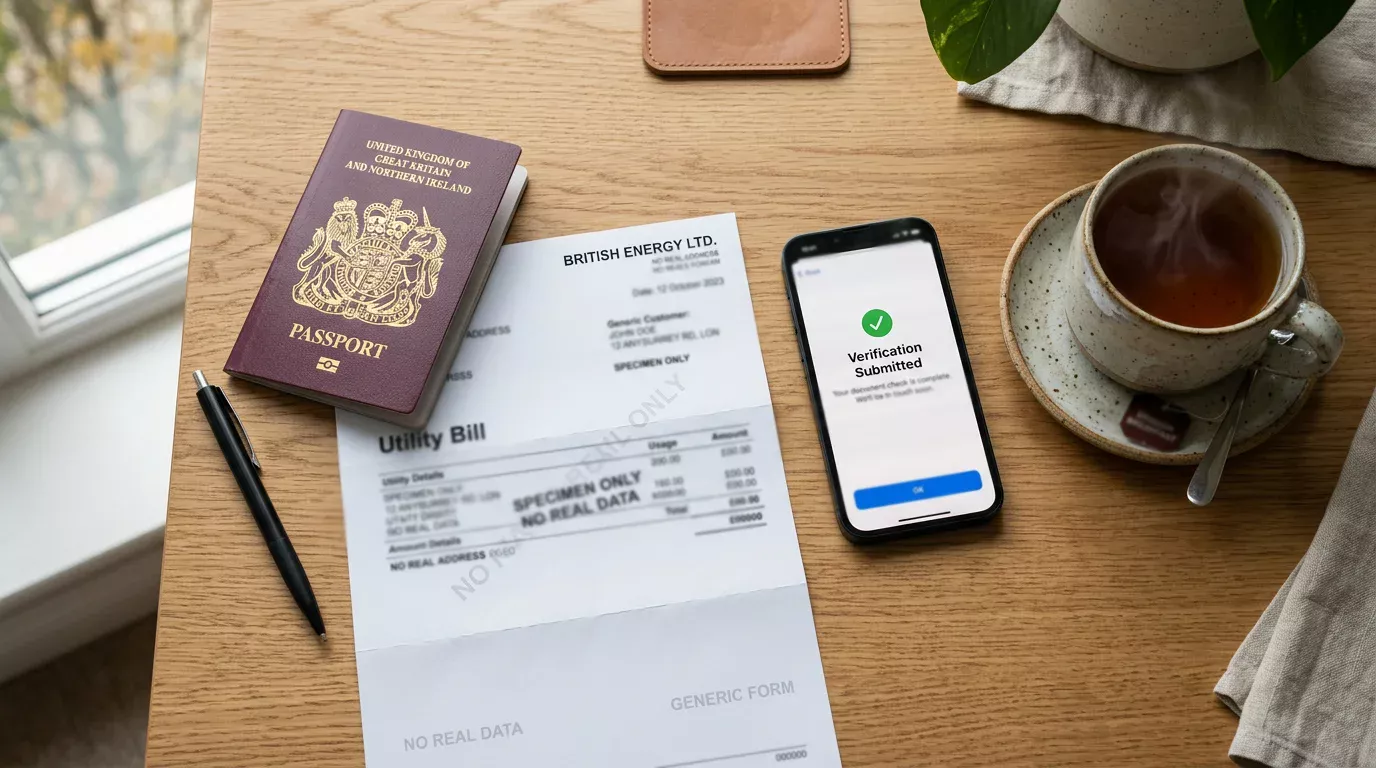
The Payz wallet does not participate in the casino’s KYC step directly. PSI-Pay has its own KYC on the Payz account, and that one runs independently. What that means in practice: your Payz account being fully verified does not exempt you from the casino’s KYC at withdrawal. The two regulators — FCA on the wallet side, UKGC on the operator side — set their own evidence requirements. The overlap is partial.
If you are clearing this gate for the first time, expect somewhere between two hours and three working days for the documents to be reviewed, depending on the operator’s payments team capacity and on whether your submissions match cleanly. Once cleared, the gate stays open for the lifetime of the account — subsequent withdrawals do not re-trigger KYC unless something material changes.
Daily, Weekly and Monthly Payz Withdrawal Limits at UK Casinos
Limits at Payz withdrawal time work on three overlapping axes — daily, weekly, monthly — and they come from two different sources at once. The combination is what trips most players up.
The operator sets one set of limits at the cashier. Typical UK casino Payz withdrawal ceilings sit somewhere between £2,000 and £10,000 per day, with monthly caps in the £10,000-to-£50,000 region. The numbers vary widely; an operator targeting casual players will set a lower cap than one courting mid-roller traffic. For external reference, Skrill — which sits in the same e-wallet category as Payz and is regulated under FCA register number 900001 — publishes a UK casino withdrawal cap of up to £10,000, which gives you a useful sense of where the market top is for the largest e-wallets.
PSI-Pay sets the second set of limits at the Payz account level, and these depend on your tier. Classic-tier accounts have the lowest monthly throughput; Silver, Gold, Platinum and VIP each lift the ceiling. The limits work in both directions — they cap how much can move into your wallet as well as how much can move out — and if a casino payout exceeds your tier ceiling, the funds will not arrive in Payz until you either upgrade or split the amount across cycles.
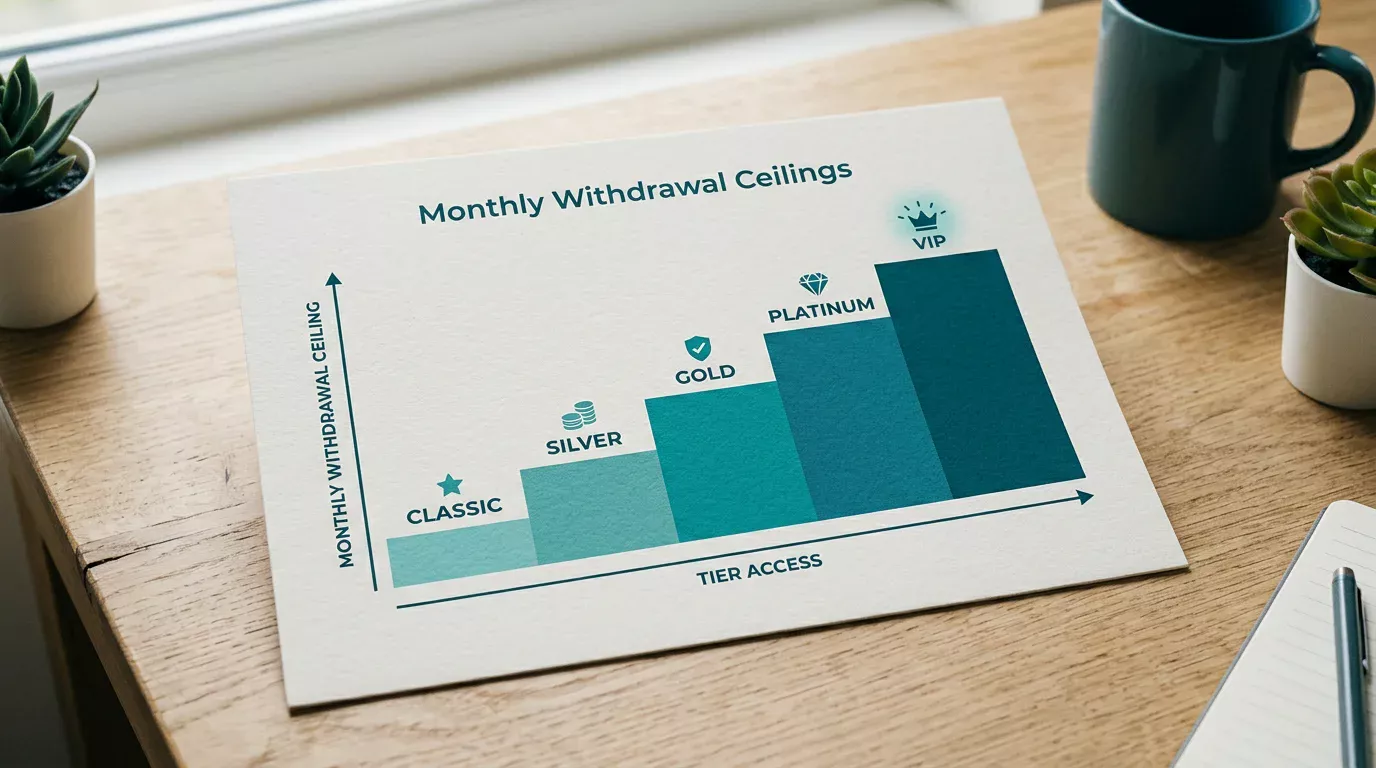
The interaction between the two sets is asymmetric in an annoying way. The casino’s limit caps what it will pay out in any one transaction. Payz’s limit caps the total inbound to your wallet over a period. So a £9,000 single withdrawal might clear the casino’s per-transaction limit fine, but bounce on Payz’s monthly inbound cap if you have already received earlier payouts.
The practical implication for anyone withdrawing serious sums: check the Payz tier ceiling before requesting a payout that would exceed it. Splitting the withdrawal across two months is faster than asking PSI-Pay to upgrade your tier on demand.
Why UKGC Banned Reverse Withdrawals and How It Speeds Payz
One UK regulatory change has done more to clean up Payz payout timing than any technical improvement on either side — the ban on reverse withdrawals. It also happens to be one of the least-understood rules in the cashier flow.
A reverse withdrawal was a feature most operators offered until the Commission moved against it: while your payout sat in the operator’s pending period, you could cancel the cashout and push the money back into your playable balance. This sounded convenient — a player who changed their mind could keep playing — but it was also a documented driver of harm. The Commission’s data showed that players who reversed withdrawals were dramatically more likely to escalate spending. Operators were required to remove the option from UKGC-licensed cashiers, with the consequence that once a Payz withdrawal is submitted, the funds are committed to leaving the casino.
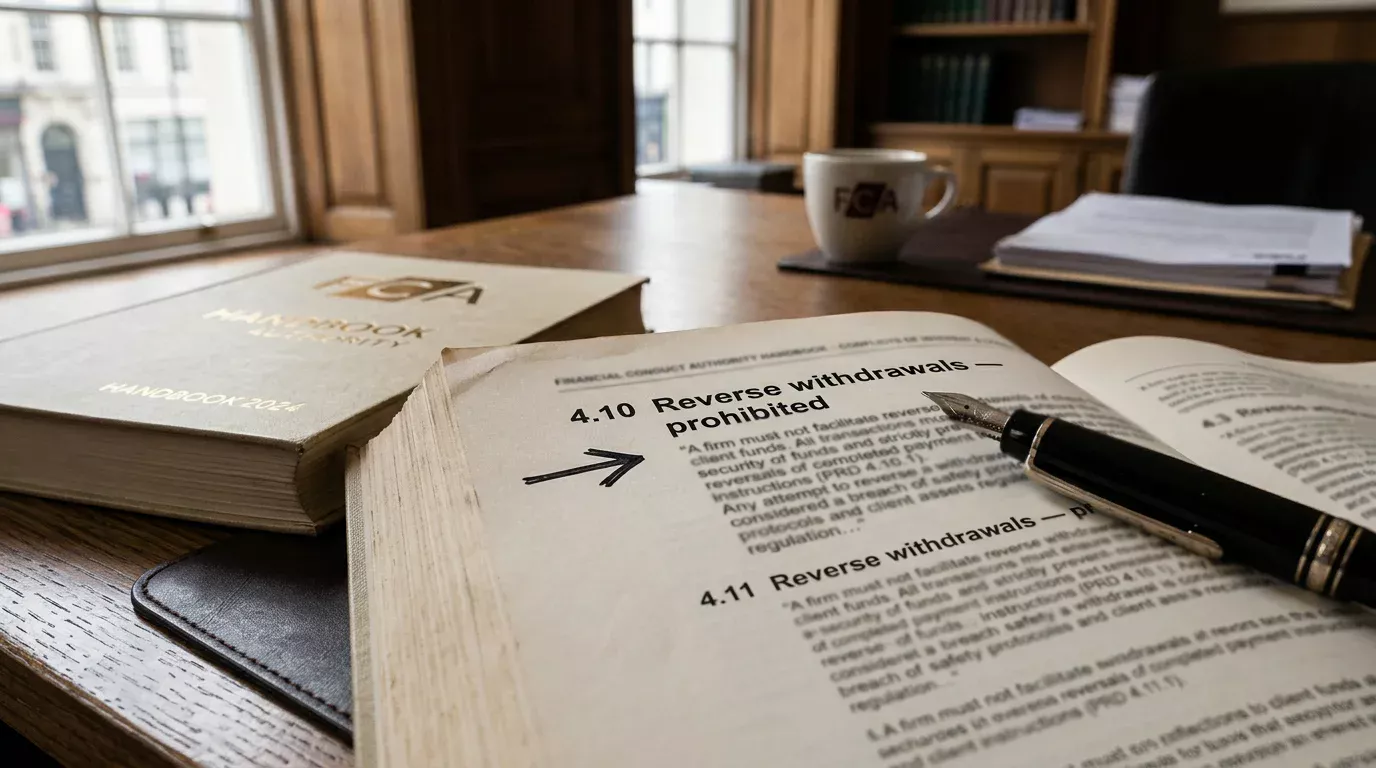
That commitment is what speeds up Payz payouts in practice. Without a reverse option, the operator’s payments team can treat the queue as a one-way conveyor. No partial reversals, no put-it-back-in-play interruptions, fewer reconciliation steps at the back office. The pending period exists for fraud and security review, not for player indecision.
The Commission has been measured about how the surrounding affordability work is meant to function alongside this, and Tim Miller, the executive director who has led much of the public communication on the topic, was explicit at the Ethical Gambling Forum — the checks the regulator has been piloting will not even attempt to make an assessment of what each customer can afford to gamble. The structure is meant to be light-touch, automated, and fast. The reverse-withdrawal ban fits that design.
Why Your Payz Payout May Land in Your Wallet or Bounce Back to Source
The Payz logo at the cashier suggests a single destination — your Payz wallet. The real routing is more complicated, and on some withdrawals the money does not actually land where you expected.
UK casinos operate under what is effectively a closed-loop principle. Funds that came in on a particular rail are preferentially returned on the same rail, especially for the amount up to the historical deposit total. If you deposited £300 via Payz over the lifetime of your account, your first £300 of withdrawals will route back to Payz. Anything over that — the actual winnings — can route to Payz too, but operators sometimes split larger payouts: the originating deposit amount to Payz, the excess to a debit card or bank account if one is registered.
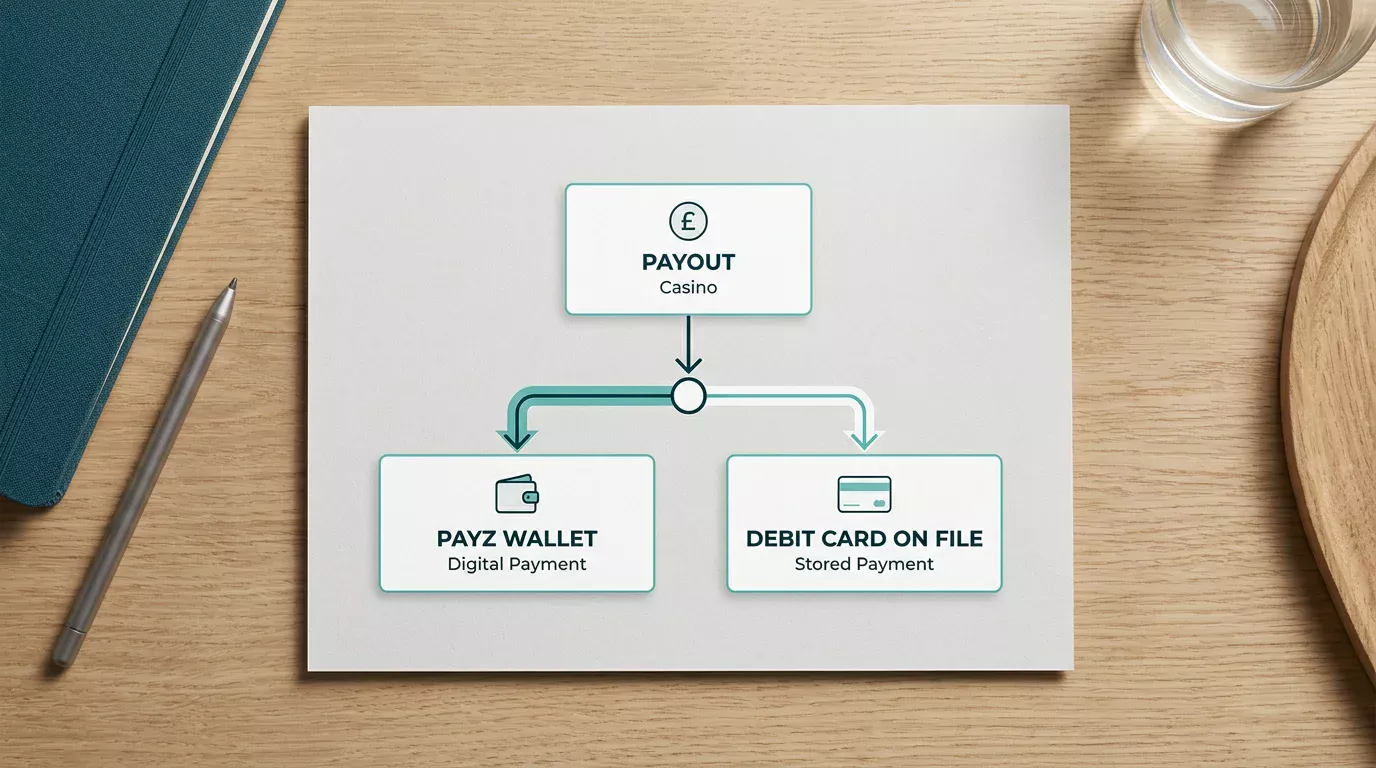
The reason is partly AML and partly practical. Closed-loop routing reduces money-laundering surface area, because it keeps funding sources and payout destinations symmetric. It also reduces operational risk for the operator — if a payout to Payz fails for any reason, having a backup destination shortens the resolution cycle. The downside for the player is that the cashout you requested as “Payz only” may quietly arrive in two places.
The practical signal to watch for: if your account has multiple verified payment methods, check the cashier’s “withdrawal preferences” or equivalent screen. Some operators let you force a single destination; others apply the split silently.
When a Payz Withdrawal Stalls: Causes and Remedies
Most stalled Payz withdrawals at UK casinos come down to a handful of causes, and the cashier almost never tells you which one is biting. Working through them in order is faster than waiting for chat support to explain.
The first cause is incomplete wagering on bonus-tagged funds. If any part of your balance is bonus-tagged or attached to wagering requirements that have not been completed, the operator will refuse the withdrawal until you either complete the wagering or formally forfeit the bonus. The cashier may show this as “pending review” without explaining the bonus link. Check the bonus terms in your account history first.
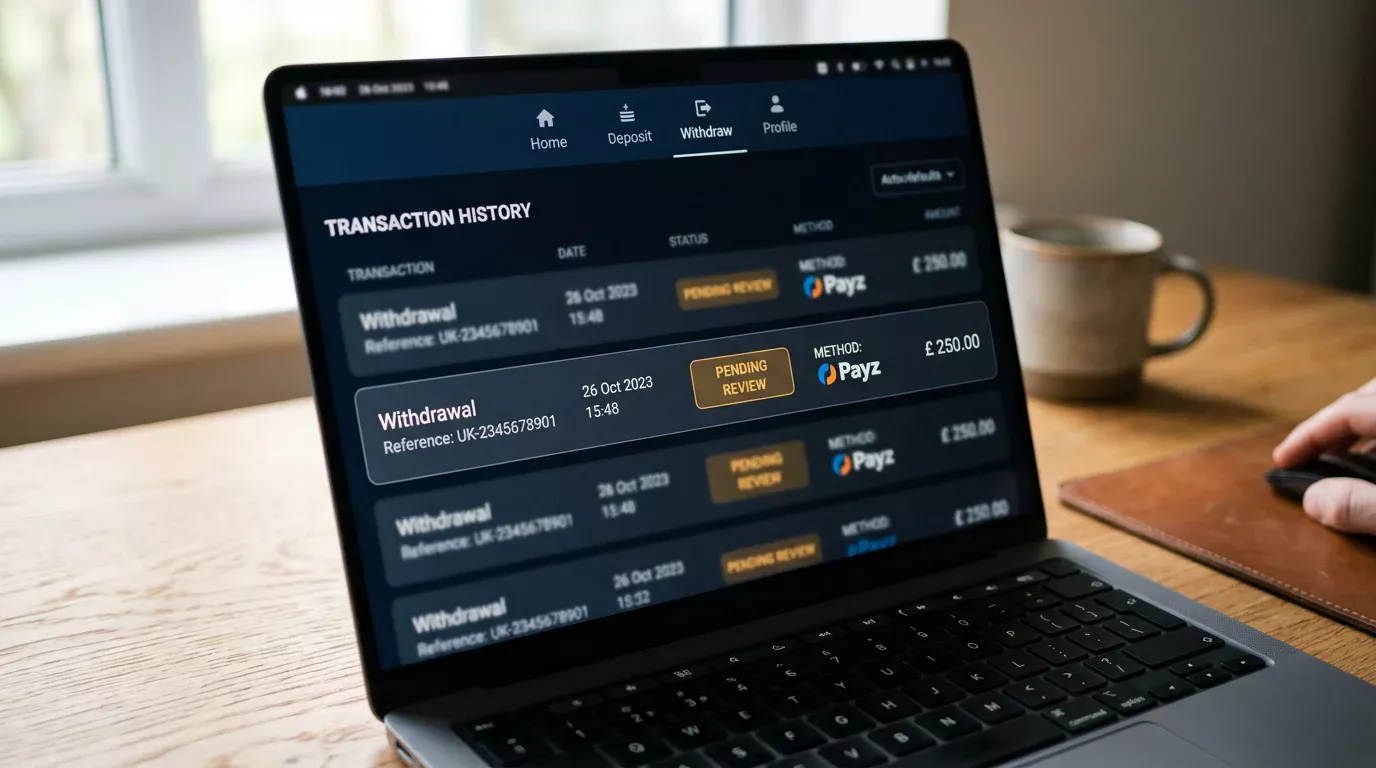
The second cause is an unresolved KYC request. If the operator asked for a document during a previous deposit or withdrawal cycle and you missed the notification — easy to do, since some operators only flag this in an email rather than a cashier banner — the withdrawal will sit indefinitely. Check your messages and your account-status panel.
The third cause is a tier-cap mismatch. Your withdrawal is within the casino’s per-transaction limit but exceeds your Payz tier’s monthly inbound ceiling. The casino approves and sends; PSI-Pay rejects on receipt and bounces the funds back to the operator. The cashier marks the withdrawal as “returned” or “failed”, which is technically accurate but easy to misread as fraud.
The fourth cause is a suspended Payz account on the wallet side. PSI-Pay occasionally suspends accounts pending a documentation refresh — an expired ID, an outdated proof of address, a change in residency status. The casino cannot push funds into a suspended wallet. The cashier will say “withdrawal failed” and the money will return to your playable balance.
The fifth cause is an operator-side compliance hold unrelated to you. UKGC enforcement work picked up sharply across 2025 and into 2026 — the Commission issued 741 cease-and-desist notices in the most recent reporting cycle and around 398,000 illegal URLs were passed to search engines, of which roughly 267,000 were removed. Operators are under heavy regulatory scrutiny, and unusual transaction patterns sometimes trigger a hold while the operator’s compliance team reviews. These usually clear within 24 to 72 hours.
If the withdrawal has been stuck for more than five working days without explanation, the escalation path is: cashier chat, then formal complaint to the operator’s complaints address, then an Alternative Dispute Resolution provider listed in the operator’s licence conditions. The Commission does not handle individual disputes directly.
What a Clean Payz Payout Actually Depends On
If I had to compress everything I have learned about Payz casino withdrawals into one observation, it would be this: the rail itself is rarely the problem. PSI-Pay’s e-money infrastructure handles inbound merchant payments well, and the technical handshake at stage three is the fastest part of the four-stage flow. What takes time is the regulatory layer wrapped around it — the operator’s KYC, the affordability checks, the closed-loop routing logic, the tier-cap reconciliation, the occasional compliance hold.
To ensure smooth transactions without unnecessary delays, we recommend playing only at reliable ecoPayz casinos in the UK that have streamlined cashier systems.
The implication for any UK player who wants Payz payouts to be reliable rather than dramatic is to clear the regulatory layer once, in advance, rather than transaction by transaction. Complete the operator’s KYC during a quiet deposit cycle, not during the first withdrawal. Match your Payz tier ceiling to the order of magnitude you actually withdraw. Keep a debit card or bank account registered on your casino file as a backup destination in case closed-loop routing splits a payout. And recognise that “pending” is a status word covering five very different stages — knowing which one you are in is the difference between an informed wait and a frustrated three-in-the-morning support chat.
The Commission has signalled, repeatedly, that the regulatory direction is towards more automation and less friction for cleared customers. The rail will not get faster than it already is, but the gates around it should keep getting smoother as the frictionless-check rate stays above 97%.
Published by the Paylobby team.