
Bankroll Levels: ecoPayz Casino Deposit Amounts in the UK
 Available in GB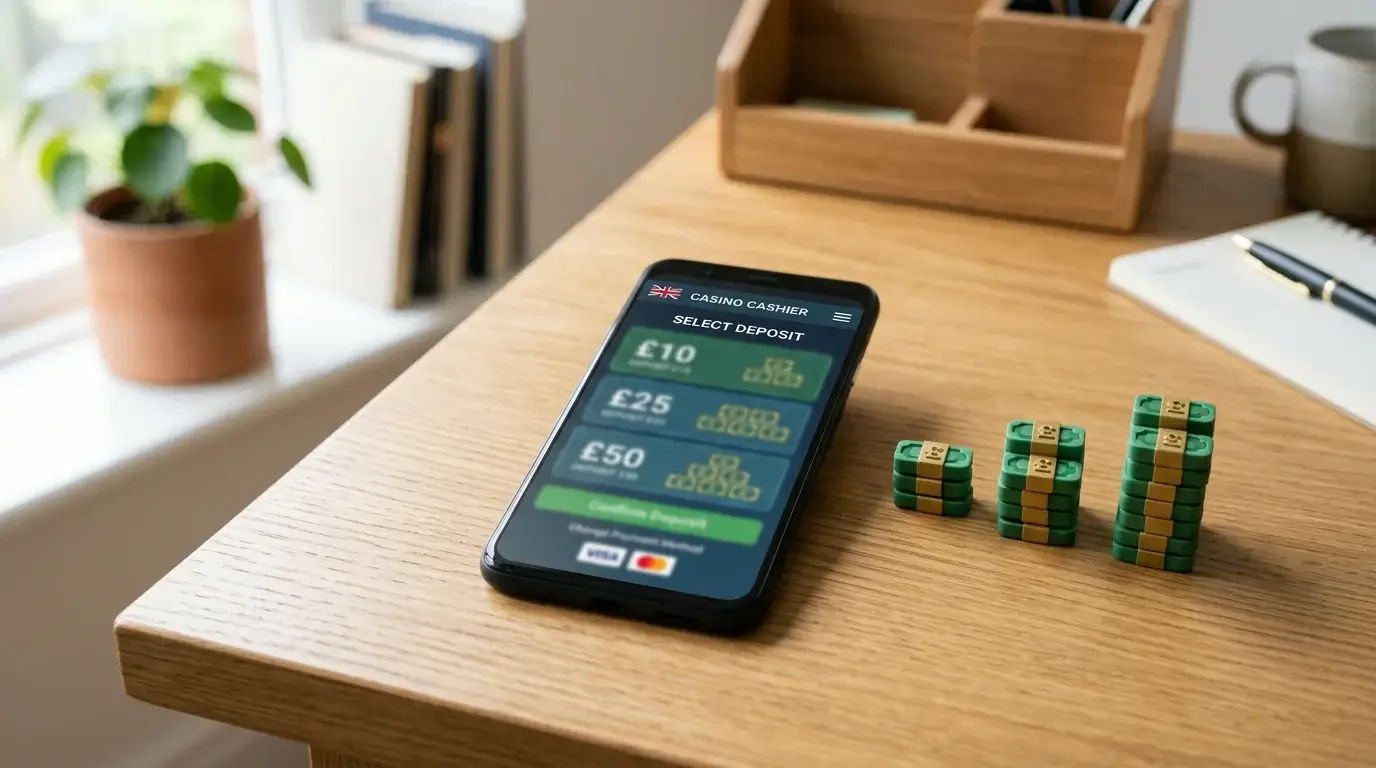
One of the more useful conversations I have with new readers starts when they ask “is £20 enough?” The answer depends entirely on what they expect to do with the deposit, but the question itself betrays a habit of thinking that does not serve them well. Casino deposits are not points on a single scale — they are different products bought at different prices, each with its own bonus structure, session implications, and break-even maths. The mental shift from “how much should I deposit” to “what am I buying with each tier” is the single most valuable upgrade I can offer to anyone using Payz at a UK casino.
The £20, £50, and £100 brackets cover the bulk of what I see in my correspondence. They are not arbitrary — they correspond to natural breakpoints in UK casino bonus eligibility, in cashier-side processing tiers, and in the maths of how long a session can plausibly last. The UK regulated market processed £16.8 billion in gross gambling yield in the year to March 2025, with 24.4 million active accounts behind that — and the median deposit pattern across that population sits firmly in the lower bracket. The tiers exist because they map onto how real players use the product.
The £20 Base Tier and Associated Platform Access
A £20 deposit at a UK casino is a meaningful starter position, not a token gesture. It clears most bonus eligibility minimums (typically £10 or £20), provides enough bankroll for a reasonable session on lower-stake slots or table games, and falls well below any vulnerability or affordability threshold. For a player who is testing an operator, exploring a new game, or running a small entertainment session, £20 is the natural entry point.
What £20 buys in practice: roughly 30 to 60 minutes of mid-volatility slot play at £0.50 to £1 spins, depending on luck and RTP. About four to six hands at a £5 minimum blackjack table. A workable test deposit for evaluating an operator’s cashier UX, withdrawal speed, and verification handling. What it does not buy: meaningful exposure to high-volatility games where a single bonus round can swing the entire deposit; bonus tiers that require £30 or £50 minimums; comfort to play through wagering requirements on a generous bonus offer.
The wallet-side implications are minor. Payz processes £20 deposits at the same speed as larger ones — typically instant on the cashier side — and the wallet’s tier structure has no meaningful impact at this scale. Currency conversion margins, if applicable, are small in absolute terms. The £20 deposit is the cleanest possible test of the casino-wallet flow because so little can go wrong.

The £50 Tier and the Bonus Inflection
£50 is where casino bonus structures usually become more interesting. Many UK welcome offers and reload promotions have their best-case headline value at the £50 to £100 deposit range — operators tune the curve to make this tier feel rewarding without committing to high-value players’ specific terms. The same player depositing £20 and then £50 separately will often see better bonus terms applied to the larger deposit even on cumulative wagering.
What £50 unlocks: more meaningful bonus offers, including most “deposit £50 get £X” structures; access to mid-volatility slot games at the £1 to £2 spin level for sustained sessions; a workable starting position for table games at £10 minimum tables; enough bankroll to survive normal slot variance without the deposit terminating the session in the first ten minutes.
The £50 tier is also where the £150 vulnerability check timing becomes relevant. Three £50 deposits at a single operator in a month cross the threshold. Players who routinely deposit £50 multiple times will trigger the check; players who deposit £50 once per month will not. The threshold is not punitive — 97% of these checks run frictionlessly — but it is worth knowing where the line sits.
From a wallet perspective, £50 deposits sit comfortably within Classic tier limits at Payz, and there is no meaningful FX or fee advantage to upgrading wallet tier specifically for this scale of activity. The wallet treats £50 as routine. The casino’s bonus structure does not.

The £100 Tier and the High-Water Mark for Casual Play
£100 is the upper edge of what I think of as casual casino play. Above £100 per deposit, you are operating in territory where verification, affordability, and tier-based features start to matter more, and where the cost of mistakes scales. Below £100, you can recover from a bad session without affecting your week. At £100, you are committing real money to entertainment, and the maths needs to be deliberate rather than reactive.
What £100 unlocks: most of the meaningful bonus offers in the UK market, including reload bonuses that scale with deposit size; comfortable bankroll for sessions of an hour or more on £1 to £2 spin slots; access to mid-stake table games at £25 minimum tables; usable position for bonus chasing where wagering requirements would burn through smaller bankrolls before completing.
The £100 tier is also where the post-RGD bonus environment really shows. With Remote Gaming Duty rising from 21% to 40% in April 2026, operators have trimmed bonus generosity, and the gap between a £50 and a £100 deposit’s bonus value has narrowed in some operator structures. The same £50 deposit-bonus that delivered £50 in matched funds in early 2025 may deliver £35 to £40 in late 2026; the £100 equivalent may have shrunk proportionally less because operators preserve the higher-deposit segment more carefully. The implication is that the value-per-pound proposition of the £100 tier has held up slightly better than the £20 or £50 tiers.
Wallet-side, £100 deposits remain within Classic tier limits for most users, though active high-volume players sitting near tier ceilings should review their tier structure. The frequency of £100 deposits matters more than the absolute amount. Two £100 deposits a month is routine; ten £100 deposits a month is a different profile that interacts with vulnerability checks, affordability frameworks, and tier benefits in more complex ways.

The Break-Even Maths Across the Tiers
One under-appreciated calculation is the rough break-even position from each tier given typical UK slot RTPs (96% to 97%) and typical bonus wagering requirements (30x to 40x). A £50 deposit with a £50 matched bonus and 35x wagering requires £3,500 in turnover to clear. At £1 spins on 96.5% RTP slots, that turnover costs roughly £122.50 in expected losses, with substantial variance around that number. The £100 of bonus and deposit is consumed and replaced through play; you reach the end of wagering with somewhere between £0 and £100 of value remaining, depending on variance.
This is the kind of arithmetic players should run before committing to a bonus, not after. The deposit tier you choose interacts with the bonus you accept, the wagering requirement you face, and the variance you tolerate. Higher deposit tiers do not always offer better expected value — they often offer larger absolute swings around a similar expected position.
For a contrast with the absolute floor of the market, players considering smaller deposits should be aware that the wallet supports activity right down to the £5 minimum at participating operators. The mechanics of £5 minimum deposit casinos via Payz are slightly different from the larger tiers and worth understanding separately if you are deliberately operating at the entry-level end.

Which Tier Fits Which Player Profile
A few reader profiles I have built around the tier choices.
The exploratory player, testing new operators or new games: £20 deposits, no bonuses, focus on UX evaluation. Each casino gets one or two £20 deposits as a trial; the choice to deposit more becomes the operator’s win or loss based on how well the trial went.
The bonus-aware regular player: £50 deposits matched against welcome and reload offers, with attention to wagering requirements and bonus terms. Stay within a budget of two or three £50 deposits per month at a single operator to keep below or just over the vulnerability threshold while preserving bonus access.
The mid-volume entertainment player: £100 deposits at a familiar operator on a regular cadence, generally without bonuses (or with bonuses chosen carefully for terms rather than headline value). Sessions are long enough to ride out variance; verification is complete and tier benefits matter.
None of these are recommendations to play more or less than you would otherwise — they are observations about how the cashier mechanics map onto common usage patterns. The right deposit size for any individual depends on disposable entertainment budget, time available, and risk tolerance, not on any external benchmark.

The Tier-Flexibility Advantage of Wallet Funding
One advantage of Payz funding versus card funding is the granularity of control over deposit size. Cards encourage round-number or fixed-template deposits because the friction of typing a card number once per session pushes players to load larger amounts. Wallets, with their saved instrument and faster cashier flow, make it trivially easy to make small adjustments. A wallet-funded player can deposit £35 or £75 or £120 exactly as readily as £50 or £100, and this granularity supports more deliberate budgeting.
The friction reduction works in both directions. Players intent on careful sizing benefit from the granularity. Players prone to chase losses may also find the lowered friction makes overspending easier. The wallet is not protective by itself; the discipline has to come from the player’s own decisions about deposit size and frequency.

The Honest Tier Choice
The settled view from years of correspondence: the right deposit tier for any player is the one they could lose without affecting their week. £20 for a tight budget. £50 for a comfortable entertainment line item. £100 for someone who treats casino play the way others treat dining out or theatre. There is no virtue in higher tiers and no shame in lower ones. The wallet processes them all equivalently. The casino’s bonus structures favour the middle, but the maths of any specific bonus needs working out on its own terms.
What the tiers buy is access to different parts of the product. What they cost is set by the player’s own circumstances. The single most valuable thing any reader of these articles can do is decide their tier deliberately and stick to it, rather than letting the deposit amount be whatever happens to come up at a moment of session enthusiasm.
Created by the "Paylobby" editorial team.