
ecoPayz Casino Under the £5 Stake Limit: What Changed for UK Slot Players
 Available in GB
A reader sent me a screenshot in May 2025 with one question — “why is the maximum spin button greyed out at £2?” He had been an occasional £10-per-spin player for years, his wallet was the same Payz account he had used for ages, the operator was a long-established UK brand, and overnight the upper end of his bet slider had been clipped. The answer was that he was twenty-three years old, and the second leg of the UK’s per-spin stake limit had just come into force.
The stake limit was the single biggest mechanical change to UK online slots in a generation, and it landed in two phases — £5 per spin for adults from 9 April 2025, and £2 per spin for players aged eighteen to twenty-four from 21 May 2025. Both apply at the spin level, not the deposit level, which means a Payz wallet has nothing to do with whether the cap bites. It is a casino-side enforcement on the game itself. But the practical experience of UK slot play has shifted enough that anyone funding through a wallet needs to understand how the limit reshapes their flow.
What the Cap Means at the Spin Button
The simplest way to picture the £5 limit is to imagine the bet slider on any UK online slot frozen at five pounds for adult players, two pounds for the eighteen-to-twenty-four bracket. The slider does not move past those points regardless of game, jackpot type, paylines, or how high the in-game multiplier mechanics go. Operators implement it by capping the maximum stake displayed in the cashier and by hard-coding the limit into the bet-control firmware. The player does not need to opt in; the limit is just there.
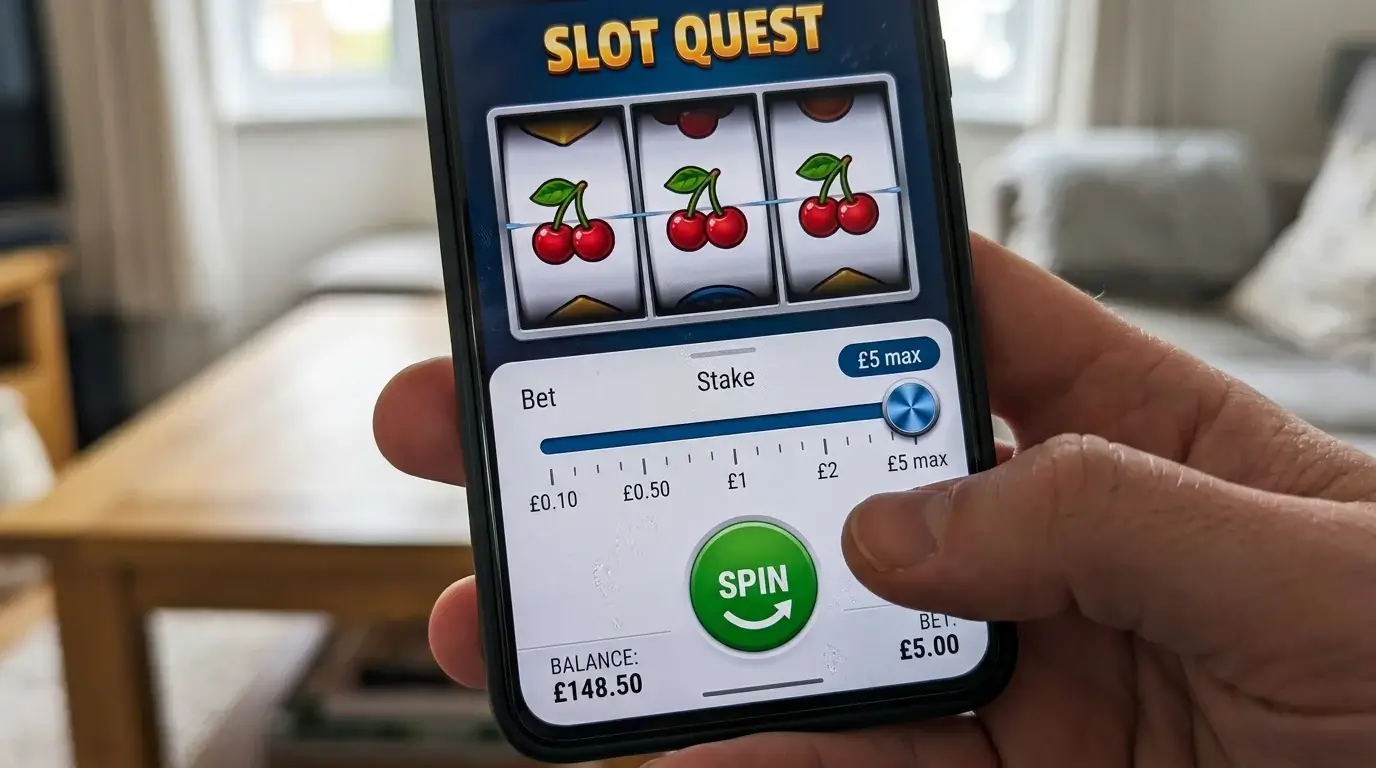
The change affected the high-volatility end of the market most. Players running £10 or £20 spins on volatility-heavy releases — bonus-buy mechanics, big-win-chase strategies — found that part of their toolkit removed at a stroke. Players already operating at £1 or £2 spins barely noticed. The regulator’s framing was that the market’s most damaging stakes were concentrated in a small slice of high-spin activity, and the cap closed that slice without altering the routine experience for the majority.

The data from the first full quarter under the limit told an interesting story. Online slots gross gambling yield in Q3 of 2025-26 was £788 million, up 10% year on year, even with stake caps in place. The number of monthly active slot accounts was 4.6 million, up 5%. The cap removed the top of the stake distribution without reducing overall player engagement — a result that surprised observers expecting a sharper revenue decline.
Why the Cap Matters for Wallet Flows Even When Stakes Are Below It
You might assume that if you never bet above £5 anyway, the cap is irrelevant to your wallet flow. That turns out not to be quite right. Several second-order effects ripple through how players deposit and withdraw.
First, the cap changes session pacing. A player who would have run three or four £20 spins is now running a longer string of £5 or smaller spins to deploy the same bankroll. Sessions get longer, deposit-to-withdrawal cycles compress, and Payz wallet activity becomes more frequent in transaction count even when total volume is similar. Operators see more spin events per session, and risk engines re-tune around the new pattern.

Second, the cap interacts with bonus structures. Bonus wagering requirements that used to clear in a few large spins now take longer to clear at smaller stakes. Players exit bonuses more slowly, which means wallet balances stay tied up in casino accounts for longer. The flow change is small per session but visible in aggregate.
Third, and this is the one that surprised me, the cap accelerated the shift to lower-deposit-tier players in the market. The £5 stake limit pairs naturally with smaller deposit amounts; the case for a £100 deposit weakens when each spin caps at £5. Median deposit sizes ticked down across several operators I track, and the volume of small £10 to £20 deposit cycles climbed proportionally. The market structurally moved toward smaller, more frequent transactions, which suits e-money wallets fine but represents a meaningful behavioural shift.
The Two-Tier Age Dimension
The £2 cap for eighteen-to-twenty-four-year-olds is the part that most UK players in that age bracket only discover when they hit it. Operator implementations vary on how the cap is signalled — some show the £2 ceiling clearly at registration with a brief explanation, others simply present a slider that does not move past £2 without any explanatory text. Either way, the cap is enforced operator-side based on the date of birth registered on the account, and it lifts automatically on the day after the player’s twenty-fifth birthday.

The regulator’s rationale was age-specific harm data showing higher risk concentration in the younger adult cohort. The intervention was deliberately narrow — apply the lower cap where the data showed the sharpest harm signal, leave the broader adult cap at £5. The unintended consequence is that operators have to maintain two enforcement layers, the £5 default and the £2 tier-down for the under-twenty-five segment, with migration between them on birthday triggers needing to fire reliably or risk a compliance flag.
The under-twenty-five cap is the most contested point in the package because it overtly distinguishes between cohorts of legal adults. The regulator’s defence is that the harm data justified the distinction — that the same arguments about adult autonomy apply less crisply when a specific age band shows materially higher harm signals than the surrounding population. That argument has not satisfied everyone, but it has held up in practice, and the cap is unlikely to be reversed in the medium term. Anyone in the affected age band should plan their wallet flow around the £2 ceiling and treat it as part of the structural environment rather than something likely to change soon.
How Wallet-Funded Players Experience the Cap Differently
One pattern I have observed across reader correspondence is that Payz-funded players noticed the cap less acutely than card-funded players. The reason is structural: wallet players were already operating in smaller cycles. They deposited £20, played through it, deposited another £20. Card players were more likely to load £100 at a session start and burn through it at larger stakes. The cap forced card-style players to adopt wallet-style pacing without changing anything about their funding instrument.
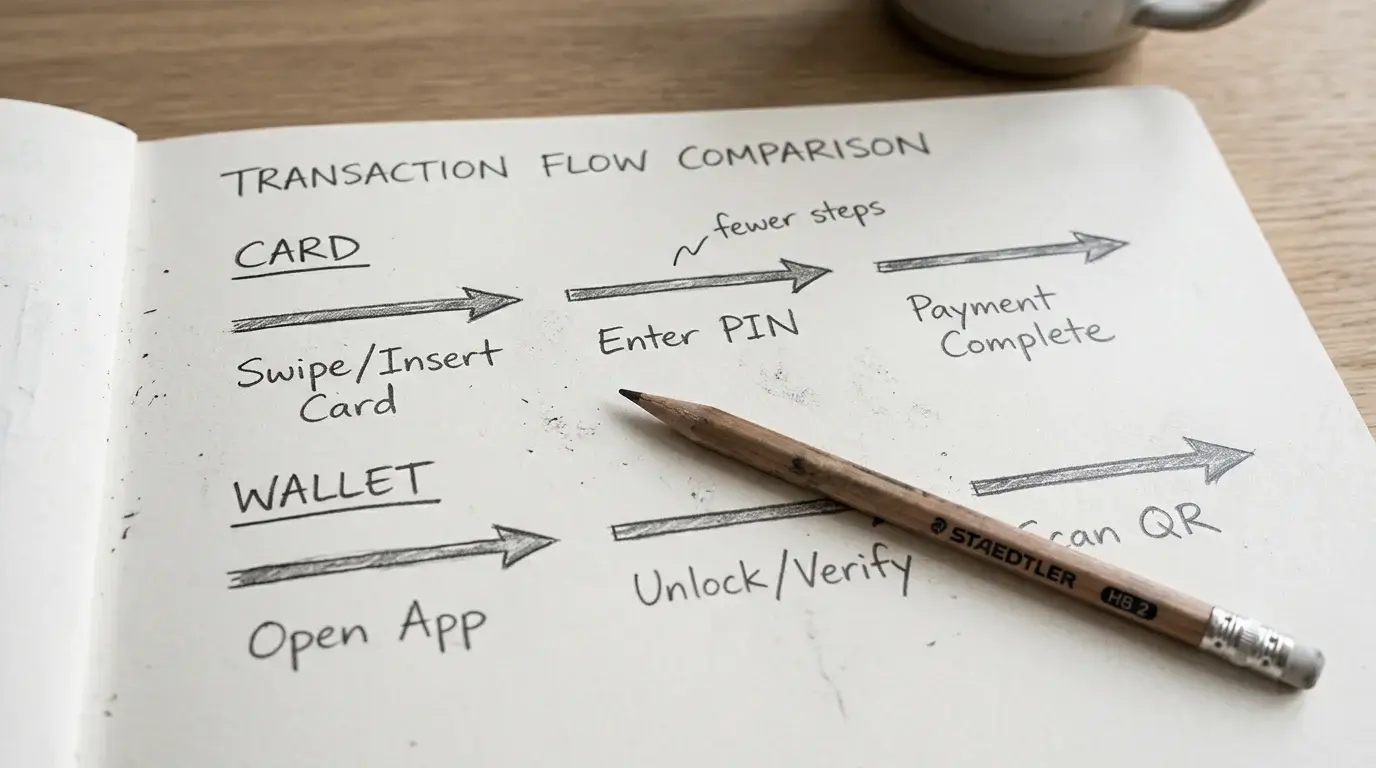
For wallet players, the practical effect was modest. The same deposit sizes still work. The same withdrawal patterns still apply. The pacing within a session changed but the surrounding wallet flow did not. This is part of why the cap’s introduction was less disruptive to the market than many predicted. The funding instruments that dominate the responsible end of the market were already pre-adapted to the play pattern the cap forced.
What the Limit Does Not Affect
A clarification worth being explicit about: the £5 and £2 caps apply to online slots specifically. They do not apply to table games, live casino, sports betting, or other verticals. A player capped at £2 per slot spin can still place a £50 live blackjack hand or a £200 football accumulator. The regulator’s stated intention is vertical-specific harm calibration, and slots were the vertical where the harm data pointed sharpest.

This is the part that confuses players most often. The same Payz wallet at the same casino can fund a £5 spin and a £100 sports bet on consecutive transactions. The limit is in the game itself, not in the wallet, not in the deposit, not in the operator. Treat it as a per-product rule rather than an account-wide one.
Looking Ahead at the Broader Policy Direction
The stake cap was one strand of a wider regulatory reset that includes the Remote Gaming Duty change due to rise from 21% to 40% in April 2026, the £150 vulnerability check threshold from February 2025, and refined affordability rules pushing toward frictionless checks at 97% coverage. Each piece moves the market in a direction the regulator has been signalling for years — smaller stakes, tighter checks, more transparent operators.
From a wallet-flow perspective, the through-line is that frictionless processing matters more than ever. Players running larger, less frequent transactions had time to absorb operational friction; players running smaller, more frequent transactions need pipelines that work cleanly every time. Wallets that handle the smaller-cycle pattern well — fast deposits, reliable withdrawals, clear histories — fit the post-2025 UK market better than ones built for a high-stake, low-frequency clientele.
The Settled View From One Year In
A year on from the £5 cap and most of a year from the £2 cap, the practical reality has been calmer than the pre-implementation noise suggested. The cap is enforced, the market kept growing, deposit and withdrawal flows adjusted, and the wallet-funded part of the population was relatively insulated from the disruption because it was already operating in the pattern the cap forced. The change that hurt most was the experience of running into a cap you did not know existed in the middle of a session — that twenty-three-year-old reader’s email captured it well — and the fix for that is operator UX, not regulatory rollback.
For UK players using Payz wallets at UK casinos, the stake cap is now a permanent feature of the landscape. Plan deposits and pacing around it; verify your date-of-birth is current on the account if you are near the twenty-five threshold; and treat the smaller spin sizes as the new operating baseline rather than a temporary inconvenience. The market has already metabolised the change; players who have not yet are paying for the lag in friction and frustration that other players have already converted into routine.
Prepared by the Paylobby editorial staff.